Focusing on both pre-colonial and post-colonial eras, this book aims to cultivate a greater understanding of globalisation processes in the context of leadership behaviour in Africa.
This edited collection analyses the unexplored concept of the family business group, evaluating the opportunities and advantages that it creates for entrepreneurs.
This book highlights the importance of understanding how trust and indigenous African cultural institutions enhance the development of entrepreneurial networks and relationships in Africa.
This book sheds light on one of the biggest development issues of our time: how the rise of entrepreneurship and the associated mindset is likely to unfold in unexpected places and change socio-economic and political fortunes.
This book offers a dynamic perspective on regional entrepreneurship, knowledge, innovation and economic growth, with a particular focus on the role that history and culture play.
This book offers a dynamic perspective on regional entrepreneurship, knowledge, innovation and economic growth, with a particular focus on the role that history and culture play.
This volume addresses the current challenges for and future prospects of women's entrepreneurship research, bringing together a wealth of diverse insights with implications for research, education and practice alike.
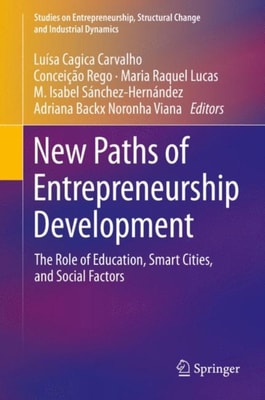
Structural change is an evolutionary process that is often cumulative within territories, improving the quality of life and achieving higher development levels.
The problems related to the process of industrialisation such as biodiversity depletion, climate change and a worsening of health and living conditions, especially but not only in developing countries, intensify.
This volume critically analyzes the convergence of technology, business practices, public policies, political ideologies, and societal values for improving business performance at the global-local paradigm.
This book explores the concept of reverse entrepreneurship, providing real-life examples of innovative start-ups and ventures hoping to internationalize.
Through a global series of case studies, this pioneering book delves into refugee entrepreneurship - a major economic, political and social issue emerging as a top priority.
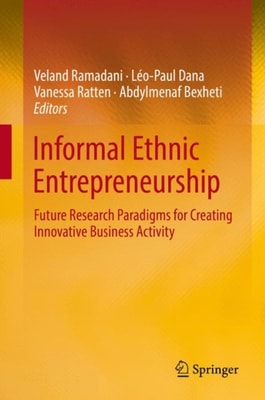
Departing from the traditional approach of surveying current and future trends and developments, this unique Handbook brings phenomena, theories, and concepts from multiple disciplines together to advance entrepreneurship.
This book analyzes female entrepreneurship in the textile sector in Africa as a phenomenon that favors the social integration and economic development of women in certain geographical areas.
This contributed volume focuses on diasporans, their characteristics, networks, resources and activities in relation to international business and entrepreneurship.
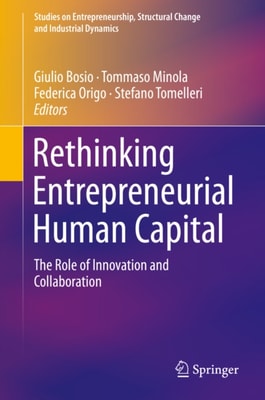
This book focuses on the specific traits and nature of entrepreneurial human capital and the extent to which it can be stimulated by entrepreneurship education - especially when these activities combine collaborative practices and innovation.
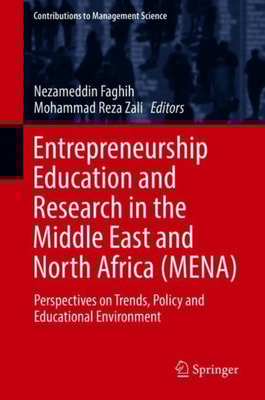
This contributed volume explores and reveals the new developments, dynamics and recommendations for entrepreneurship education in the Middle East and North Africa (MENA) region.
Adopting evolutionary and behavioral approaches, this volume presents the latest research advances in knowledge competencies and human capital, as well as the changing structural dynamics, highlighting their links with entrepreneurial activities.
Highlighting the motivations of B Corp entrepreneurs in Chile, this book explores the phenomenon behind for-profit organisations that are committed to social and ecological sustainability as well as human welfare.
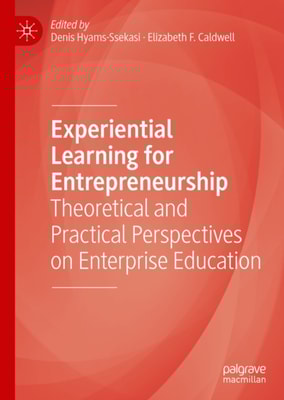
This topical new book provides an illuminating overview of enterprise education, and poses the question as to whether current establishments have adequate systems in place to prepare students for the world of work.
This book discusses a six-step transformation cycle in which the tasks of innovation management - ranked according to their relevance for companies - are placed in a systematic order.
An empirical account of one of India's largest indigenous populations, this book tells the story of the Gonds-who currently face displacement and governmental control of the region's forests, which has crippled their economy.