Advances in Subsurface Data Analytics: Traditional and Physics-Based Approaches brings together the fundamentals of popular and emerging machine learning (ML) algorithms with their applications in subsurface analysis, including geology, geophysics, petrophysics, and reservoir engineering.
The Feature-Driven Method for Structural Optimization details a novel structural optimization method within a CAD framework, integrating structural optimization and feature-based design.
This monograph introduces a novel multiset-based conceptual, mathematical and knowledge engineering paradigm, called multigrammatical framework (MGF), used for planning and scheduling in resource-consuming, resource-producing (industrial) and resource-distributing (economical) sociotechnological systems (STS).
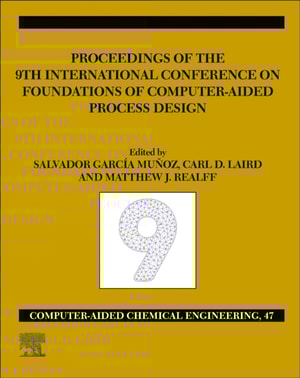
FOCAPD-19/Proceedings of the 9th International Conference on Foundations of Computer-Aided Process Design, July 14 - 18, 2019, compiles the presentations given at the Ninth International Conference on Foundations of Computer-Aided Process Design, FOCAPD-2019.
Optimal State Estimation for Process Monitoring, Fault Diagnosis and Control presents various mechanistic model based state estimators and data-driven model based state estimators with a special emphasis on their development and applications to process monitoring, fault diagnosis and control.
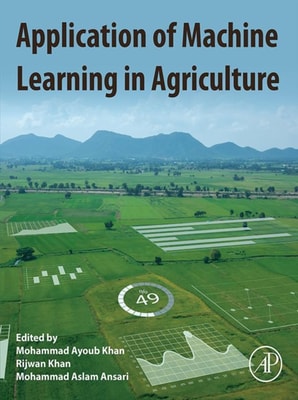
Application of Machine Learning in Smart Agriculture is the first book to present a multidisciplinary look at how technology can not only improve agricultural output, but the economic efficiency of that output as well.
Python Programming and Numerical Methods: A Guide for Engineers and Scientists introduces programming tools and numerical methods to engineering and science students, with the goal of helping the students to develop good computational problem-solving techniques through the use of numerical methods and the Python programming language.
Multi-Paradigm Modelling for Cyber-Physical Systems explores modeling and analysis as crucial activities in the development of Cyber-Physical Systems, which are inherently cross-disciplinary in nature and require distinct modeling techniques related to different disciplines, as well as a common background knowledge.
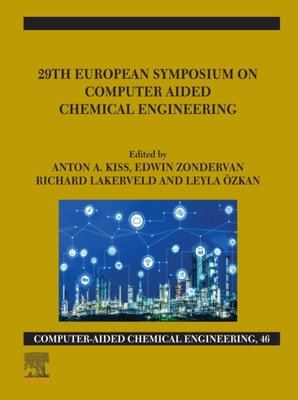
The 29th European Symposium on Computer Aided Process Engineering, contains the papers presented at the 29th European Symposium of Computer Aided Process Engineering (ESCAPE) event held in Eindhoven, The Netherlands, from June 16-19, 2019.
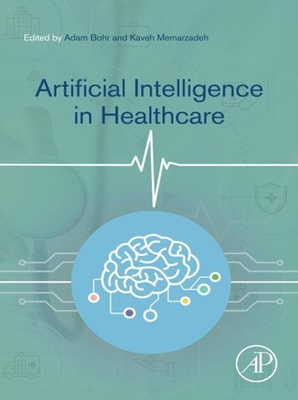
Artificial Intelligence (AI) in Healthcare is more than a comprehensive introduction toartificial intelligence as a tool in the generation and analysis of healthcare data.
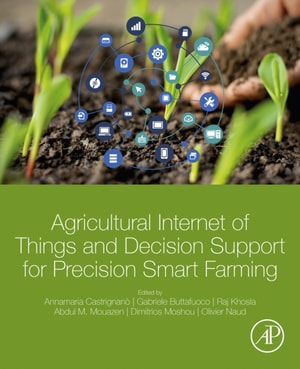
Agricultural Internet of Things and Decision Support for Smart Farming reveals how a set of key enabling technologies (KET) related to agronomic management, remote and proximal sensing, data mining, decision-making and automation can be efficiently integrated in one system.
Neutrosophic Set in Medical Image Analysis gives an understanding of the concepts of NS, along with knowledge on how to gather, interpret, analyze and handle medical images using NS methods.
This book discusses inventory models for determining optimal ordering policies using various optimization techniques, genetic algorithms, and data mining concepts.
Stochastic global optimization methods and applications to chemical, biochemical, pharmaceutical and environmental processes presents various algorithms that include the genetic algorithm, simulated annealing, differential evolution, ant colony optimization, tabu search, particle swarm optimization, artificial bee colony optimization, and cuckoo search algorithm.
Deep Learning and Parallel Computing Environment for Bioengineering Systems delivers a significant forum for the technical advancement of deep learning in parallel computing environment across bio-engineering diversified domains and its applications.
This book, following the three published volumes of the book, provides the main purpose to collect research papers and review papers to provide an overview of the main issues, results, and open questions in the cutting-edge research on the fields of modeling, optimization, and dynamics and their applications to biology, economy, energy, industry, physics, psychology and finance.
Over the past 5 years, the concept of big data has matured, data science has grown exponentially, and data architecture has become a standard part of organizational decision-making.
Model Management and Analytics for Large Scale Systems covers the use of models and related artefacts (such as metamodels and model transformations) as central elements for tackling the complexity of building systems and managing data.
Deep Learning and Parallel Computing Environment for Bioengineering Systems delivers a significant forum for the technical advancement of deep learning in parallel computing environment across bio-engineering diversified domains and its applications.
Introduction to Modeling in Physiology and Medicine, Second Edition, develops a clear understanding of the fundamental principles of good modeling methodology.
Stochastic global optimization methods and applications to chemical, biochemical, pharmaceutical and environmental processes presents various algorithms that include the genetic algorithm, simulated annealing, differential evolution, ant colony optimization, tabu search, particle swarm optimization, artificial bee colony optimization, and cuckoo search algorithm.
Intelligent Data Mining and Fusion Systems in Agriculture presents methods of computational intelligence and data fusion that have applications in agriculture for the non-destructive testing of agricultural products and crop condition monitoring.
Air Route Networks through Complex Networks Theory connects theory research with network connectivity analysis, providing practitioners with the tools they need to develop more efficient, resilient and profitable air route networks.
International Trade and Transportation Infrastructure Development: Experiences in North America and Europe examines the impact of trade agreements, such as the North American Trade Agreement (NAFTA) and the European Union Customs Union, and their relationship to transportation systems and infrastructure in member countries.
When predicting the future of air traffic development, it is imperative for researchers and planners tohave the most accurate information about airport capacity constraints.
Informed Urban Transport Systems examines how information gathered from new technologies can be used for optimal planning and operation in urban settings.
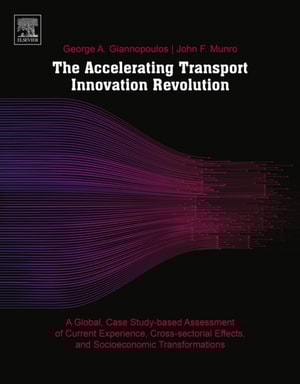
The Accelerating Transport Innovation Revolution: A Global, Case Study-based Assessment of Current Experience, Cross-sectorial Effects and Socioeconomic Transformations, offers a comprehensive view of current state-of-the-art and practices around the world to create innovation on a revolutionary scale and connect research to commercial exploitation of its results.
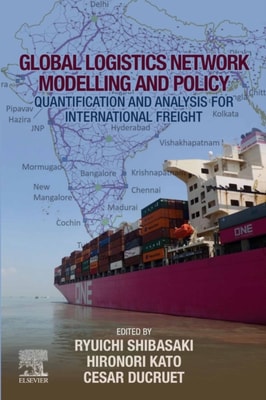
Global Logistics Network Modelling and Policy provides guidelines on quality policy, covering investments, management and planning for port and hinterland infrastructure, roads, railways and inland waterway ports.
Introduction to Modeling in Physiology and Medicine, Second Edition, develops a clear understanding of the fundamental principles of good modeling methodology.
Uncertainties in Numerical Weather Prediction is a comprehensive work on the most current understandings of uncertainties and predictability in numerical simulations of the atmosphere.
The purpose of this book is to present a comprehensive review of the latest research and development trends at the international level for modeling and optimization of the supplier selection process for different industrial sectors.
Principles and Practice of Big Data: Preparing, Sharing, and Analyzing Complex Information, Second Edition updates and expands on the first edition, bringing a set of techniques and algorithms that are tailored to Big Data projects.
Problems facing manufacturing clusters that intersect information technology, process management, and optimization within the Internet of Things (IoT) are examined in this book.
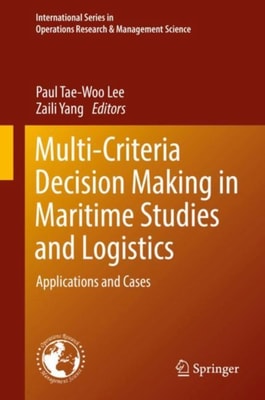
This book describes a wide range real-case applications of Multi-Criteria Decision Making (MCDM) in maritime related subjects including shipping, port, maritime logistics, cruise ports, waterfront developments, and shipping finance, etc.
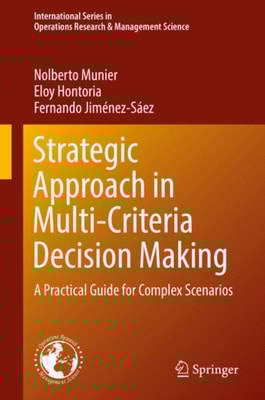
This book examines multiple criteria decision making (MCDM) and presents the Sequential Interactive Modelling for Urban Systems (SIMUS) as a method to be used for strategic decision making.
This book assesses potential developments of terrorism and ways to prevent it-the growing threats as new technologies become available - and how the same new technologies may help trap those with potential mal-intent.