This second edition of a pioneering technical work in biomedical informatics provides a very readable treatment of the deep computational ideas at the foundation of the field.
Parameter Estimation and Inverse Problems, Second Edition provides geoscience students and professionals with answers to common questions like how one can derive a physical model from a finite set of observations containing errors, and how one may determine the quality of such a model.
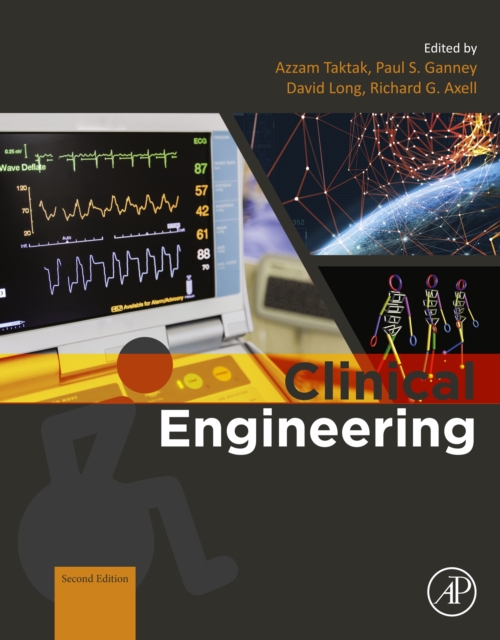
Clinical Engineering: A Handbook for Clinical and Biomedical Engineers, Second Edition, helps professionals and students in clinical engineering successfully deploy medical technologies.
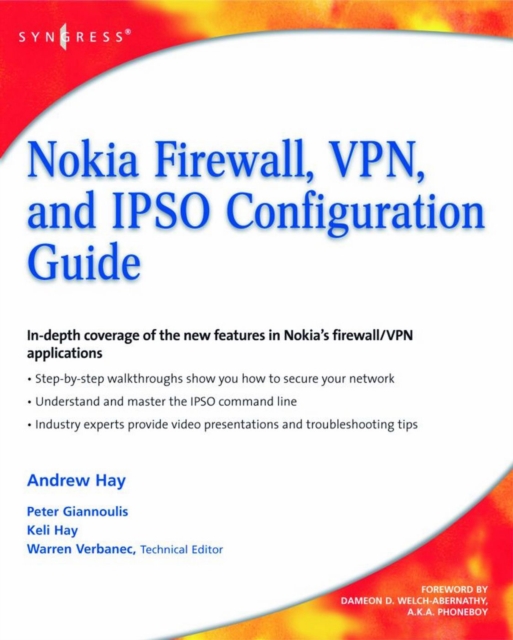
"e;While Nokia is perhaps most recognized for its leadership in the mobile phone market, they have successfully demonstrated their knowledge of the Internet security appliance market and its customers requirements.
Principles of Biomedial Informatics provides a foundation for understanding the fundamentals of biomedical informatics, which deals with the storage, retrieval, and use of biomedical data for biological problem solving and medical decision making.
Precision Agriculture: Evolution, Insights and Emerging Trends presents a complete guide from foundational concepts to the economic, commercial and environmental implications of the approach.
Data Sharing Between Supply Chain Actors examines the function of Track and Trace (T&T) which enables companies to know the location of various objects and the history of its movement.
Bio-Inspired Strategies for Modeling and Detection in Diabetes Mellitus Treatment focuses on bio-inspired techniques such as modelling to generate control algorithms for the treatment of diabetes mellitus.
Picture Fuzzy Logic and Its Applications in Decision Making Problems provides methodological frameworks and the latest empirical research findings in the field of picture fuzzy operators, and their applications in scientific research and real-world engineering problems.
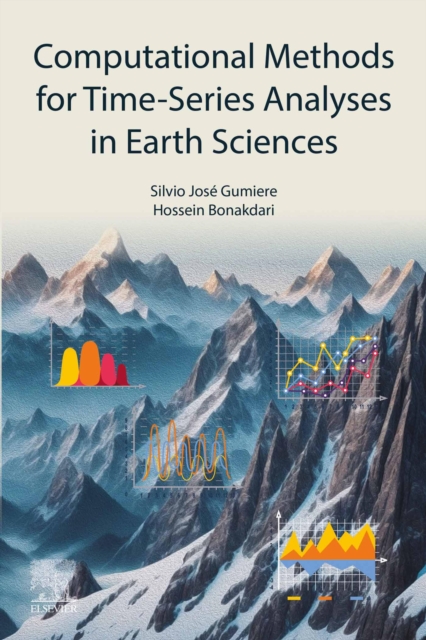
Computational Methods for Time-Series Analyses in Earth Sciences bridges the gap between theoretical knowledge and practical application, offering a deep dive into the utilization of R programming for managing, analyzing, and forecasting time-series data within the realm of Earth sciences.