If your health care organization is typical, you were successful in getting your electronic medical record (EMR) system installed on time and within budget.
This book explores how medical device integration (MDI) supports quality patient care and better clinical outcomes by reducing clinical documentation transcription errors, improving data accuracy and density within clinical records and ensuring the complete capture of medical device information on patients.
This third edition of HIMSS' award-winning, bestseller explores how clinicians, patients, and health IT stakeholders are collaborating to support high-value care through health IT.
The editors of the HIMSS Books' best-seller Health: From Smartphones to Smart Systems have returned to deliver an expansive survey of the initiatives, innovators, and technologies driving the patient-centered mobile healthcare revolution.
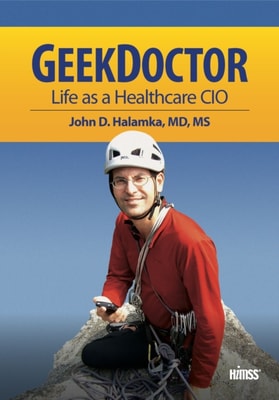
In his highly regarded blog, Life as a Healthcare CIO, John Halamka records his experiences with health IT leadership, infrastructure, applications, policies, management, governance, and standardization of data.
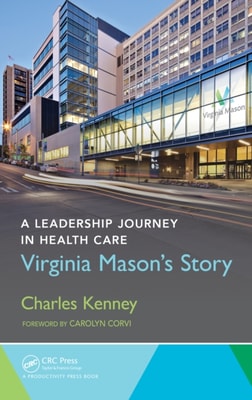
Since adapting the principles of the Toyota Production System to health care in 2002, Virginia Mason Health System has made enormous leaps forward in quality, safety, patient experience of care, and affordability.
Without a governance structure, IT at many hospitals and healthcare systems is a haphazard endeavor that typically results in late, over-budget projects and, ultimately, disparate systems.
As the most common health-care intervention, prescription drug use shares the most important characteristics of the health-care system in the United States.
Both the demographics and lack of resources in the health and well-being industry are increasingly forcing us to find alternative solutions for individualized health and social care.
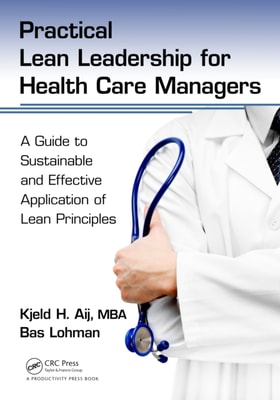
The application of Lean tools appears relatively simple, but the change in culture required to turn Lean into a lasting success requires strong leadership.
Organizations around the world are using Lean to redesign care and improve processes in a way that achieves and sustains meaningful results for patients, staff, physicians, and health systems.
While many health care organizations need to improve health care quality and lower costs, most lack specific strategies and tactics for implementing these changes.
Healthcare Informatics: Improving Efficiency through Technology, Analytics, and Management supplies an understanding of the different types of healthcare service providers, corresponding information technologies, analytic methods, and data issues that play a vital role in transforming the healthcare industry.
Based on the author's years of experience working with Toyota's master teachers and with companies in the midst of great change, this book follows the story established in the Shingo Prize-winning book, Andy & Me: Crisis & Transformation on the Lean Journey.
This book reveals and describes the leadership and culture change required to remove waste from healthcare processes and eliminate the root cause of soaring costs, poor quality and safety, and limited access.
This book provides a wide spectrum of readers with comprehensive but easily understandable protocols for the assessment and training of wheelchair skills.
As an increasing number of individuals go to work in the nonprofit sector, nonprofit managers need support on how best to build their human resource management capacity.
In Bringing Value to Healthcare: Practical Steps for Getting to a Market-Based Model, Rita Numerof and Michael Abrams lay out the roadmap to a healthcare system that is accountable for delivering optimal patient outcomes at a sustainable cost.
Improving the quality of healthcare, while increasing accessibility and lowering costs, is a complex dilemma facing rural communities around the world.
This book offers a new perspective on improving healthcare that draws inspiration from sources as diverse as American healthcare history, Lean Six Sigma, patient experience, employee engagement, clinical microsystems, physician burnout, and industrial design thinking.
This book explains why the fundamental structures of 20th century American healthcare have failed to keep up with American industry in terms of quality and cost.
The author's previous book, Transition to 21st Century Healthcare: A Guide for Leaders and Quality Professionals, provides a high-level view of American healthcare as transitioning through a period of industrialization, breaking down the fading structures of 20th century healthcare, and paving the way for 21st century healthcare.
This important volume provide a one-stop resource on the SAFER Guides along with the guides themselves and information on their use, development, and evaluation.
Edited by a professor at Harvard Medical School who has extensive experience in this field, this important and timely book presents a variety of perspectives on the organization of patient medical records around patient problems, presenting a more effective problem-oriented approach rather than the traditional data-oriented approach.
Healthcare operations, in hospitals and home healthcare settings, are inundated with complex fuzzy features that impose difficulties in the creation of work schedules.
Many companies conduct Lean training and projects, but few have tapped the wealth of ideas in the minds of their staff like Baylor Scott and White Health.
As healthcare moves from volume to value, payment models and delivery systems will need to change their focus from the individual patient to a population orientation.
A decade ago, UK HealthCare recognized the need to reposition itself as a regional referral center, focusing on advanced subspecialty care for the entire state of Kentucky.
Healthcare Technology Management: A Systematic Approach offers a comprehensive description of a method for providing safe and cost effective healthcare technology management (HTM).
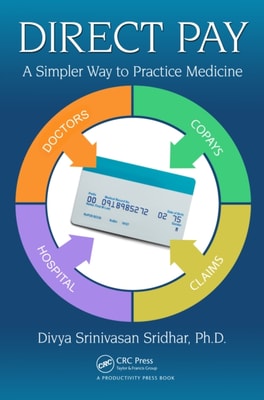
Direct Pay: A Simpler Way to Practice Medicine examines the direct pay business model as a policy alternative and potential policy solution to the economic, technological, and sociocultural problems that have emerged for practicing physicians as a result of the Affordable Care Act.
Revenue cycle management (RCM) refers to an institution's financial management process that helps track, identify, collect, and manage incoming payments.
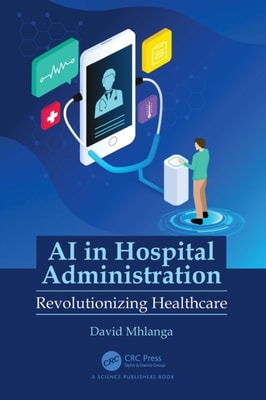
AI in Hospital Administration: Revolutionizing Healthcare is a groundbreaking book that explores the transformative potential of artificial intelligence (AI) in hospital administration and its impact on revolutionizing healthcare.