Comprehensive, concise and easily accessible, this is the first health economics dictionary of its kind and is an essential reference tool for everyone involved, or interested in, healthcare.
In this introductory text, the author presents the law relating to child care and the reforms introduced by the Children Act 1989, assessing its impact on child care practice and procedures.
The National Service Framework for mental health aims to provide uniformly good systems so that mental health problems are detected and therefore treated early.
Widespread recognition of the benefits of minimally invasive procedures in surgery and medicine is resulting in the rapid development of new advances and new techniques in every speciality.
Organizations around the world are using Lean to redesign care and improve processes in a way that achieves and sustains meaningful results for patients, staff, physicians, and health systems.
Both the demographics and lack of resources in the health and well-being industry are increasingly forcing us to find alternative solutions for individualized health and social care.
The NHS and independent healthcare sectors increasingly depend on the contributions of the migrant workforce to make up for serious shortfalls in staff numbers.
This book is based on the findings of a nationwide study, the aim of which was to analyse general practitioners' performance as gatekeepers of the Dutch healthcare system.
Conciliation is the term used in the National Health Service to describe a particular form of dispute resolution that is used in relation to the complaints process.
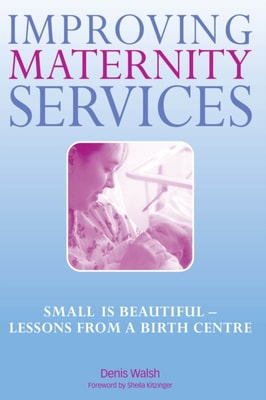
This title includes Foreword by Sheila Kitzinger, Writer, Researcher, Activist and Honorary Professor, Wolfson School of Health Sciences, Thames Valley University.
This work traces and anticipates past, present and future changes in mental health services to assess the impact both of developments in care, and of the implications of new organisational change.
'Successful medical leaders are usually, but not always, experienced and credible clinicians with good people skills, who look beyond the boundaries of their own specialty or institution, who are positive and perseverant and who are prepared to take reasonable risks to achieve their goals.
The proposed abolition of Primary Care Trusts and transfer of their commissioning functions to GP consortia have been greeted with intense excitement by some GPs, and with extreme trepidation by others.
Managing a dental practice has become increasingly complex in recent years, after changes within both the National Health Service and the private sector.
The General Practice Jigsaw provides comprehensive and up-to-date information on the future of education training and professional development in general practice and primary care.
Patient and public involvement in health and social care has become a key element of government policy, and the need to listen and act on the views of patients and the public is an increasingly integral part of the planning and delivery of healthcare.
Recent changes to the health service including new structures and ways of working at both local and national levels are having major influences on the working lives of every health visitor and community nurse and on their professional opportunities.
The impressive progress of medical science over the nineteenth and twentieth centuries has tended to overshadow the art of caring for the patient and their families.
Vision and Value in Health Information offers a significant challenge: to find a place for health information in the modernization of health services in the UK.
The introduction of the new General Medical Services contract for the payment and reward of general practice and GP practices will inevitably change the way in which primary care is delivered.