This book comprehensively explores the messy and contested relationship between everyday practices of remittance sending and receiving, processes of market making, and operations of micro- and global finance.
With stock market swings due to unethical behavior, fuel price escalation due to increased demand, and climate disasters due to global warming, operating in a socially responsible manner is quickly moving from the realm of a nice idea to abusiness imperative.
In the digital era, the pace of technological advancement is unprecedented, and the interconnectivity of systems and processes has reached unprecedented levels.
Saudi Arabia's Transformation: Uncertainty and Sustainability offers a compelling account of the Kingdom's ambitious journey to reshape its future under Saudi Vision 2030.
Saudi Arabia's Transformation: Uncertainty and Sustainability offers a compelling account of the Kingdom's ambitious journey to reshape its future under Saudi Vision 2030.
In the digital era, the pace of technological advancement is unprecedented, and the interconnectivity of systems and processes has reached unprecedented levels.
The Politicized Market Economy: Alcohol in Brazil's Energy Strategy examines Brazil's ambitious National Alcohol Program (Proalcool) as a case study in the interplay between government policies and market forces in a politicized market economy.
The Politicized Market Economy: Alcohol in Brazil's Energy Strategy examines Brazil's ambitious National Alcohol Program (Proalcool) as a case study in the interplay between government policies and market forces in a politicized market economy.
A FINANCIAL TIMES BEST BOOK OF 2024The world-renowned economist offers a ground-breaking new vision for inclusive prosperityLeft behind places can be found in prosperous countries from South Yorkshire, integral to the industrial revolution and now England s poorest county, to Barranquilla, once Colombia s portal to the Caribbean and now struggling.
This research volume aims at outlining the substantial role of information asymmetry in agri-food chains and how building trust and mitigating this problem could enhance the performance of these chains.
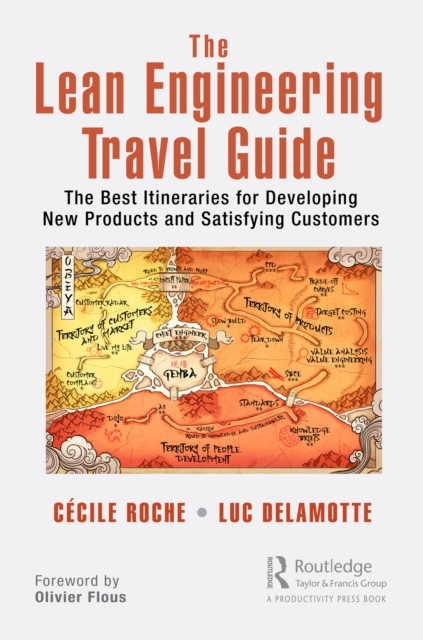
In a pull production system, the final process pulls needed parts from the previous process, which pulls from the process before it, and so on, as determined by customer demand.
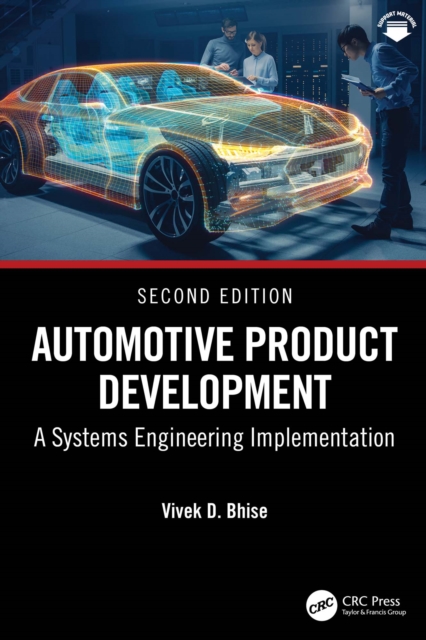
This new edition continues to explore the intricate processes of designing, developing, and manufacturing automotive products by integrating multiple levels of complex systems.
Africa stands at a critical juncture in its development trajectory, grappling with the twin challenges of climate vulnerability and persistent socio-economic inequality.
The studies in this book use Hegelian concepts and methodology to address issues such as the definition of nature, the concept of life, the relationship between humans and their natural environment, the principles of environmental ethics, technique, responsibility, human rights, the climate threat, and the challenges of economics facing the requirement of environmental and social sustainability.
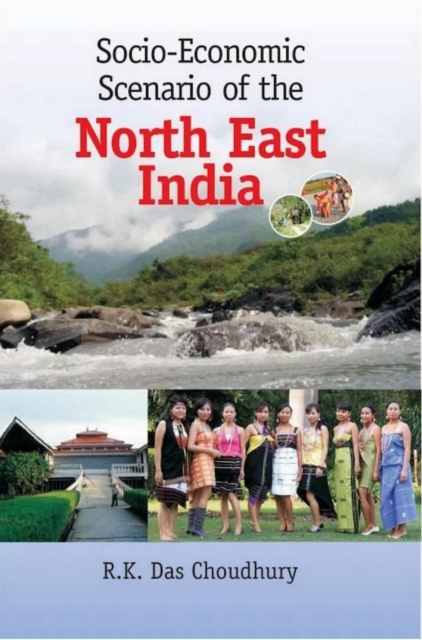
This book describes more or less a comprehensive picture, not only of historical, geographical and demographical backgrounds, but also of various aspects of socio-economic condition of the people of all the North East states including Sikkim.
This book describes more or less a comprehensive picture, not only of historical, geographical and demographical backgrounds, but also of various aspects of socio-economic condition of the people of all the North East states including Sikkim.
I hereby have the pleasure to introduce an important and excellent work about the economic history and modern diversification of the Libyan economy, in which the information has been presented and analysed in a way that answers many qu- tions about the unique Libyan community and its economic system.
A distinguished international group of central bankers, commercial bankers, entrepreneurs, academic advisors, policymakers, and representatives of development finance organizations and donor agencies, brought together by KfW, examines in this book the future of financial sector development in Southeast Europe.
As the world continues to grapple with a range of practical development challenges that are directly linked to livelihood concerns about human well-being and declining living standards, often overlooked is the human right to development, which remains largely unfulfilled.
"e;Urgency asks us to transform our cities and re-embed them into soil, water and living organisms to safeguard our planet's resources and restore biodiversity.
The wntmgs by Japanese and Gennan economists presented here originated against the backdrop of ongoing globalization processes and notable fluctuations in regional economic dynamics observable at the same time, primarily in the East and South East Asian area.
With the ongoing restructuring in Sudan, structural issues such as the need for skill development and interaction with technological change need an in-depth analysis that this book offers.
This Encycolpaedic dictionary in eleven volumes has been essentially a compilation and editing of terms and expressions to provide students at all levels with a handy and reliable source for definitions of economic terms along with their interpretations, statements of economic laws, theories and principles, and descriptions of economic and financial institutions.
In 2003, Goldman Sachs published a startling report on the BRICs (Brazil, Russia, India, and China) region: These four countries would be larger than the G6 economics within 40 years, muscling their way to economic dominance over the coming decades, and powering past developed countries such as the United Kingdom, Germany, and Japan.
This Encycolpaedic dictionary in eleven volumes has been essentially a compilation and editing of terms and expressions to provide students at all levels with a handy and reliable source for definitions of economic terms along with their interpretations, statements of economic laws, theories and principles, and descriptions of economic and financial institutions.
The Cartesian view of man being the controller of nature has generated an economic system, whether capitalist or Marxist, which exploits nature to produce more and more goods and services to meet the material needs of society.
To truly understand AIDS and sexual behaviour we must Possess the necessary knowledge and factual information acquired through formal education and teaching, self-learning and reading, and the personal experience of ourselves and others.