The thought-provoking book presents alternative viewpoints to mainstream macroeconomic theory, questions conventional policy wisdom and suggests a systematic re-orientation of current macroeconomic and financial regulatory policies in India.
This book assesses how efficient primary and upper primary education is across different states of India considering both output oriented and input oriented measures of technical efficiency.
This book examines India's ten years of experience developing Special Economic Zones (SEZs) and the performance of SEZs in the context of India's growing international engagement, its endeavours to attract domestic and foreign investment in manufacturing and services and its aim to increase and diversify exports of goods and services.
This book demonstrates the changing dynamics of India's engagement with Africa, focusing on trade, investment, official development assistance, capacity building activities and the diaspora.
This book investigates the less-explored dimensions of how industries in different Indian subnational spaces or states have responded to the growing phenomenon of internationalization.
This book examines the performance of organized retail chains supplying the agri-input and output services in terms of achieving their objective of utilising collective bargaining power in the marketing of their agricultural produce, integrating empirical experience from India and other selected developing countries.
This book addresses topical development issues in India, ranging from land acquisition, poverty alleviation programs, labor market issues, the public-private partnership (PPP) model and fiscal federalism.
Middle India and Rural-Urban Development explores the socio-economic conditions of an 'India' that falls between the cracks of macro-economic analysis, sectoral research and micro-level ethnography.
This book presents an enquiry into the interface between nature, economy and society, which is still in its early stages, notwithstanding the commendable progress and advances made in the field of environmental and natural resource economics within the ever-expanding boundaries of economics as a discipline.
This book highlights the development disparities in India and considers three complex areas of development - economic wellbeing, human progress and agricultural development - over a period of forty years since the 1970s.
The book examines the status of public service in developing countries, in the sectors of health, infrastructure, labour and marginalized populations, rural economy and public administration.
Though considerable research literature is now available on China-India relations, most of it still follows a conventional narrative, viewing the relationship through the narrow conflictual prism limited to South Asia than in the new, larger perspective, especially in the context of emerging East Asian dynamics.
This volume brings together research on development in three major areas of contemporary global relevance: agriculture and food security, energy, and the institutions of national innovation.
The changing dynamics of business worldwide have led organizations to look beyond traditional managerial practices while at the same time attempting to retain their core competitive advantages.
The changes following more than two decades of economic reforms and globalization of the Indian economy - at state, corporate sector, and consumer level - raise interesting questions on the ways in which the stakeholders will continue to engage on the world stage, politically, socially and economically.
In development literature Foreign Direct Investment (FDI) is traditionally considered to be instrumental for the economic growth of all countries, particularly the developing ones.
This brief views the environment through diverse lenses - those of standard economics, institutional economics, political science, environmental science and ecology.
At the outbreak of the global financial crisis, 2008, the G20 was widely acknowledged as helping prevent an even more serious decline in the global economy.
This work focuses on urban governance in the developing world, its aim being to bring a holistic perspective to the debate on urban governance in Asia and around the globe.
The book's 30 chapters are divided into three sections - international trade, economic development, macroeconomics and finance - and focus on the frontier issues in each.
This book is the product of a study conducted by the Tata Institute of Social Sciences (TISS) in collaboration with the United Nations Development Programme (UNDP) and Ministry of Urban Housing and Poverty Alleviation (MoHUPA).
In the light of multiple corporate debacles, financial crises and environmental disasters across the globe, the need for corporate goals to transition from simply maximising shareholder wealth to optimising stakeholder welfare is being echoed in various quarters.
Upon the backdrop of impressive progress made by the Indian economy during the last two decades after the large-scale economic reforms in the early 1990s, this book evaluates the performance of the economy on some income and non-income dimensions of development at the national, state and sectoral levels.
The book brings together implementation studies from the Asia Pacific countries in the context of the deadline of 2015 for achieving the Millennium Development Goals.
What changes are occurring at the macro and the sectoral levels, how the labour market changes are taking place and what impact is felt on the low income households are some of the questions that the present volume focuses on.
In production and service sectors we often come across situations where females remain largely overshadowed by males both in terms of wages and productivity.
Beyond Gandhian Economics is an attempt to establish that Gandhian Economics is not neoclassical in essence and that it goes beyond the defined domain of economics in analyzing social, political and ethical implications of economic actions or policies.
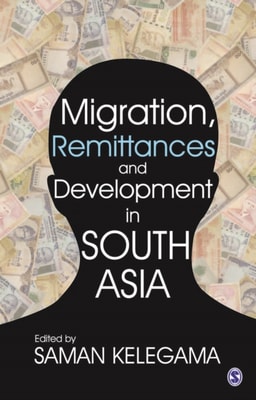
Migration, Remittances and Development in South Asia explores the impact of migration on development in South Asian countries, compiling extensive information on the migration flows and trends, migrant remittances and migration policies.