Focusing on both pre-colonial and post-colonial eras, this book aims to cultivate a greater understanding of globalisation processes in the context of leadership behaviour in Africa.
This book explores how corruption is now widely recognized as a major "e;disease"e; which threatens not only economic development but also the foundations of societies.
This book argues that development strategies have thus far failed in Western Africa because the many challenges afflicting the area have yet to be explored and understood from the perspective of institutional resources.
This book highlights the importance of understanding how trust and indigenous African cultural institutions enhance the development of entrepreneurial networks and relationships in Africa.
The book examines various aspects of Africa's external economy by focusing on regional monetary arrangements and how they are affected by devaluation episodes.
This book uses institutional data to examine and analyze the current governance structures of Multilateral Financial Institutions (MFIs) with the ultimate goal of reforming MFI governance models to be more responsive to the needs of developing countries.
This book presents stimulating new perspectives on three key sets of issues: a fair globalization, the policies that might be adopted in response to protectionist pressures, and sustainable development policies involving G7 and G20 actions to lay the foundations for renewed trust.
This book surveys Poland's move from being a post-feudal, backward, peripheral country to being a modern, capitalist, European state: from the partition of the commonwealth of Poland and Lithuania to the abolishment of 'second serfdom'; late industrialization to state socialism; post-partition fragmentation to post-Second World War westward dislocation; and from the 'Solidarnosc' movement to accession into the European Union.
This book uses electricity-sector reforms to question some of the preconceived ideas concerning the MENA region and to provide a broader analysis of related political economy issues.
The problems related to the process of industrialisation such as biodiversity depletion, climate change and a worsening of health and living conditions, especially but not only in developing countries, intensify.
The problems related to the process of industrialisation such as biodiversity depletion, climate change and a worsening of health and living conditions, especially but not only in developing countries, intensify.
This Palgrave Pivot looks through social, economic, institutional, and environmental lenses to examine sustainable development in India and Bangladesh.
This book analyzes the whole path to justice: from the decision to enter the path to justice until justice is achieved and applies a mixed-methods approach using quantitative and qualitative data.
This book explores the concept of reverse entrepreneurship, providing real-life examples of innovative start-ups and ventures hoping to internationalize.
This book explores the economic and social development of the Western Balkan region, a group of six countries that are potential candidates for EU membership.
This book offers important new insights into recent advances and perspectives in the field of political economy of development in Southeastern European countries.
This book presents an extensive study on the effectiveness of recent regulations on pharmaceutical prices in India, exploring the weaknesses in the design and implementation of pharmaceutical price controls and investigating what can be done to fix the broken system.
This contributed volume explores and reveals the new developments, dynamics and recommendations for entrepreneurship education in the Middle East and North Africa (MENA) region.
This book covers the multi-faceted incentives, trade-offs, and challenges associated with the economics and politics of resource efficiency investments.
This book brings order to the chaotic and rapidly evolving world of influencer marketing by providing readers with much needed context, frameworks, and best practices.
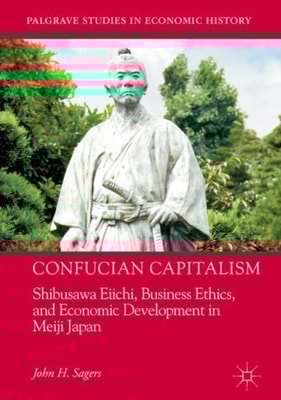
With the life story of Shibusawa Eiichi (1840-1931), one of the most important financiers and industrialists in modern Japanese history, as its narrative focal point, this book explores the challenges of importing modern business enterprises to Japan, where the pursuit of profit was considered beneath the dignity of the samurai elite.
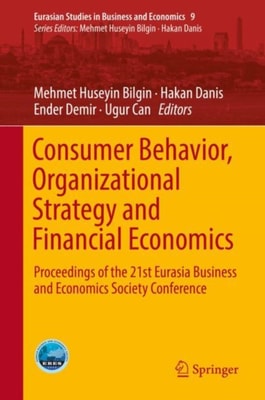
This volume presents selected articles from the 21st Eurasia Business and Economics Society (EBES) Conference, which was held in Budapest (Hungary) in 2017.