La tesis que inspira este libro es la necesidad de dejar a un lado la competencia destructiva entre las empresas si se quiere ser un ganador en el futuro, ampliando los horizontes del mercado y generando valor a través de la innovación.
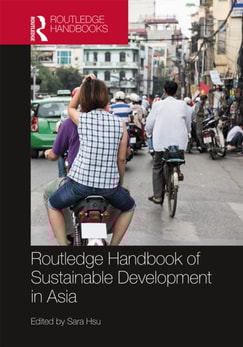
In the present global context, some countries still face many challenges to bringing about inclusive, efficient, and environmentally sustainable development.
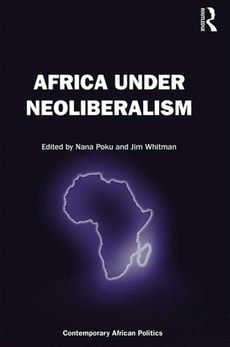
The period since the 1980s has seen sustained pressure on Africa's political elite to anchor the continent's development strategies in neoliberalism in exchange for vitally needed development assistance.
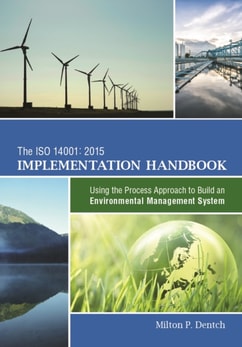
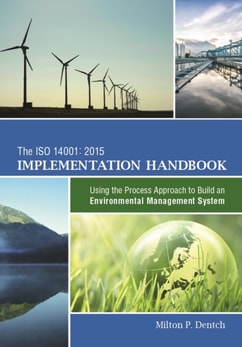
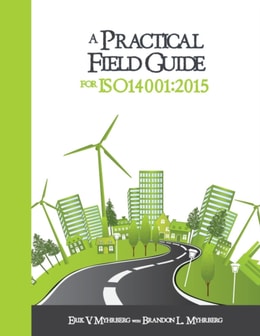
The field guide depicts step by step what must occur for organizations to create an effective environmental management system (EMS) in conformance with a ISO 14001:2015/a, whether from scratch or by transitioning from ISO 14001:2004.
This book examines the multi-layered aspects and the complexities of inclusive development in South Asia based on recent data and using innovative methodology.
A political economy analysis of the history of food security in the Arab world, including the role played by the global food price crisis in the Arab Spring and the Arab response aiming at greater food sovereignty via domestic food production and land acquisition overseas - the so-called land grab.
This book discusses the theory, method, and practice of risk economics and also examines climate change and disaster's theoretical and practical implications on capital formation and accumulation in the contemporary economic system.
With a population of 1 billion people and the world's second largest economy, China is fast becoming one of the most powerful and important countries in the world.
This book examines the multi-layered aspects and the complexities of inclusive development in South Asia based on recent data and using innovative methodology.
Soviet Agriculture in Perspective (1969) examines the framework within which Soviet agriculture had to operate from the start: the dilemma of a revolutionary regime in a backward peasant country, the straightjacket of a bureaucratic system inherited from Tsarism, made even more rigid by the internal tensions of the new society, and the imperative needs of economic development.
The performance of the manufacturing sector of the Indian economy was particularly dismal during the second half of the sixties and the whole of the seventies.
Beyond Decolonial African Philosophy dives into decoloniality discourse, challenging some of its shortcomings and offering alternative perspectives on the nature of Africanity and Afrotopia (Africa's better future) from leading African philosophers.
Wrecking Activities at Power Stations in the Soviet Union (1933) is a valuable historical document that presents a verbatim report of the trials of various Soviet and British engineers and workers accused of acts of sabotage against the Soviet energy infrastructure.
This volume uses cutting-edge theory and empirical analysis of channels of international interaction to build new knowledge about strategies of entrepreneurs, domestic and multinational firms, governments, and international organizations facing increasing globalization.
This book considers the nature of change at the World Bank, exploring both the external impetous for change, and the impact of the Bank's internal organization and culture.
This book is an introduction to one of the fast-developing core pillars in business, sustainability, as well as how it is closely tied into the concept of service.
The Communist Economic Challenge (1965) examines the substantial industrial development in the Soviet Union, and its European satellites, and China, looking at Khrushchev's boast that by 1970 the USSR's industrial output would surpass that of the USA.
This book is among the first to address the issue of assessing the efficiency of sustainable development financing from a theoretical and methodical point of view.
This book includes papers presented at the 11th International Conference "e;Economies of the Balkan and Eastern European Countries"e; (EBEEC), held in Bucharest, Romania, in May 2019.
This book presents insights from several countries in Latin America and beyond on how to organize critical sectors, such as education, roads and water, to improve quality, access and affordability.
Eversince the publication of Information India in the year 1989 the handy yearbook has been considered as a mini information software in print, rather than a book.
Diagnosis of the Brazilian Crisis delves into the complexities of Brazil's socio-economic challenges during a turbulent period of its history, offering a critical perspective on the role and responsibility of intellectuals in times of national crisis.
Considering the increasing importance of renewable energy for climate change mitigation, this book provides an overview of how renewable energy sources are integrated into the grid to promote better understanding among students and business professionals in the utility sector and across industries.
In the aftermath of the Arab Spring, and in light of socio-economic and geopolitical challenges facing governments old and new, women's rights and empowerment have gained new urgency and relevance.
The book examines the pattern of non-farm development at the national level and identifies the correlates and determinants of occupational diversification for the major states.
The economic liberalization of India, changes in global structures, and the rapid emergence of India on the global landscape have been accompanied by the dramatic rise in popular, public, and elite discourses that offer the promise to imagine India.
For several years, the government of Paraguay has sought to address the issue of informality, both as a response to poverty reduction and a means to expand its tax base.