This book examines five countries in South East Asia that are instructive case studies of how the region has had to negotiate pathways of development beyond crises and traps.
Dieses Buch zeigt auf, welche Pfade Entwicklungsländer verfolgen können, um ihren Handlungsspielraum zurückzugewinnen und die Lebensbedingungen der Menschen langfristig zu verbessern.
This topical volume deals with the major challenges of migration in the Global South and their governance, which are traditionally much less considered than migration to industrialized countries and its consequences.
This contributed volume explores and reveals the new developments, dynamics and recommendations for entrepreneurship education in the Middle East and North Africa (MENA) region.
This book offers new insights into the real and financial sectors in the post-pandemic European Union, with a specific focus on the countries of Central and Eastern Europe and a special reference to Croatia.
This book explores the diverse challenges facing the EU and in particular examines the impediments to financial stability and sustainable growth and how these can be overcome.
This book investigates if and how agricultural market structures and farm constraints affect the development of dynamic food and cash crop sectors and whether these sectors can contribute to economic transformation and poverty reduction in Africa.
This book provides the theoretical and analytical background necessary to understanding the process of growth and the implementation of economic policies.
This book analyses the effects of technological development, innovation, entrepreneurship and governance in middle income countries, such as Turkey, in detail.
The book examines the social processes which have shaped the development and organisation of various marketing practices and activities, and the markets associated with them.
This book provides a systematic examination of the relationship between industrial clusters and poverty, which is analyzed using a multidimensional framework.
Fostering inclusive green growth in Africa means addressing existing and emerging development challenges, while efficiently managing Africa's natural capital and building resilience to environmental, social and economic risks.
Exploring the elements that constitute the perceived luxuriousness of a brand, this book addresses the changing definitions of the term 'luxury' in today's world.
This book considers the role played by co-operative agriculture as a critical economic model which, in Australia, helped build public capital, drive economic development and impact political arrangements.
Reflecting the emergence of new organizational forms and hybrid organizations, this edited collection explores the processes of exchange, collaboration and technological management that have changed organizational structures.
This Palgrave Pivot empirically analyzes the role of conventional and interest-free Islamic banking in the growth process of developing Islamic nations.
Das Buch aus der Chefsache-Reihe zeigt auf, welche Bedeutung und Auswirkungen die digitale Transformation auf unser persönliches, gesellschaftliches und berufliches Umfeld hat.
The aim of this edited volume is to bring together the views of expert academics and practitioners on the latest regulatory developments in sustainable finance in Europe.
The impact of the COVID-19 pandemic on the global economy, just as with the Great Recession a decade earlier, has served to reinforce the fact that the world is hierarchically organized and the distribution of power between countries is distinctly asymmetric.
The impact of the COVID-19 pandemic on the global economy, just as with the Great Recession a decade earlier, has served to reinforce the fact that the world is hierarchically organized and the distribution of power between countries is distinctly asymmetric.
This book presents a state-of-the-art portrait of entrepreneurship in the transition economies of Central and Eastern Europe (CEE) and the Commonwealth of Independent States (CIS) as well as Georgia and Ukraine.
This book provides a critical perspective on several interconnected themes that relate to the implementation of both domestic and international environmental standards.
Responsible Management in Emerging Markets: A Multisectoral Focus is in response to the dearth of literature on responsible management in emerging economies.
This book sheds light on current issues in sustainable finance through an in-depth analysis and discussion of relevant sustainable products and sustainable initiatives of several financial institutions.
Oil and Gas in Trinidad and Tobago presents a historical economic review of the energy sector of Trinidad and Tobago, followed by a detailed evaluation of policies associated with resource abundance and the effects on the economy from various perspectives, including industrialization, labor productivity, education, export diversification, and competitiveness.
This book explores consumer protection in the major financial markets in the world and provides an international comparison among the countries of different cultural background and economic development.
This book provides the first comprehensive academic study of what China's trade with, and investment in, African countries mean for the socio-economic well-being of the continent.
This book presents a critical reassessment of theories of property rights, in response to conflicts and competition between different groups, and the state.
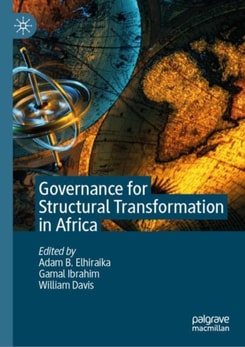
This book explores how better governance can help Africa to achieve structural transformation (understood to be the reallocation of factors of production across and within sectors to better support inclusive development), which history has shown to be key to sustained, inclusive growth.
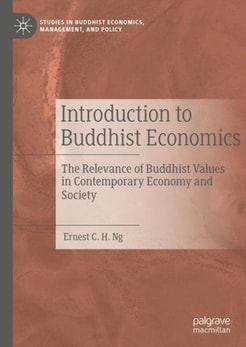
Living in a market-driven economy where short-term profit and economic growth appear to be the ultimate goal, this book explores how Buddhist teachings could bridge the divide between our spiritual and material needs and reconcile the tension between doing good for social interest and doing well for financial success.
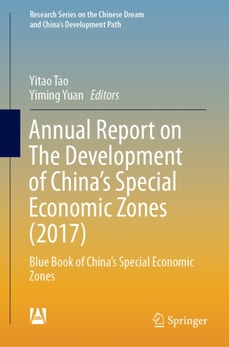
This Report objectively reflects the whole year's progress of politics, economy, society, culture, system, environment, innovation and reform as well as the problems, challenges and countermeasures in traditional special economic zones and new special economic zones.