Focusing on both pre-colonial and post-colonial eras, this book aims to cultivate a greater understanding of globalisation processes in the context of leadership behaviour in Africa.
This book is an analysis of the political and philosophical foundations of the development of India's economy, including discussions of what's gone wrong in the past and what can be done to rectify it.
This book presents an empirical investigation of the efforts that multinational pharmaceutical companies take in order to find a business model that allows for a profitable access to the Bottom of the Pyramid (BoP) markets.
This two-volume set presents the conference papers from the 1st International Conference on Economics, Development and Sustainability (EDESUS 2019), organized by the University of Economics and Business, Vietnam National University, Hanoi.
The first of this two-volume work brings to the fore marketing communication theories and concepts that are prominent in emerging economy contexts, and highlights the opportunities and challenges within these markets.
This book provides a comprehensive overview of Corporate Social Responsibility (CSR) in Indian corporations following the 2013 legal mandate on corporate spending of profits for CSR.
This volume explores the governance and management of science, technology, and innovation (STI) in relation to innovation policy and governance systems, highlighting its goal, challenges, and opportunities.
This volume explores the governance and management of science, technology, and innovation (STI) in relation to social inclusion and sustainability, highlighting its goal, challenges, and opportunities.
Brazil is the most populous economy in Latin America with the second highest GDP among the emerging BRIC economies, after China, and the second per capita GDP among the BRIC economies after Russia.
This edited volume brings together research on symbiotic themes of entrepreneurship, resource planning, and regional development and their impact on global-local business imperatives.
Amidst the constant stream of overly technical and excitable books heralding a blockchain revolution that's destined to be more disruptive than the Internet, this book stands apart for its more nuanced take, focusing on the potential for these new technologies to change developing countries for the better.
Social entrepreneurship is on the rise and social enterprises are solving some of the most critical and enduring social problems by using innovative, pragmatic and sustainable business models.
This book focuses on the implementation of the China-Pakistan Economic Corridor (CPEC), a multi-billion-dollar infrastructure development project intended to connect Asia with Europe, the Middle East and Africa.
There are two ways people coordinate their actions: through cooperation, exercised by economic power, and through control, exercised by political power.
Evaluation in recent decades has evolved from a tool for project appraisals to a more widely used framework for public decision-making and operational management.
This two-volume work provides a comprehensive overview of the Belt and Road Initiative, examining its impact on economic growth, trade, financial systems and international relations.
This two-volume work provides a comprehensive overview of the Belt and Road Initiative, examining its impact on economic growth, trade, financial systems and international relations.
This edited volume presents new means of quantifying the behavioral and consequential differences between technology-based and non-technology-based nascent entrepreneurs in varied economies.
This book explores the history of leisure in Chinese culture by tracing the development of Chinese philosophy and leisure values in Chinese tradition and civilization.
This book explores how and why Mexico s approach to the 2030 Agenda for Sustainable Development and Sustainable Development Goals (SDG) implementation with the Lopez Obrador administration is unsustainable and non-transformative, overshadowed by his vision of Mexico s Fourth Transformation .
This book explores the personal experiences of professionals who are a part of the post-colonial and late-industrializing reality in the global value chain in Singapore.
Considering Asian cities ranging from Taipei, Hong Kong and Bangkok to Hanoi, Nanjing and Seoul, this collection discusses the socio-political processes of how neoliberalization entwines with local political economies and legacies of 'developmental' or 'socialist' statism to produce urban contestations centered on housing.
An Exploration into China's Economic Development and Electricity Demand by the Year 2050, is an exploratory study of national and regional economic development, energy demand and electricity demand in China by the year of 2050.
This book presents research, analysis, and reflections on the major issues of Guatemalan development and democracy: the role of the military, the involvement of Mayan communities in national development, the possible emergence of more inclusive political institutions and the roles of international forces and agencies in Guatemalan social change.
A case study of why Third World countries are still poor, the premise of this book is that while some progress has been made in transforming the political economy of Ecuador, certain behaviors, beliefs and attitudes have kept the country from developing in ways that otherwise would have been possible.
A revealing look at the common causes of failures in randomized control experiments during field reseach-and how to avoid themAll across the social sciences, from development economics to political science departments, researchers are going into the field to collect data and learn about the world.
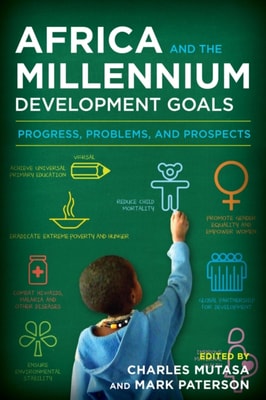
This unique work by the Centre for Conflict Resolution (CCR), Cape Town, South Africa, tracks the progress Africa has made in achieving the United Nations' Millennium Development Goals (MDGs) since 2000.
Brazil is the world's sixth-largest economy, and for the first three-quarters of the twentieth century was one of the fastest-growing countries in the world.
Justin Yifu Lin's groundbreaking account of how developing countries can help themselves-now fully updatedHow can developing countries grow their economies?
How to better manage systemic risks-from cyber attacks and pandemics to financial crises and climate change-in a globalized worldThe Butterfly Defect addresses the widening gap between the new systemic risks generated by globalization and their effective management.
Power to the People examines the varied but interconnected relationships between energy consumption and economic development in Europe over the last five centuries.
Why India's problems won't be solved by rapid economic growth aloneWhen India became independent in 1947 after two centuries of colonial rule, it immediately adopted a firmly democratic political system, with multiple parties, freedom of speech, and extensive political rights.
The report from the CSIS Project on Prosperity and Development outlines a new tool for policymakers to encourage private-sector development in developing nations.
A groundbreaking look at Western and Eastern social development from the end of the ice age to todayIn the past thirty years, there have been fierce debates over how civilizations develop and why the West became so powerful.
In an era where global cities emerge as pivotal hubs for economic growth and cultural fusion, this book presents an innovative approach to understanding and leveraging the rich tapestry of diversity in urban environments.
Explaining-and solving-the oil curse in the developing worldCountries that are rich in petroleum have less democracy, less economic stability, and more frequent civil wars than countries without oil.
Understanding Globalization introduces students to the concept of globalization, providing an essential history, overview of key themes and theories, and a wealth of engaging examples.