In the nineteen 60s and 70s, the University of Dar es salaam was recognised internationally as a great academic institution, and the site of anti-colonialist, anti-imperialist, socialist studies and activism.
This study examines, traces and maps the poverty reduction policies adopted by six countries in Eastern and Southern Africa since the mid-1990s with a view to highlighting differences and similarities.
This publication addresses the extent to which social work curricula in Kenya prepares graduates to handle issues of poverty and social development, the specific knowledge and skills that they are equipped with an existing gaps therein.
This volume contains framework papers prepared for a collaborative research project on Reproductive Health, Economic Growth and Poverty Reduction in Africa, an initiative of the African Economic Research Consortium (AERC).
For the almost 40 years of its existence, ANPOCS has contributed to introducing or consolidating new thematic areas in the academic agenda of debates in the Brazilian social sciences.
Building on Fossungu,s earlier works, and essentially providing Africa with original, critical, and multi-level analyses of the trio of globalization, democracy, and national determination, this book theorizes that African states have to unite in order to have any impact in the global economy.
In spite of its surging popularity with scholars and environment conservation and management aid experts, scientific environmental epistemology does not seem to be the answer to the forestry and environmental problems that Africa is facing.
The dawn of the twenty-first century heralded an apparent change of fortunes for most sub-Saharan African economies, with annual growth averaging over 5% for fifteen years.
One of the fundamental challenges in rethinking and remaking development in Africa from a Pan African perspective is that too much ,mere talk, and ,blame game, have played out at the expense of ,real action,.
This book draws on years of rich empirical research on radio drama production in Cameroon to offer a strikingly new perspective in Development Theatre discourse in Africa.
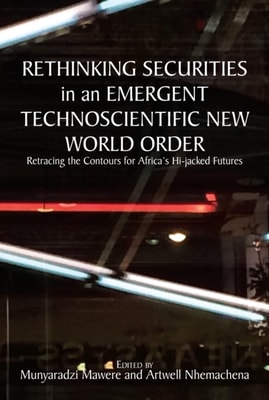
This book delves into the topical issue of the future of humanity and of being African in a world increasingly subjected to the power of technology and the dominance of a mercilessly self-absolved global elite.
From Plough to Entrepreneurship is motivated largely by the fact that Africans were deprived of economic and political autonomy by white government in South Africa.
Financing Africa,s development requires ingenuity, discipline, and an understanding of fiscal systems , the entirety of government revenues and expenditures, including taxation and debt.
The global epistemological gendarmerie do not only police epistemologies but they also infect the world with infectious epidemics of laughter targeted at those people whose epistemologies are offhandedly condemned as sterile and useless in controlling and containing pandemics.
Cet ouvrage qui est consacr, , la femme, aborde l'une des probl,matiques d'actualit, lourde qu'est la paix et vise , d,montrer que les femmes sont des v,ritables arm,es au service de la paix et du d,veloppement.
It is now widely recognised that rising inequality of income and wealth on the one hand and a slowdown in the rate of economic growth on the other are two of the most important challenges faced today by the global economy as well as by most of the developing economies.
This book analyses the transition of South Asian nations from agrarian to industrialized economies, which is accompanied by a widening gap between agricultural and non-agricultural growth rates and a greater income disparity between farmers and urban residents.
Desde la conformación del Estado nacional a fines del siglo XIX hasta las noticias de ayer, la élite empresarial ha sido un actor central con un poder de veto determinante en la economía argentina.
Digital transformation in organisations can improve business agility, operational efficiency, customer service, and contribute to sustainability initiatives.
Marcelo Paladino y Héctor Rocha son los dos autores que más han contribuido en la Argentina, y muy probablemente también en América Latina, a analizar y difundir la importante cuestión de la cooperación público-privada.