En noviembre de 2008, mientras el derrumbe financiero global se profundizaba, la entonces octogenaria reina Isabel visitó la Escuela de Economía de Londres y sorprendió a los prestigiosos académicos allí reunidos con una pregunta inocente pero muy aguda: dada la magnitud de la crisis, ¿por qué nadie la había advertido?
An award-winning journalist presents a tour-de-force analysisdrawing from history, economics, sociology, and popular cultureof the profound and transformative years of the early 2020s, both for individuals and for the global economy.
The scientific study of complex systems has transformed a wide range of disciplines in recent years, enabling researchers in both the natural and social sciences to model and predict phenomena as diverse as earthquakes, global warming, demographic patterns, financial crises, and the failure of materials.
Belief and Rule Compliance: An Experimental Comparison of Muslim and Non-Muslim Economic Behavior uses modern behavioral science and game theory to examine the behavior and compliance of Muslim populations to Islamic Finance laws and norms.
A Fast and Frugal Finance: Bridging Contemporary Behavioural Finance and Ecological Rationality adds psychological reality to classical financial reasoning.
The Western world has experienced extraordinary economic progress throughout the last six decades, a prosperous period so extended that continuous economic growth has come to seem normal.
An eminent economist warns that Western nations’ economic expectations for the future are way out of sync with the realities of economic stagnation and stringent steps will be required to avoid massive political and economic upheaval.
Stressing the concrete applications of economic forecasting, Practical Business Forecasting is accessible to a wide-range of readers, requiring only a familiarity with basic statistics.
Volumes 2A and 2B of The Handbook of Economic Growth summarize recent advances in theoretical and empirical work while offering new perspectives on a range of growth mechanisms, from the roles played by institutions and organizations to the ways factors beyond capital accumulation and technological change can affect growth.
Biometrics - the physiological and/or behavioural characteristics that can be used to verify the identity of an individual - are no longer just being used in high security locations; they are now in use in major, mainstream government and commercial applications.
Electric Utility Resource Planning: Past, Present and Future covers the balance of renewable costs, energy storage, and flexible backstop mechanisms needed in electric utility resource planning.
Changing the Indian Economy: Renewal, Reform and Revival explores the fact that post-Modi India is witnessing unprecedented socioeconomic change, truly labeled as Modi's Mantra and his attempts to morph the Indian economic landscape.
Handbook of the Economics of Marketing, Volume One: Marketing and Economics mixes empirical work in industrial organization with quantitative marketing tools, presenting tactics that help researchers tackle problems with a balance of intuition and skepticism.
The annual Asian Development Outlook analyzes economic performance in the past year and offers forecasts for the next 2 years for the 45 economies in Asia and the Pacific that make up developing Asia.
This volume investigates the accuracy and dynamic performance of a high-frequency forecast model for the Japanese and United States economies based on the Current Quarter Model (CQM) or High Frequency Model (HFM) developed by the late Professor Emeritus Lawrence R.
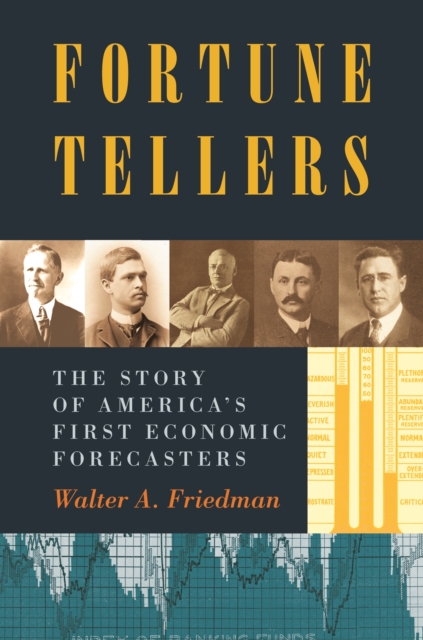
A gripping history of the pioneers who sought to use science to predict financial marketsThe period leading up to the Great Depression witnessed the rise of the economic forecasters, pioneers who sought to use the tools of science to predict the future, with the aim of profiting from their forecasts.
A new, evolutionary explanation of markets and investor behaviorHalf of all Americans have money in the stock market, yet economists can't agree on whether investors and markets are rational and efficient, as modern financial theory assumes, or irrational and inefficient, as behavioral economists believe.
The technique of regression analysis is used so often in business and economics today that an understanding of its use is necessary for almost everyone engaged in the field.
As Singapore enters its 50th year of independence, it is a time for introspection to look back at the successes and challenges of the past, but is also a crucial time to consider what the future holds for the nation.
With the Taiwan experience as background, the major theme of this conference is to examine prospective economic development of Taiwan in the 1990s and beyond, together with discussions of the economic development of other countries in the Pacific Rim.