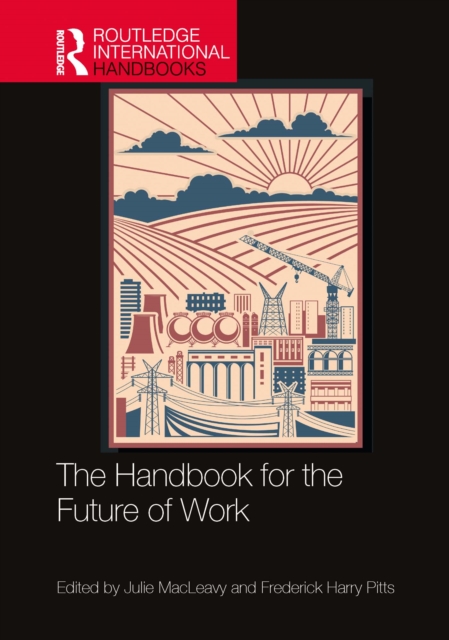
The Handbook for the Future of Work offers a timely and critical analysis of the transformative forces shaping work and employment in the twenty-first century.
El trabajo que el lector tiene en sus manos es el resultado de poco más de una década de investigación sobre la formación, transformación e integración de la clase obrera en la historia de la provincia de Entre Ríos.
'A first-class work of reporting [and] a work of compassion for Indigenous peoples everywhere' BENJAMIN MOSER, Pulitzer Prize-winning author of SONTAG'Reads like a wondrous mixture of Heart of Darkness and In Cold Blood.
One of the most powerful books in the social sciences ever written Thomas Piketty'The twentieth century's most prophetic critic of capitalism' Prospect Polanyi s revolutionary work is a must-read Mariana MazzucatoKarl Polanyi's landmark 1944 work is one of the earliest and most powerful critiques of unregulated markets.
Con un bagaje teorico y conceptual respetable, el profesor Caicedo Moscote se empela en su deber de volver la catedra un escenario para que los alumnos aprendan a pensar el derecho desde sus fuentes y fundamentos historicos culturales.
*The #1 Sunday Times bestseller*'Explosive and beautifully told these truths can set us free' - Danny Dorling'This book is dynamite shining a spotlight on the evils of neoliberalism, shattering the myth that there is no alternative , and laying the foundations for a new politics' - Caroline LucasHow can you fight something if you don t know it exists?
Written by a team of leading China specialists, this updated 2nd edition of Chinese Politics explores the dynamics of state power and politics in contemporary China, focusing on the Xi Jinping era.
Written by a team of leading China specialists, this updated 2nd edition of Chinese Politics explores the dynamics of state power and politics in contemporary China, focusing on the Xi Jinping era.
A major reappraisal, by the Nobel-prizewinning economist, of the relationship between capitalism and freedomDespite its manifest failures, the narrative of neoliberalism retains its grip on the public mind and the policies of governments all over the world.
First published in 1982, The Liberation of Capital develops a challenging and critical confrontation of orthodox and Marxist theories of capital with the unifying concept of 'free capital' - human creativity and intellectually-derived productivity.
First published in 1982, The Liberation of Capital develops a challenging and critical confrontation of orthodox and Marxist theories of capital with the unifying concept of 'free capital' - human creativity and intellectually-derived productivity.
Even as the rewards of work decline and its demands on us increase, many people double-down on their commitment to wage slavery-working harder, doing overtime, and learning to hustle.
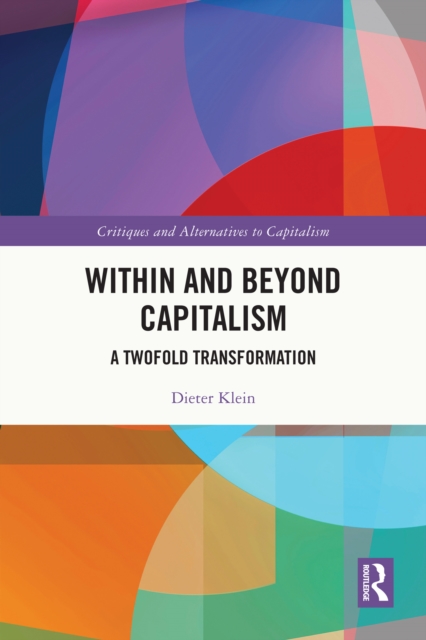
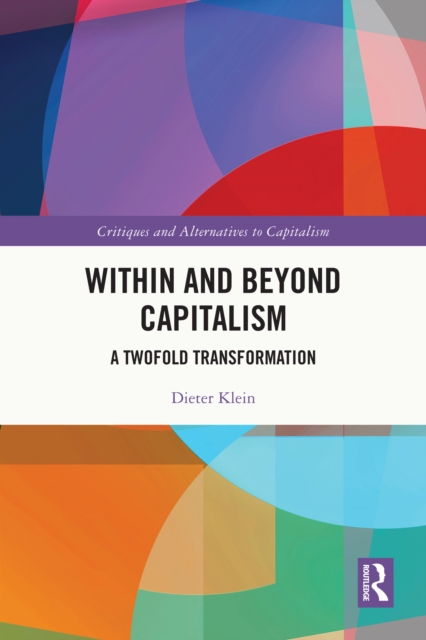
This book argues for a twofold transformation to mitigate environmental catastrophe, avert war and overcome poverty and authoritarianism: a struggle for democratic, peace-oriented, social and ecological changes within the framework of a post-neoliberal, but still bourgeois-capitalist society, and a drive towards entry-level projects aimed at a great transformation beyond capitalism.
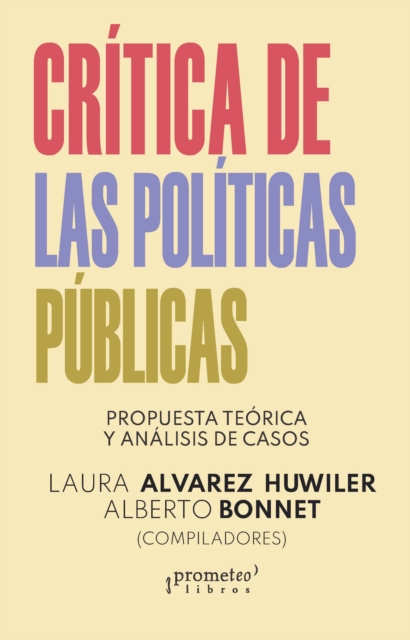
Buceando en las tormentosas aguas de las políticas públicas implementadas en la Argentina reciente y en sus resultados, a menudo desalentadores, este libro apunta a discutir la concepción subyacente de las políticas públicas y de su relación con la sociedad.
This book argues for a twofold transformation to mitigate environmental catastrophe, avert war and overcome poverty and authoritarianism: a struggle for democratic, peace-oriented, social and ecological changes within the framework of a post-neoliberal, but still bourgeois-capitalist society, and a drive towards entry-level projects aimed at a great transformation beyond capitalism.
The forgotten history of the liberal radicals, socialist internationalists, feminists, and Christians who envisioned free trade as the necessary prerequisite for anti-imperialism and peaceToday, free trade is often associated with right-wing free marketeers.
Hegemony and the Politics of Labour takes up a question that goes to the heart of the debate about politics, capitalism, and discourse: how can labour relations and value production be understood as discursive processes?
Hegemony and the Politics of Labour takes up a question that goes to the heart of the debate about politics, capitalism, and discourse: how can labour relations and value production be understood as discursive processes?
Hundreds of years from now, anthropologists will puzzle: twenty-first century humans lived in some of the wealthiest societies in history, yet only a minority of us, around a third, reported being happy.
Originally published in 1987 and now reissued with a substantial introduction by Robin Cohen, this wide-ranging work of comparative and historical sociology argues that a major engine of capital's growth lies in its ability to find successive cohorts of quasi-free workers to deploy in the farms, mines and factories of an expanding international division of labour.
Originally published in 1987 and now reissued with a substantial introduction by Robin Cohen, this wide-ranging work of comparative and historical sociology argues that a major engine of capital's growth lies in its ability to find successive cohorts of quasi-free workers to deploy in the farms, mines and factories of an expanding international division of labour.
Capitalism is often held to be the best of all possible worlds, or even the only possible world, in which the market is underpinned by the highest principles of rationality, efficiency, and compatibility with democracy.
Historians, since the 1960s, argue that the French economy performed as well as did any economy in Europe during the eighteenth and nineteenth centuries thanks to the opportunities for profit available on the market, especially the large consumer market in Paris.
Historians, since the 1960s, argue that the French economy performed as well as did any economy in Europe during the eighteenth and nineteenth centuries thanks to the opportunities for profit available on the market, especially the large consumer market in Paris.
Con su erudito y certero análisis deconstructivo, apoyándose tanto en economías heterodoxas como en la psicología, la sociología, la antropología y los saberes de los pueblos, el presente libro nos invita a un "darnos cuenta", en términos ontológicos, de la realidad de este nuevo modelo de existencia, develando de paso el crucial hecho de que al convertirnos en el "empresario de sí mismos", nos rendimos más que nunca bajo una subjetividad contable y cedemos ante la forma-empresa de la vida, quedando atrapadas/os en la red de bucles tóxicos de un capitalismo neo(neuro) liberal que ocupa de forma cada vez más difundida y profunda nuestros cuerpos, nuestras mentes, nuestro conocimiento de nosotras/os mismas/os.