Celebrities are increasingly front and centre in public debates on everything from solving world poverty to halting genocide, confronting obesity, and finding spiritual contentment.
Celebrities are increasingly front and centre in public debates on everything from solving world poverty to halting genocide, confronting obesity, and finding spiritual contentment.
Social economy organizations such as cooperatives, non-profits, mutual benefit groups, foundations, and non-governmental organizations are uniquely positioned to respond not only to emerging social and economic needs, but also to new collective aspirations.
Social economy organizations such as cooperatives, non-profits, mutual benefit groups, foundations, and non-governmental organizations are uniquely positioned to respond not only to emerging social and economic needs, but also to new collective aspirations.
The vision of a global future spread through the world like wildfire in the last decade - exhilarating for some, alarming for others, apparently inexorable for all.
Organized crime, understood in a literal sense as systematic illegal activity for money or power, is as old as the first systems of law and government and as international as trade.
In this addition to the award-winning Church and Postmodern Culture series, respected theologian Daniel Bell compares and contrasts capitalism and Christianity, showing how Christianity provides resources for faithfully navigating the postmodern global economy.
With his characteristically very personal anecdotal style, Charles Handy analyses how materialistic capitalism is self-limiting, how efficiency may be the enemy of a cohesive society, and examines the false certainties of science and religion.
The global financial crisis of 2007 to 2009 ruined businesses and banks, individuals and even nations, and seemed to land a mortal blow to the capitalist system.
Comparative Economic Systems: Culture, Wealth and Power in the 21st Century explains how culture, in various guises, modifies the standard rules of economic engagement, creating systems that differ markedly from those predicted by the theory of general market competition.
Real-life ';wildpreneur' Tamara Jacobi shares her insights on what it takes to successfully make the leap from a safe yet soul-crushing day job to chasing your dreams.
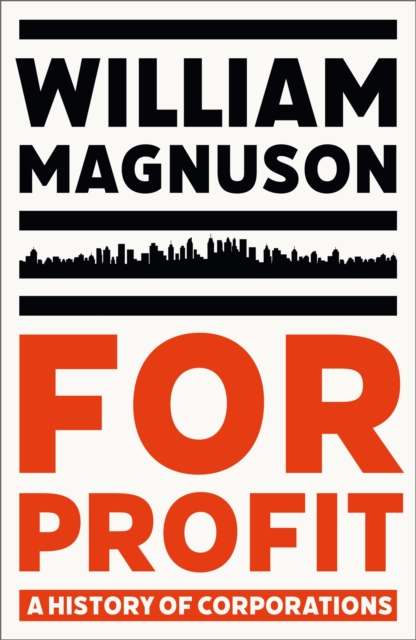
A FINANCIAL TIMES BEST ECONOMICS BOOK OF THE YEARA THE ECONOMIST BOOK OF THE YEAR'Brilliantly conceived and enlightening at every turn' Lawrence WrightWe have long been suspicious of corporations recklessly pursuing profit and amassing wealth and power.
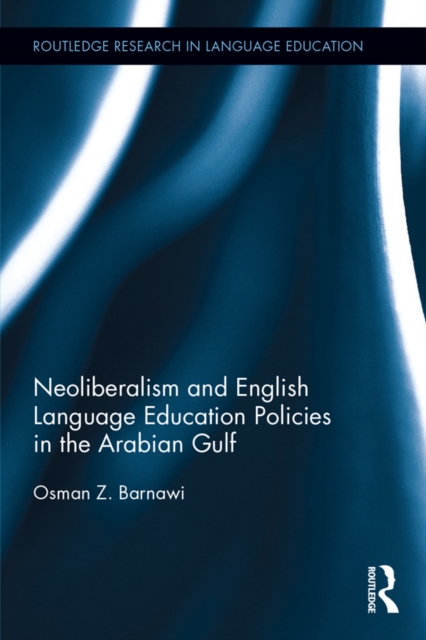
Over the past two decades, the Arabian oil-rich Gulf countries have faced enormous social, political, economic, cultural, religious, ideological and epistemological upheaval.
Over the past two decades, the Arabian oil-rich Gulf countries have faced enormous social, political, economic, cultural, religious, ideological and epistemological upheaval.
A generation of people around the world, from Boston to Bangkok, from New York to New Delhi, are making everyday choices in ways that defy traditional logic.
A generation of people around the world, from Boston to Bangkok, from New York to New Delhi, are making everyday choices in ways that defy traditional logic.
Many years on after the 2007-8 financial crisis, most developed nations still find themselves in a state of weak recovery, high debt pile-up and distributive disparity.
Many years on after the 2007-8 financial crisis, most developed nations still find themselves in a state of weak recovery, high debt pile-up and distributive disparity.
The main theme of this book is that, within contemporary capitalist societies a materialist outlook informed by science has triumphed creating the lack of a spiritual dimension to give meaning and purpose to the activities that are necessary for a capitalist society to function effectively.
The main theme of this book is that, within contemporary capitalist societies a materialist outlook informed by science has triumphed creating the lack of a spiritual dimension to give meaning and purpose to the activities that are necessary for a capitalist society to function effectively.
This title was first published in 2000: A comparative analysis of market transformation in Poland, Belarus and the Baltic states with particular emphasis on cross-national variations in speed and direction of post-Communist economic reforms.
This title was first published in 2000: A comparative analysis of market transformation in Poland, Belarus and the Baltic states with particular emphasis on cross-national variations in speed and direction of post-Communist economic reforms.
Education Policy, Neoliberalism, and Leadership Practice is a foundational book describing all aspects of neoliberalism and its broad scale impact in education.
Education Policy, Neoliberalism, and Leadership Practice is a foundational book describing all aspects of neoliberalism and its broad scale impact in education.