This book discusses the relationship between pluralist economics and the case study method of teaching, advocating the complimentary use of both to advance economics education.
This book presents an authoritative collection of contributions reporting on fuzzy logic and decision theory, together with applications and case studies in economics and management science.
This volume of intellectual biography records the work of Michal Kalecki's maturity: his work on monetary economics and the theory of profits; his work on the problems of socialism and developing countries; and the extension of his theory of capitalism to define his work in relation to Keynes and previous political economic principles.
The common roots of success and failure in economic growth and development lie in the systemic governance and fragmentation of institutional complementarities, respectively, but not in the unilateral adaptation of market-led or state-led models.
Applying the principles of Optimal Control Theory to the problem of regional allocation of investment can be a useful tool for demonstrating how the trade-off between regional equity and overall efficiency can be overcome.
This book introduces applications of mathematics and fuzzy mathematics in decision science, fuzzy geometric programming and fuzzy optimization as well as operations research and management, based on 44 research papers presented at three successful conferences:(1) The International Conference on Mathematics and Decision Science (ICMDS), September 12-15, 2016, Guangzhou University, Guangzhou, China (www.
As the outcome of the Dagstuhl Seminar 15481 on Crowdsourcing and Human-Centered Experiments, this book is a primer for computer science researchers who intend to use crowdsourcing technology for human centered experiments.
This book seeks new perspectives on the growing inequalities that our societies face, putting forward Structured Additive Distributional Regression as a means of statistical analysis that circumvents the common problem of analytical reduction to simple point estimators.
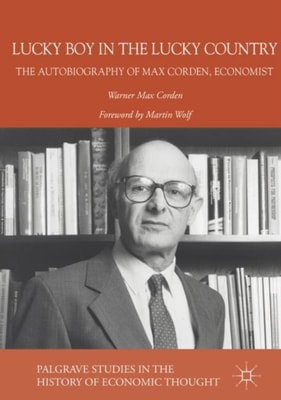
Corden has written a charming and insightful account of his professional and personal life, from his childhood in Breslau, Germany, until his retirement in Melbourne.
This book theoretically and practically updates major economic ideas such as demand and supply, rational choice and expectations, bounded rationality, behavioral economics, information asymmetry, pricing, efficient market hypothesis, game theory, mechanism design, portfolio theory, causality and financial engineering in the age of significant advances in man-machine systems.
This textbook offers a comprehensive guide to the systematic structure of capitalism, while at the same time introducing readers to all three volumes of Marx's Capital.
This brief presents a detailed look at the entrepreneurial ecosystem of nations around the wold by combining individual data with institutional components.
This book demonstrates the continuing relevance of economics for understanding the world, through a restatement of the importance of plurality and heterodox ideas for teaching and research.
This book covers the proceedings from the 2016 International Symposium on Chaos, Complexity and Leadership, and reflects current research results of chaos and complexity studies and their applications in various fields.
This book unifies and extends the definition and measurement of economic efficiency and its use as a real-life benchmarking technique for actual organizations.
This brief captures the contextual features of entrepreneurship by measuring entrepreneurial attitudes, abilities, and aspirations at both the individual- and country-level.
This book is a textual criticism of modern ideas about the work of Adam Smith that offers a new perspective on many of his famous contributions to economic thought.
This book presents a foresight-based exploratory analysis on the coming post-capitalist society and the transforming role of technology, creativity, and social innovation in the new economy.
This book uses Figueroa's unified theory of capitalism to explain how economic growth has led to a new epoch, the Anthropocene, and it presents a new set of economic principles that are needed in this new age.
This book considers the role played by co-operative agriculture as a critical economic model which, in Australia, helped build public capital, drive economic development and impact political arrangements.
The book illustrates the considerable advances in modern evolutionary economics and addresses core questions of economic behaviour, interaction of heterogeneous actors in uncertain environments and the possibility of aggregating observations on a macro-economic level.
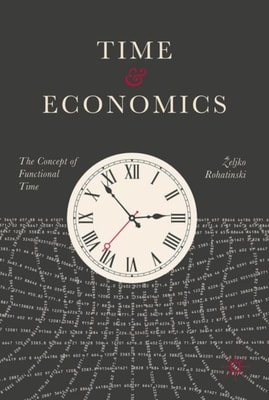
This book links the philosophical perception of time and Einstein's theory of special relativity to economic processes, showing that the phenomena of time dilation and length contraction seen in physics can be identified within - and adapted to - an economic framework.
This book provides the first comprehensive introduction to multi-agent, multi-choice repetitive games, such as the Kolkata Restaurant Problem and the Minority Game.
The special session on Decision Economics (DECON) is a scientific forum held annually and intended to share ideas, projects, research results, models and experiences associated with the complexity of behavioural decision processes and socio-economic phenomena.
This book analyses the effectiveness of climate finance as political instrument to reduce the effect of anthropogenic activities on climate change and promote the green growth in developing countries.
This book is the result of recent research by contemporary scientists on topics which were discussed at the conference of the same name in Volgograd, Russia in April 2017.
This unique book adopts a problem approach to study the Internet economy, which consists in assessing its contradiction to classic economy, analyzing it, and describing how the Internet economy is developing in modern Russia.
This textbook offers a unique approach to macroeconomic theory built on microeconomic foundations of monetary macroeconomics within a unified framework of an intertemporal general equilibrium model extended to a sequential and dynamic analysis.