In recent years, factors such as sustainability, digitalization, climate change, energy transformation, social inclusion, gender parity, and Environmental, Social and Governance (ESG) risk have been playing an increasingly important role in the process of financial transformation.
Moritz Goldner analyzes the unexplored phenomenon of patients and caregivers as innovators with respect to their own unmet medical needs in two complementary studies.
This book will expand the body of literature on capacity-building in science and improve public understanding of the issues regarding geographical concentration of federal research funding.
This edited volume addresses the impacts of climate change on Pacific islands, and presents databases and indexes for assessing and adapting to island vulnerabilities.
Providing an in-depth case study on the emergence of social impact investing in the UK, this book develops a new perspective on financialization processes that highlights the roles of non-financial actors.
New Zealand and Australia are broadly considered to be countries in which sustainability and responsibility discourses are being pursued by governments and business alike, and in which incentives and initiatives are helping confront and overcome sustainability-related challenges.
This edited collection explores the links between human capital (both in the form of health and in the form of education), demographic change, and economic growth.
Averting Climate Catastrophe Together addresses the necessity of meeting the Paris Agreement temperature target and explores what framework could enable climate action in an effective, efficient and equitable manner that is consistent with that goal.
The book 'Economic Trends and Sustainable Environmental Assessment' attempts to x-ray the economic and socioeconomic activities, and cultural or behavioural aspects from the concept of sustainability by employing several related research scenarios spanning the micro-, meso-, and macro-level approaches.
Why the global economy has become increasingly unstable, and how financial “de-carbonization” could break the pattern of bubble-driven wealth destruction.
Carbon pricing is one of the key policy instruments available to help countries reach the goals of the Paris Agreement and the United Nations Framework Convention on Climate Change (UNFCCC).
First Published in 1992, Choosing Our Future presents a personal but highly rigorous account of the environmental problems facing us and of the ways in which they can be tackled.
This book explores the concept of livable cities, where people enjoy living and being, and examines indicators of citizens' well-being in relation to the urban environment.
First published in 1944 (Sir Halley Stewart Lectures 1938), the original blurb reads: "e;In Rich Man, Poor Man, Professor John Hilton examines the facts as to the distribution of wealth in this country.
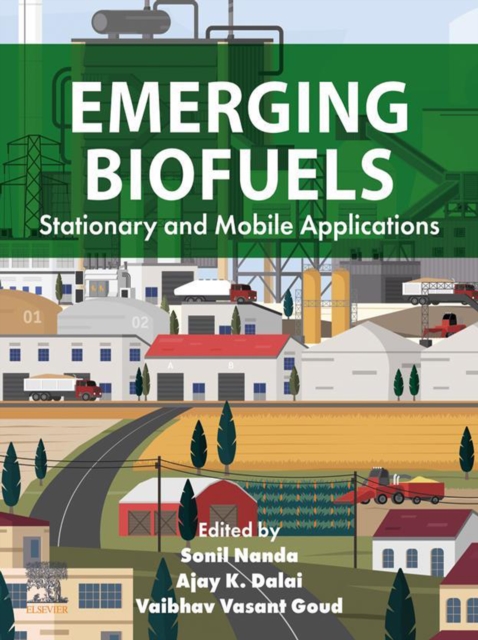
Emerging Biofuels: Stationary and Mobile Applications presents a comprehensive assessment of supply chains and conversion pathways of the promising biofuels in the 21st century.
This book demonstrates falsified economic performance of global economies when the environment is not recognised as a capital, and when the ecosystem is overlooked towards sustainable development.
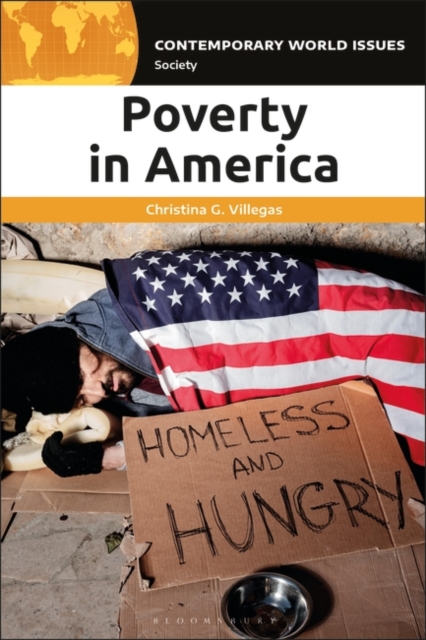
This wide-ranging and accessible survey of poverty in America examines every important facet of the issue, from historical and socioeconomic contributors to poverty to programs, policies, and ideas crafted to reduce income inequality and poverty across the USA.
Urban slum dwellersespecially in emerging-economy countriesare often poor, live in squalor, and suffer unnecessarily from disease, disability, premature death, and reduced life expectancy.
Now forty years old, the Endangered Species Act (ESA) remains a landmark act in conservation and one of the world's most comprehensive laws designed to prevent species extinctions and support recovery efforts for imperiled species.
A sobering account of a disenfranchised American working class and important policy solutions to the nation's economic inequalities One of the country's leading scholars on economics and social policy, Isabel Sawhill addresses the enormous divisions in American society-economic, cultural, and political-and what might be done to bridge them.
Practical Aspects of Electroorganic Synthesis presents educational insights into the practical aspects of electrosynthesis methods, providing a variety of examples and techniques.
Applications of Artificial Intelligence in Mining, Geotechnical and Geoengineering provides recent advances in mining, geotechnical and geoengineering, as well as applications of artificial intelligence in these areas.
The updated 2nd edition of Healthcare Management Engineering In Action in the Business Guides on the Go series provides a comprehensive exploration of healthcare management operations.
Following his timely and well-received A Failure of Capitalism, Richard Posner steps back to take a longer view of the continuing crisis of democratic capitalism as the American and world economies crawl gradually back from the depths to which they had fallen in the autumn of 2008 and the winter of 2009.