This book is an innovative exercise to unravel recent advances in development fundamentals in emerging economies through Indian lens that include various aspects of macroeconomics, international trade, finance, and issues connected to social sector that have become more important in post-pandemic world.
This book is an innovative exercise to unravel recent advances in development fundamentals in emerging economies through Indian lens that include various aspects of macroeconomics, international trade, finance, and issues connected to social sector that have become more important in post-pandemic world.
In an increasingly globalized world, an understanding of the role of international trade is central to the study of agricultural economics and agribusiness.
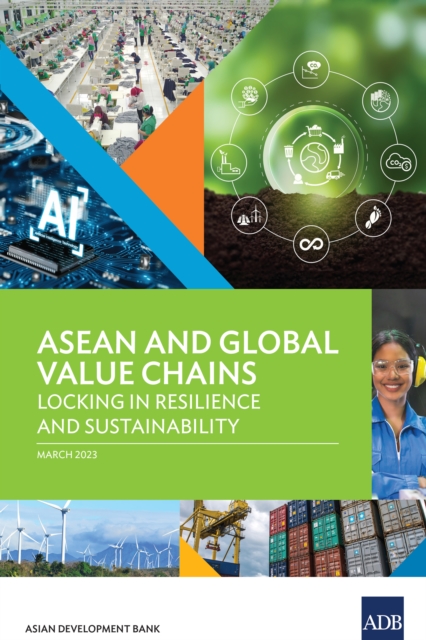
Analyzing how the role of ASEAN economies in global value chains has helped spur their recovery and cut poverty, this publication shows the need to future-proof these critical networks to ensure inclusive, sustainable, and greener growth.
Originally published in 1937, this study was modelled on Jacob Viner's famous work on Canada and when it was published it was an important addition to the growing literature in Applied Economics.
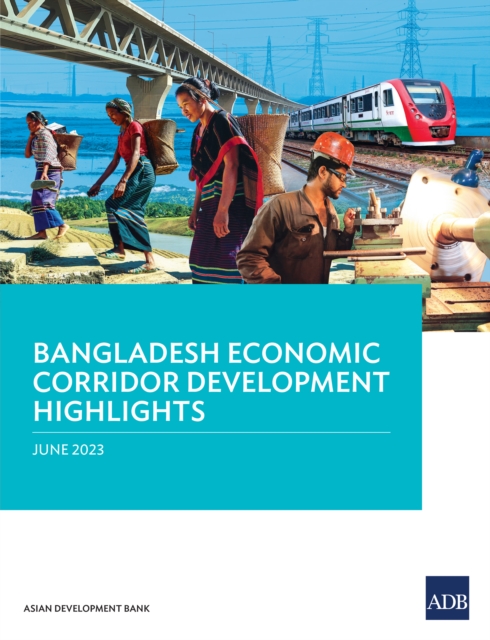
As Bangladesh builds on a decade of strong economic growth, this executive summary explains why creating an economic corridor can drive the massive structural transformation it needs to ensure its development is sustainable and equitable.
Wie Geld nationales Recht aushebelt»Auf ihren Reisen in verschiedene Teile der Welt beschreibt Abrahamian die heimtückisch miteinander verbundenen globalen Regime der Ungleichheit und Ungerechtigkeit.
Applying two-level game theory and rational decision-making analysis, this book explores how China navigates domestic constraints and international pressures to achieve optimal outcomes in its foreign trade policy.
Understanding the theories that underpin international political economy (IPE), and their practical applications, is crucial to the study of international relations, politics, development and economics.
Understanding the theories that underpin international political economy (IPE), and their practical applications, is crucial to the study of international relations, politics, development and economics.
Applying two-level game theory and rational decision-making analysis, this book explores how China navigates domestic constraints and international pressures to achieve optimal outcomes in its foreign trade policy.
This report provides an analytical framework for studying integrity in trade, combining insights from OECD work on trade facilitation, responsible business conduct and integrity in customs.
Brunei Darussalam, Indonesia, Malaysia, and the Philippines need to bolster cooperation in their special economic zones (SEZ) to spur sustainable growth.
Les auteurs des etudes regroupees dans ce volume passent en revue les preoccupations exprimees par les exportateurs et les pouvoirs publics en termes d'acces au marche.
Le Groupe conjoint de l'OCDE sur les echanges et la concurrence a ete cree en 1996 afin de mieux comprendre les problemes complexes qui se posent a l'interface de ces deux politiques, avec la globalisation des marches en toile de fond.
This Trade and Gender Review of New Zealand draws on both quantitative and qualitative insights to provide a comprehensive analysis of the impact of trade, and trade policies, on New Zealand women as workers, consumers, and business owners and leaders.
En nuestro país se sabe que Ignacio Bartesaghi Hierro es uno de los expertos de más alto nivel en lo que tiene que ver con integración, comercio exterior y Mercosur.
This book examines Senegal's industrial labor market and relates its principal features, together with the structure of enterprise ownership and government policies, to the country's economic performance.
Since Tsarist times, Russia's leaders, rather than pursue economic growth for its own sake, have sought control over economic activity as a means to manage their own support base, respond to perceived security threats and to facilitate their wider geopolitical ambitions.
The world's key resources of energy, food and water, which are closely connected and interdependent on each other, are coming under increasing pressure, as a result of increasing population, development and climate change.
With European Monetary Union well underway, Europe is starting to look at nearby countries and culturally closer continents to define its strategies for the future.
This report shows how countries in the BIMSTEC subregion can work together to rebuild their pandemic-battered travel industries and create intraregional thematic tour packages to boost visitor numbers and support sustainable development.
This report outlines nontariff barriers to trade between BISMSTEC subregion countries and shows how a structured approach centered on boosting compliance, harnessing technology, and improving infrastructure can bolster intraregional trade.
The Northern Sea Route and the Economy of the Soviet North (1956) evaluates the commercial value of the route on the basis of a detailed study of the economy of the Soviet North.