Non-Tariff Barriers, Regionalism and Poverty is a collection of key articles in three important areas of applied international trade research: measuring non-tariff barriers and their effects, the consequences of regional trading arrangements, especially on the countries excluded from them, and the connection between international trade and poverty.
Although international trade has been much studied by both economists and regional scientists, the nature, causes, and the consequences of interregional trade, i.
This book analyses the communication processes of international trade between producers, their suppliers, and traders in Asia, and buyers in other parts of the world.
Policies affecting resource allocation across tradable sectors and those affecting the incentives to produce tradable activities are key determinants of macroeconomic balance and growth.
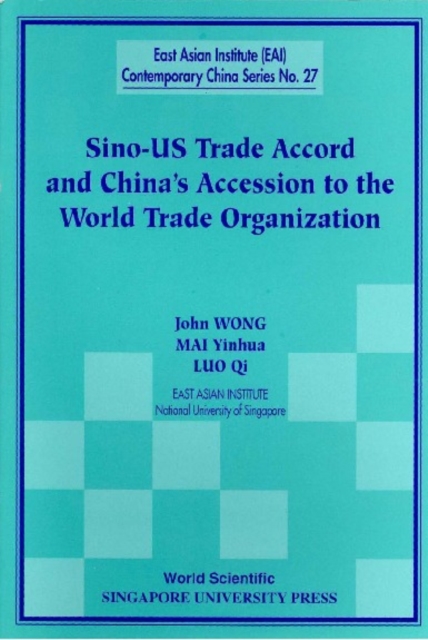
The Sino-US trade accord signed in November 1999 in Beijing set a milestone for China's protracted journey towards becoming a member of the World Trade Organization (WTO).
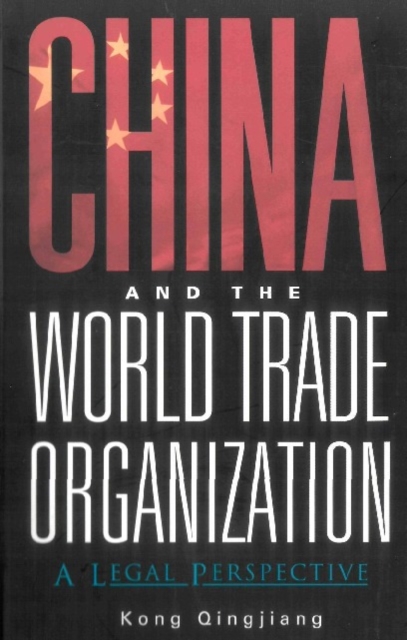
This book examines, from the legal perspective, China's process of WTO accession, its commitments to the accession, the implications of such commitments for its trade and legal systems, and its efforts toward WTO compliance.
Inframarginal analysis represents a methodology that extends marginal analysis, using non-classical mathematical programming, in efforts to investigate corner solutions and indivisibilities.
This book provides a discussion of the general impact of WTO membership on both sides of the Taiwan Strait, and addresses the political and economic impact on cross-Strait relations of common membership.
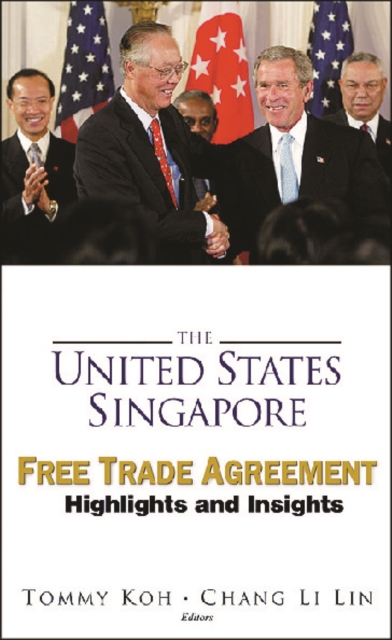
Free Trade Agreements (FTAs) have proliferated in East Asia as regional economies rush to catch up with the rest of the world - but what difference do they make?
Singapore, a small Southeast Asian country with limited resources, transformed itself from a trading post to a successful, cosmopolitan nation with one of the most impressive growth rates in the world.
It is an appropriate time to rethink the relationship between trade regionalism and multilateralism in the Asian context as we witness the proliferation of free trade agreements (FTAs) in Asia.
The Asia-Pacific region has emerged as a dominant player in trade and will continue to be an influential pole of world trade and economics, with the center of gravity shifting to this region.
Quantitative Analysis of Newly Evolving Patterns of International Trade offers a variety of perspectives on new forms and developments of international trade and related activities for Japan, the United States, China, and some other important trading countries, to develop new methods and data for measuring the factor contents of emerging new modes of international trade.
The main aim of this book is to assess the importance of international rules for foreign direct investment and the major challenges to international harmonization of those rules.
The book contributes to the growing literature pertaining to empirical and policy issues in international trade, foreign capital flows and issues in finance, implications for India and emerging economies related to trade and development interface, and analysis of sector level growth and development in India.
In an ever more globalized and pluralized world, more attention is paid to engaging private parties in the process of trade policy-making, as non-state actors are often directly affected by trade policy shaped by governments.
The 'Belt and Road' initiative announced by Chinese President Xi Jinping in 2013 aims at reviving the ancient trade routes connecting China to Europe and Africa: the '21st Century Maritime Silk Road' and the inland 'Silk Road Economic Belt'.
This book provides the analysis on capital markets in China, focusing attention upon (1) the bubble phenomena (whether or not a Chinese bubble really exists and might burst), (2) foreign direct investment and (3) integration, through all of which we could recognize the current situation and the future prospects of Chinese marketization.
This book provides a comprehensive review of the theory of international trade and trade policy, including coverage of recent areas of research such as heterogeneous firm trade models and trade costs.
This book assesses the magnitude of the effects of trade liberalisation on welfare and the environment in the context of a small open economy, and the degree to which these effects are influenced by environmental policy.
This is one of few books on the quantitative assessment of trade liberalisation and its impact on micro and macro economics structure in developing countries.
The signing of the North American Free Trade Agreement (NAFTA) and recent expansions of the European Union have led to renewed efforts to create preferential trade areas (PTAs) around the world including Asia, Africa and Latin America.
This book offers a unique insight into the world of standard-setting organizations (SSOs)' IPR policies and the role they play in balancing the interests of innovators and implementers, vis-a-vis the development of standards.
The contents of this volume focuses on the economic issues such as income inequality, foreign direct investment, world income classification, business issues such as customer churn analysis, internal branding, human resources issues among others.
This book seeks to illuminate what China's Belt and Road initiative truly means for the global south, offering historical context and explaining the vision that the Chinese State has in coordinating actions in the territorial, political and economic spheres in a multilateral pretension.