This book brings together two major developments of the past decade: the collapse of the Soviet Union on the political side and "e;globalization"e; on the economic side.
Bringing together the economics, politics, and history of the movement toward economic and monetary union (EMU), the author looks at such topics as the first significant attempt at EMU, the Werner report and its aftermath, and the development of the Maastricht Treaty and the crises that followed its signing.
This volume analyzes the import patterns of selected countries to determine which nations are active importers and which ones import much less than expected.
This book examines the evolution of trade and trade patterns in Central and Eastern European countries (CEEC) and assesses the implications of these patterns on structural change and economic development within transition economies.
This timely book points the way towards a new positive regulatory framework for international investment following the failure of the Multilateral Agreement on Investment (MAI).
Building upon a wide range of literatures this book argues that international regulatory institutions become stronger when oligopolistic institutional arrangements decay and competitive pressures intensify.
Based on a major international research project undertaken by The Institute for East West Studies, this book provides the first comprehensive analysis of an important, but little explored, feature of post-Cold War Europe: the emergence of subregional cooperation in areas such as the Barents, the Baltic Sea, Central Europe and the Black Sea.
The book offers an authoritative overview of the topical issues surrounding intra-industry trade in Europe in the era of European economic integration.
The chapters in this volume identify and assess the political process and bases of support for multilateralism in terms of the shifting power relations in world politics, institutional innovations in the United Nations and non-UN multilateralisms.
In this history of US-based direct broadcast satellite developments, the United States and other nation-states are shown to be the ultimate arbiters of their ongoing histories.
Economic prospects for the countries of the Middle East and North Africa are assessed in light of the changing world economy, increasing integration of trade and financial markets, greater needs for educated labour, and growing concerns about poverty and environmental degradation.
Multinationals are increasingly taking internationalised approaches to the ways in which they generate new knowledge and develop innovative new products from it in the pursuit of global competitiveness.
A topical study of regional arrangements covering ASEAN, SAARC and APEC in Asia, NAFTA and MERCOSUR in the Americas, SADC, SACU and ECOWAS in Africa, and the European Union, EFTA and Eastern Europe.
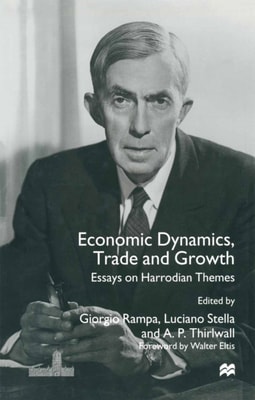
Sir Roy Harrod was one of the foremost economists of the twentieth century who made pioneering contributions in several branches of economics including: trade cycle theory; growth theory; trade theory; monetary economics; imperfect competition theory, and methodology.
Written in the context of contemporary theoretical debate in international political economy, this book overturns a number of myths about the political economy of trade in one of the oldest areas of industry.
This book brings together papers written by representatives from UN agencies and academics who take a fresh look at the expanding role of transnational corporations and foreign direct investment in the world economy.
This innovative new text brings together the disciplines of economics and social anthropology to provide a refreshing and unique perspective on international business.
This book focuses on the functioning of the evolving International Monetary System and on recent developments and trends in the financial markets that have become increasingly globalized.