This book brings together the work of international economist, labour economists and sociologists in a far-reaching study of global production networks and the challenges they pose for developing country workers.
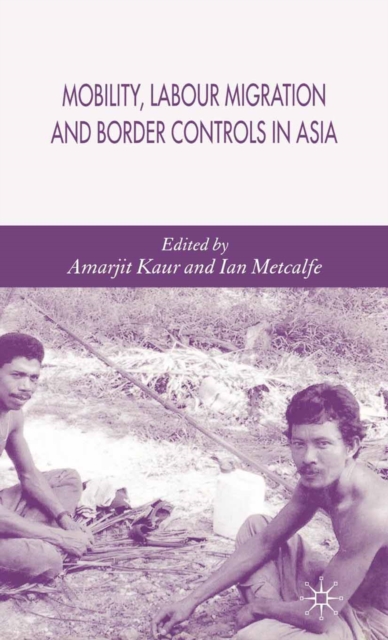
This book examines the economic consequences of immigration and asylum migration, it focuses on the economic consequences of legal and illegal immigration as well as placing the study of immigration in a global context.
Although economists have long pointed to the aggregate gains from increased economic integration, the popular perception of globalization is much more pessimistic.
This book explores the complex relationship between social security and economic development, arguing that social security contributes positively to economic development by promoting social investments that not only foster economic growth but enhance social welfare for all.
This book presents a re-examination of classical issues in the relationship between different forms of democratization, civil, political and social, and examines Chile's transition to democracy during the 1990s as a typical case of the modern sequence.
Uncovering how cash-in-hand economies are composed of not only the underground sector (work akin to formal employment conducted for profit-motivated purposes), but also a hidden economy of favours more akin to mutual aid, this book displays the need to transcend conventional market-oriented readings of cash-in-hand work and radically rethink whether seeking its eradication through tougher regulations is always appropriate.
This book presents conceptual tools and theoretical perspectives that can be used to sociologically analyze labour markets in modern capitalist societies.
Consumption, Jobs and the Environment argues that the present pattern of development, based on everlasting economic growth, is completely unsatisfactory from a welfare point of view.
While the question to why work beyond sixty has now become obvious, the how and for whom questions are the real topic of this new study by one of the best European specialists in the area.
This book provides new evidence on the magnitude and sources of pay inequalities between women and men in European countries and New Zealand on the basis of micro data.
This book analyses the management of human resources in Chinese industry, covering the period from 1949 to present, particularly focusing on the period of economic reforms in the 1980s and early 1990s.
Transition economies offer a test case for concepts and theories, for broader ideas and for the methods of scientific enquiry, but also for the multiplicity of ideological interpretations.
The economic performance of a national economy, as shown by indicators such as the rate of unemployment and inflation, is heavily dependent on the operation of its external and internal labour markets.
This book gauges possible development implications of current WTO trade negotiations by examining various proposals and assessing their likely economic impact.
This book describes the adoption, growth and subsequent relinquishment of industrial subsidies in the UK, tracing their development back to the early years of this century and following their extension through to virtually every area of economic policy.
The purpose of this book is to highlight contemporary changes in the world of work and employment by exploring the importance of the informal economy in Western Europe and the United States.
This volume challenges the view that unemployment is exclusively determined by structural characteristics of the labour market and the social benefit system.
The purpose of this book is to set out in a comprehensive, but succinct manner, the key points surrounding four economic issues that generate, today, much discussion and debate.
This collection describes the changing structure of employment during the period of robust employment expansion that preceded the credit crunch and features contributions from a team of leading labour market researchers from Europe and the United States.
As a collection of alternative views on societies, methodologies, policies and assessment of the current elements of the society, Alternative Perspectives on a Good Society brings together different authors answering different questions all within the context of visions of a good society.
This book assesses the phenomenon of international framework agreements (IFAs), examining their implementation and impact around the world as well as their promotion of ILO standards.
The financial crisis is destroying wealth but is also a remarkable opportunity to uncover the ways by which debt can be used to regulate the economic system.