This book provides valuable insights into the Kingdom of Saudi Arabia (KSA) through a comprehensive examination of Vision 2030, an ambitious economic plan by the KSA to reinvent and diversify its economy from a heavy dependence on hydrocarbon to knowledge-based resources.
As the pace of economic change seems to only quicken, including rapid technological advance, today's advanced economies face uncertainty from a number of directions, most of which have the potential to change established modes of thinking and the institutional arrangements that underpin basic economic organization.
As the pace of economic change seems to only quicken, including rapid technological advance, today's advanced economies face uncertainty from a number of directions, most of which have the potential to change established modes of thinking and the institutional arrangements that underpin basic economic organization.
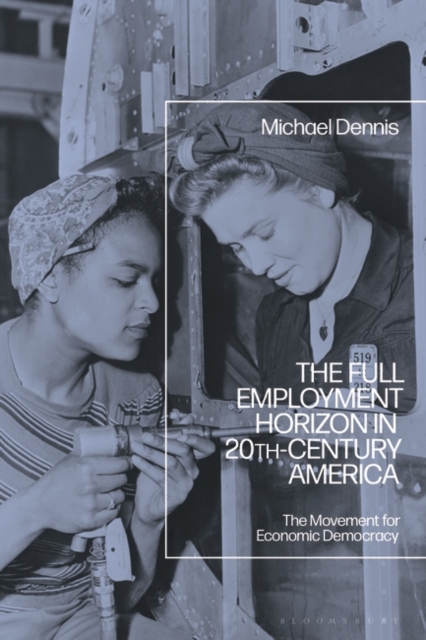
Through moments of social protest, policy debate, and popular mobilization, this book follows the campaign for economic democracy and the fight for full employment in the United States.
Through moments of social protest, policy debate, and popular mobilization, this book follows the campaign for economic democracy and the fight for full employment in the United States.
This volume collects original contributions and recent research in economic theory and the political economy of unemployment and inflation from a team of internationally renowned scholars.
Wages are a vital economic variable in their influence on employment and unemployment and as the main source of personal income, affecting both living standards and labour incentives.
The growth of the services sector in developing countries and their increased participation in trade in services have far-reaching implications for promotion of employment and income and management of international migration.
Based on original data obtained from a purpose-designed nationwide household sample survey, the volume contains studies of the overall distribution of income, inequality and poverty in rural areas, wage employment in rural industries, urban wage inequalities, and the relationship between education and income.
This book argues that a satisfactory theory of the international division of labour must come to grips with the problems of economism, functionalism and determinism that have sometimes characterised Marxian approaches to this theme.
Multinationals have global reach in their search for profits; women, even more than men, are confined to their immediate community in their search for jobs.
This volume contains a series of essays which examine microeconomic or structural issues and attempt to explain why alternative prescriptions to monetarism could have avoided the massive rise in unemployment in the 1980s.
In the present stage of international capitalist development, women are increasingly being drawn into paid employment by multinational and state investment in the Third World.
By an international forum of contributors, this is the result of a conference organized by the Department of Economics of the University of Limburg and the European Production Study Group.
An attempt to analyse employment in Britain in which the author examines developments in the labour market since the war and assesses the contribution of national policy and ideology.
Information about women's occupational mobility is required to resolve issues about women's role in class analysis, about theories of the operation of labour markets, and for understanding changes in the industrial structure.
In the mid-1980s the world's industrialised economies entered their second decade of stagnant growth and mass unemployment paralleled only by the Great Slump.
The papers in this volume examine the conditions and consequences of micro-electronic technology within one or more of various spheres of the labour process.