Basic income is an innovative, powerful egalitarian response to widening global inequalities and poverty experiences in society, one that runs counter to the neoliberal transformations of modern welfare states, social security, and labor market programs.
Through a thorough analysis of China's recent history and economic development process, the authors of this book seek to explain the causes of China's economic rise and its impact on the rest of the world.
This useful new book contributes to the understanding of competition policy in the Mexican banking system and explains how levels of competition relate to banks' efficiency.
Localizing Global Finance illustrates that private equity has become a more significant component of China's economy based on a pattern of new domestic elites importing and implementing a largely Western financial model.
This book provides an original and timely insight into the role that the domestic and international political economy played in the Eurozone sovereign debt crisis, combining an innovative theoretical framework with in-depth bond market analysis.
Growth, Employment, Inequality, and the Environment deals with the fundamental economic problems of our time: employment, inequality, the environment, and quality of life.
Conscious that trust deficit is a principal concern in East Asia, the book attempts to suggest ways to enhance confidence in certain key areas such as disputes in East and South China Seas, maritime CBMs, impact of economic interdependence on security, and issues concerning identity and values in Asian thinking.
This volume argues that a renewed commitment to sound macroeconomic policies and structural reforms is needed for countries in South East Europe, or 'the Balkans' achieve to sustainable prosperity, along with enhanced support from the international community.
Risk, Power, and Inequality in the 21st Century provides a groundbreaking new analysis of the increasingly important relationship between risk and widening inequalities.
The author provides a theoretical framework of the global political economy of banking regulation and analyses the policies and politics of the Basel Committee on Banking Supervision.
This text bridges the gulf between theoretical economic principles of negotiation and auction theory and their multifaceted applications in actual practice.
The author aims to develop conceptual refining and theoretical reframing of the productivist welfare capitalism thesis in order to address a set of questions concerning whether and how productivist welfarism has experienced both continuity and change in East Asia.
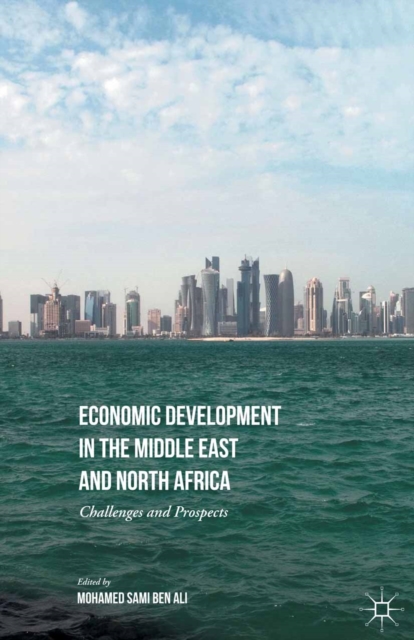
Using cases on individual countries, Economic Development in the Middle East and North Africa offers diverse theoretical and empirical evidence on a variety of issues facing policymakers, investors, and other stakeholders in the region.
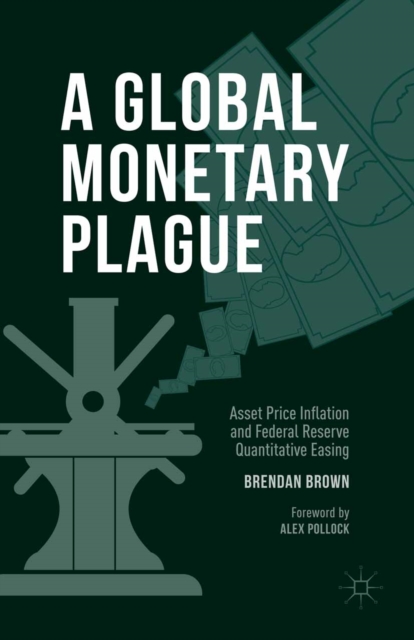
The Great Monetary Experiment designed and administered by the Federal Reserve under the Obama Administration unleashed strong irrational forces in global asset markets.
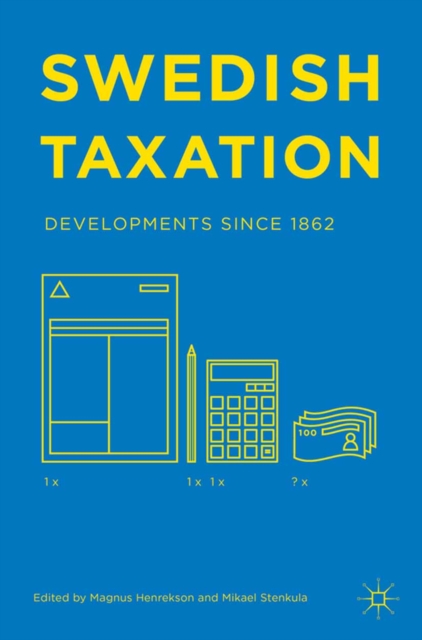
By taking the long view on the evolution of this country's tax policies through the past few decades, Henrekson and Stenkula explain how Sweden developed the highest tax-to-GDP ratio in the world, until the beginning of the 2000s.
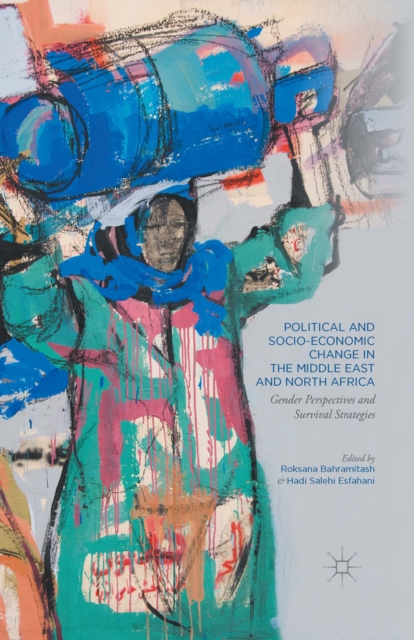
Political and Socio-Economic Change in the Middle East and North Africa examines the shortcomings of the economic development policies in the region before and after the Arab uprisings.
This book looks at developmental pathways to poverty reduction that emphasize employment-centred structural change, social policies that both protect citizens and contribute to economic development, and types of politics that support economic transformation and participation of the poor in growth processes.
Informed by in-depth case studies focusing on a wide spectrum of micro and macro post-socialist realities, this book demonstrates the multi-faceted nature of informality and suggests that it is a widely diffused phenomenon, used at all levels of a society and by both winners and losers of post-socialist transition.
From bank bailouts to austerity, Europe's and Ireland's response to the economic crisis has been engineered specifically to shift the burden of paying for the crisis onto ordinary citizens while investors, financiers, bankers and the privileged are protected.
This book investigates why Austrian economists fail to apply the spontaneous order framework to cooperative relationships - such as a dynamic and evolving public sector - that might complement a thriving market.
Development Macroeconomics in Latin America and Mexico brings the attention of academics, practitioners, and policy makers to the neglected macroeconomic factors that can account for both the unsatisfactory average growth performance of Latin American and the diversity around this average.
Brazil is the most populous economy in Latin America with the second highest GDP among the emerging BRIC economies, after China, and the second per capita GDP among the BRIC economies after Russia.
For the most part, human capital theory emphasizes human cognitive development and the acquisition of knowledge and skills that enable enhanced productivity and earnings.
Both quantitative and qualitative analysis is used to review China's stock market in a book containing the latest research on China's IPO market, the 2006-07 market bubble, the development of institutional investors, the stock index futures market, stock sector performance, corporate governance of listed firms and China's growth enterprise market.
For the past 30 years international monetary economists have believed that exchange rate models cannot outperform the random walk in out-of-sample forecasting as a result of the 1983 paper written by Richard Meese and Kenneth Rogoff.