This book examines the role and function of the state in contemporary economics from a number of diverse economic perspectives, including Austrian, feminist, institutionalist, Marxian, radical and Post Keynesian.
Convergence, Cohesion and Integration in the European Union tackles the fundamental theoretical and empirical issues underlying the process of European integration.
Hardie investigates the link between the financialization - defined as the ability to trade risk - and the capacity of emerging market governments to borrow from private markets.
Euro Crash diagnoses the three fatal design flaws in EMU as constructed by the Maastricht Treaty and analyses future likely monetary scenarios for Europe, demonstrating how the best of these would be the creation of a new narrow monetary union between France and Germany founded on strict monetarist principle and without a European Central Bank.
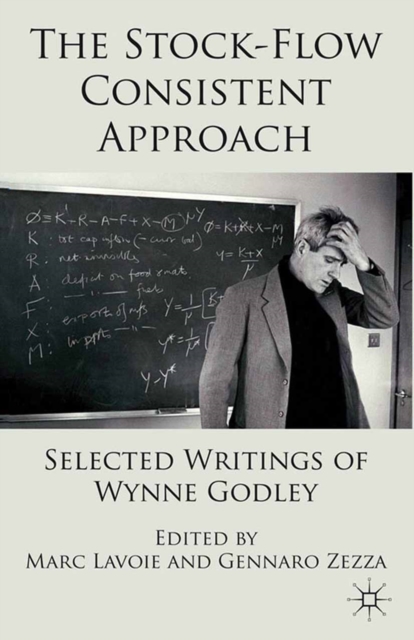
A collection of papers from leading thinkers to celebrate the work of the late Wynne Godley, and his enormous contribution to the field of monetary economics.
This anthology aims to explain why some Nordic shipping companies became world leaders while others failed to respond effectively to the challenges and opportunities of globalization.
Personal consumption accounts for two thirds of GDP, yet recent economic events have emphasised our limited ability to translate consumption patterns into policy.
Sustainability Analysis provides a detailed exploration of current environmental thinking from a variety of perspectives, including institutional and psychological angles.
This volume highlights the importance of interactive, practice-based learning as a means to promote more thorough innovation dynamics in regional and national economies.
Read examines probability, risk, and uncertainty through the contributions of John von Neumann, Leonard Jimmie Savage, Kenneth Arrow and Harry Markowitz.
Management accounting has undergone significant evolution moving away from rigid budgeting programs and static output measures to comprehensive approaches of value identification and measurement.
The book analyses the Spanish financial system from the turn of the last century to the present day and the economic, social and political backdrop to this history.
In June 2010 IE Business School, with King Abdulaziz University, gathered in Madrid some of the world's foremost scholars, academics and practitioners of Islamic Economics and Finance.
In this unique contribution to economic sociology, Jeffrey Hass examines the impact of culture, norms and political authority on Russia's post-socialist transition.
Written by fifteen leading academics from the Japan Society for International Development (JASID), this book undertakes a review of Japan's economic development over the last 150 years, and seeks to clarify Japanese priorities in domestic and foreign policy for the coming decades.
Selected essays from the eminent economist, Wynne Godley, tracing the development of his work and illuminating the key theories and models that made his name.
The Making of a Post-Keynesian Economist: Cambridge Harvest gathers up the threads of the last decade of the author's twenty eight years in Cambridge, before his return to Australia.
Through the tools of economics, Annunziata's vivid and gripping book shows how the global financial crisis was caused by a failure of leadership and common sense in which we all played a role.
Marx's Theory of Price and its Modern Rivals provides an original look at how Marx understood the role of money, extending his theory to consider how prices move over the course of business cycles.
As a collection of alternative views on societies, methodologies, policies and assessment of the current elements of the society, Alternative Perspectives on a Good Society brings together different authors answering different questions all within the context of visions of a good society.
Proposing an aggregative conception of vulnerability, this book provides a new framework for understanding individual experience of, and resilience to, vulnerability and promotes the need to find remedies for exposure to involuntary dependence, the unsecured future and the painful past.
This volume assesses the current state of play for Middle East and North African countries, in the light of wider work on inflation targeting, and provides lessons from the evolution of monetary policy in Europe.
This book analyses the development path of transition economies in European Countries and former Soviet Republics that have experienced the transformation from planned economies to market economies since the fall of the Berlin wall in 1989.
This text comprises a selection of papers that provide state of the art insights into bank performance, risk and firm financing post crisis that were presented at the European Association of University Teachers of Banking and Finance Conference (otherwise known as the Wolpertinger Conference) held at Bangor University, Wales, 2010.
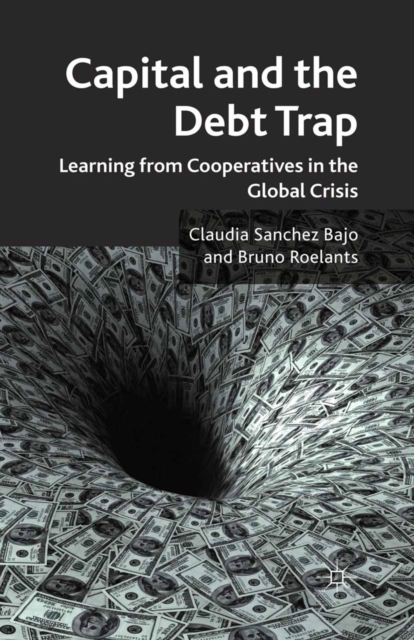
The financial crisis is destroying wealth but is also a remarkable opportunity to uncover the ways by which debt can be used to regulate the economic system.
This book evaluates the salient features of Japanese relation-based banking, particularly in the post war period, and Anglo-American mode of banking to explain the nature and extent of transition failure that caused prolonged financial and economic slump in Japan.
This book examines the pattern of growth of the Spanish economy in the last few decades, and studies the causes of its labour productivity, and the special features characterising business cycles in Spain.
This book presents the state-of-the-art with respect to credit risk evaluation and pricing within the contemporary global banking and financial system.