This book provides a coherent Blockchain framework for the business community, governments, and universities structured around microeconomics, macroeconomics, finance, and political economy and identifies how business organizations, financial markets and governmental policies are changed by digitalization, specifically Blockchain.
This book offers a series of statistical tests to determine if the "e;crowd out"e; problem, known to hinder the effectiveness of Keynesian economic stimulus programs, can be overcome by monetary programs.
The monetary system is the indispensable missing link in the debate of sustainability, and whether the current financial system can handle these evolved needs.
This book scientifically tests the assertion that accommodative monetary policy can eliminate the "e;crowd out"e; problem, allowing fiscal stimulus programs (such as tax cuts or increased government spending) to stimulate the economy as intended.
This book adopts a comprehensive approach, combining the views of economists and political scientists, to assess the threats of maintaining the non-collaborative stance that prevailed in the response to past crises, and to explore new solutions to the present emergency.
This workbook presents the answers to the exercises in Macroeconomic Theory, Fluctuations, Inflation and Growth in Closed and Open Economies by Fernando de Holanda Barbosa (2018).
This book explores Portugal's response to the 2008 economic crisis and how the country regained the trust of the global capital markets through investor support.
This book includes papers presented at the 11th International Conference "e;Economies of the Balkan and Eastern European Countries"e; (EBEEC), held in Bucharest, Romania, in May 2019.
This book sheds new light on if and why, between 2009 and 2015, European governments succeeded or failed in initiating and actually realizing some of the farthest-reaching austerity plans in modern history.
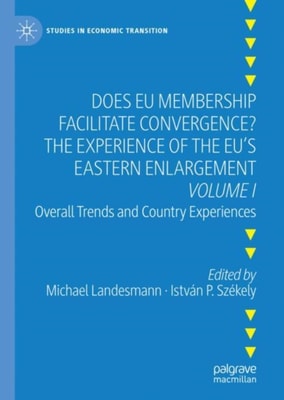
This edited volume analyses the channels through which EU membership contributed to the convergence process of member countries in the Baltics, Central-Eastern and South-Eastern Europe.
This edited volume analyses how EU membership influenced the convergence process of member countries in the Baltics, Central-Eastern and South-Eastern Europe.
This book examines the business models, performance, and decision-making approaches employed by financial institutions in Central and Southeast Europe.
The Economics of Brexit - Revisited builds upon and extends the analysis contained within the authors' previous book, The Economics of Brexit: A Cost-Benefit Analysis of the UK's Economic Relationship with the EU, which arguably represented the most comprehensive and systematic evaluation of the UK's economic relationship with the EU.
This book explains why inflation remains subdued after recessions, based on three revolutionary concepts: defensive expectations, compensatory savings, and cumulative wage gap.
This book discloses the economic foundations of European fiscal and monetary policies by introducing readers to an array of alternative approaches in economics.
This handbook presents emerging research exploring the theoretical and practical aspects of econometric techniques for the financial sector and their applications in economics.
Reflecting the diverse and profound changes triggered by the latest wave of economic globalization, this book highlights various governance responses at national, regional and global levels.
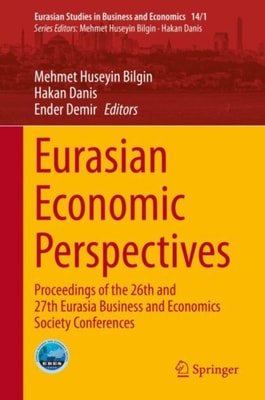
This book presents selected papers from the 26th and 27th Eurasia Business and Economics Society (EBES) Conferences, held in Prague, Czech Republic, and Bali, Indonesia.
This book examines the challenges for the life insurance sector in Europe arising from new technologies, socio-cultural and demographic trends, and the financial crisis.
Target balances are the largest single item in some of the balance sheets of the Eurosystem's national central banks (NCBs), and yet very little is known about them by the general public and even by economists.
This book examines the effect of banking on the real economy and society, focusing on banking supervision as the decisive factor in steering banking activities and determining the social outcome of the game of finance.
Climate scientists have determined that we must act now to prevent an irreversible and catastrophic climatic tipping point, beyond which neither our own nor many other species can be assumed likely to survive.