This volume of intellectual biography takes the Italian economist, sociologist, political scientist Vilfredo Pareto (1848-1923) from his disillusionment with liberal and pacifist activism, to the original development of pure economics and the composition of his Treatise on General Sociology and the test of this latter on the war and post-war events.
As economic populism and protectionism increasingly threatens the global trade order, this book examines the behavior of World Trade Organization (WTO) members at the judicial arm of the WTO-the dispute settlement mechanism (DSM).
This textbook provides a solid introduction to the theoretical and empirical aspects of environmental economics, and their links to environmental policy.
This book has four main objectives: to bring the thus far almost entirely neglected historical case of 'the rise of Japan' into the literature on power shifts in general and 'the rise of China' in particular; to propose a discourse-based conceptualization of identity for the study of economic policy that engages theoretical and methodological debates on how to overcome the dichotomy between 'ideational' (identity) and 'material' (economic) factors; to address the tendency to focus on the 'radical Other' in poststructuralist IR scholarship, by highlighting how heterogeneity disturbs exclusive and binary articulations of identity and difference; and to propose a method for putting political discourse theory (PDT) into practice in empirical research by drawing on rhetorical political analysis (RPA).
This book argues that the macroeconomic policy adjustment models recommended by the IMF and the World Bank for implementation in many Muslim countries, with substantial donor financial support, have not been effective.
This book is the product of three years of empirical research, four years in politics, and a lifetime in a country experiencing three different regimes.
This book focuses on the implementation of the China-Pakistan Economic Corridor (CPEC), a multi-billion-dollar infrastructure development project intended to connect Asia with Europe, the Middle East and Africa.
This book presents cutting-edge research on urban and regional systems applying modern spatial analytical techniques of Geographic Information Science & Technologies (GIS&T), spatial statistics, and location modeling.
This book revisits the forgotten history of the 'European Dependency School' in the 1970s and 1980s, explores core-periphery relations in the European integration process and the crises of the contemporary European Union from a dependency perspective, and draws lessons for alternative development paths.
There are two ways people coordinate their actions: through cooperation, exercised by economic power, and through control, exercised by political power.
This book provides an in-depth assessment of the modern geopolitics of hydrocarbon resources in the territorial waters of the Eastern Mediterranean, highlighting the current conflicts and disputes in the maritime territories of Egypt, Israel, Lebanon, Cyprus, and Turkey.
This two-volume work provides a comprehensive overview of the Belt and Road Initiative, examining its impact on economic growth, trade, financial systems and international relations.
This book deals with the economics of establishing a frontier by conquest or by peaceful settlement, the costs involved, and the optimum extension of the territory.
This book - through a collection of case studies covering Southern and East Africa, China, India, Japan, South Korea and Southeast Asia - offers insights into the nature of social exchanges between Africa and Asia.
This two-volume work provides a comprehensive overview of the Belt and Road Initiative, examining its impact on economic growth, trade, financial systems and international relations.
This book offers a novel interpretation of the Great Recession and the ensuing Euro Crisis as a consequence of the evolution of capitalism since the 1970s.
This edited volume presents new means of quantifying the behavioral and consequential differences between technology-based and non-technology-based nascent entrepreneurs in varied economies.
This book uses Nigeria's Afri-capitalist and South Africa's Ubuntu Business models as case studies that reconcile the tension between Africa Rising and Pan African economics, presenting their convergence as Africa's viable Third Way route to global development.
This book characterizes South Korea's pre-neoliberal regime of social governance as developmental liberalism and analyzes the turbulent processes and complex outcomes of its neoliberal degeneration since the mid-1990s.
This book presents a comparative study of the land settlements and sovereign arrangements between the US government and the three major aggregated groups of indigenous peoples-American Indians, Native Alaskans, and Native Hawaiians-whose land rights claims have resulted in very different outcomes.
This book explores the interconnected ways in which the control of knowledge has become central to the exercise of political, economic, and social power.
Looking at the precedents set by the panic of 1907 and the Great Depression in America, this book investigates the causes of the 2007-2008 financial crisis.
This book explores how and why Mexico s approach to the 2030 Agenda for Sustainable Development and Sustainable Development Goals (SDG) implementation with the Lopez Obrador administration is unsustainable and non-transformative, overshadowed by his vision of Mexico s Fourth Transformation .
This book is a theoretical and empirical analysis of institutional foundation of long-term economic growth from the perspective of state-market and central-local relations.
The book is the first to cover all areas of privatization in Israel and one of the first to do so in general, including state infrastructure, immigration policy, land, health, education, welfare, regulation, and policy design.
Why our addiction to debt caused the global financial crisis and is the root of our financial woesAdair Turner became chairman of Britain's Financial Services Authority just as the global financial crisis struck in 2008, and he played a leading role in redesigning global financial regulation.
Russia is one of the world's largest hydrocarbon resource holders, producers, and exporters, but it is undergoing an uncertain economic and energy transition.
How the creation of the Nobel Prize in Economics changed the economics profession, Sweden, and the worldEconomic theory may be speculative, but its impact is powerful and real.
This unique work by the Centre for Conflict Resolution (CCR), Cape Town, South Africa, tracks the progress Africa has made in achieving the United Nations' Millennium Development Goals (MDGs) since 2000.
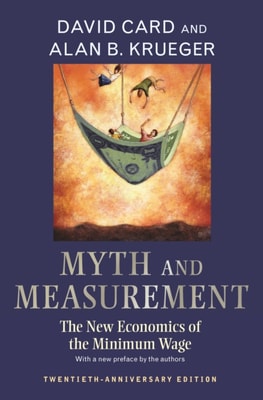
From David Card, winner of the Nobel Prize in Economics, and Alan Krueger, a provocative challenge to conventional wisdom about the minimum wageDavid Card and Alan B.
A groundbreaking history of why governments do-and don't-tax the richIn today's social climate of acknowledged and growing inequality, why are there not greater efforts to tax the rich?
From the author of the #1 New York Times bestseller On Bullshit, the case for worrying less about the rich and more about the poorEconomic inequality is one of the most divisive issues of our time.
Why economic insecurity spurs so little collective political actionAmericans today face no shortage of threats to their financial well-being, such as job and retirement insecurity, health care costs, and spiraling college tuition.
Why India's problems won't be solved by rapid economic growth aloneWhen India became independent in 1947 after two centuries of colonial rule, it immediately adopted a firmly democratic political system, with multiple parties, freedom of speech, and extensive political rights.
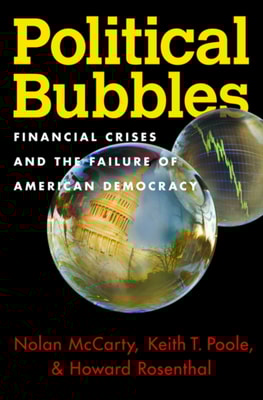
How governmental failure led to the 2008 financial crisis-and what needs to be done to avoid another similar event Behind every financial crisis lurks a "e;political bubble"e;-policy biases that foster market behaviors leading to financial instability.
Nobel Prize-winning economist explains why we need to reclaim finance for the common goodThe reputation of the financial industry could hardly be worse than it is today in the painful aftermath of the 2008 financial crisis.