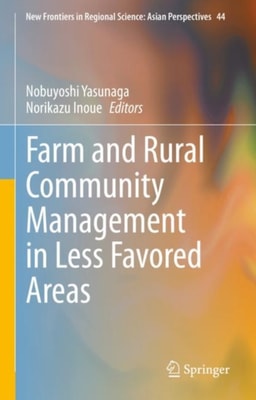
The answers to the questions of why and how people live where they live as well as how they maintain and integrate with one another are fundamental human settlement issues rooted in history and culture.
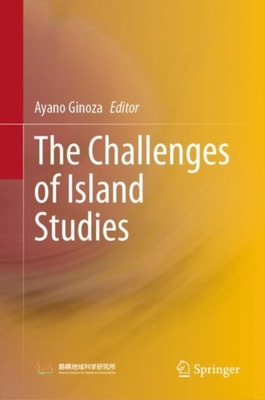
This book attempts to reveal historical dynamism of transforming contemporary Maritime Asia and to identify key driving forces or agencies for the evolution and transformation of Maritime Asia in the context of global history studies.
This book focuses on the impact on financial regulation and examines the impact of financial regulation on bank performances from different perspectives.
This book focuses on the impact and effectiveness of foreign aid or official development assistance (ODA) from several aspects, as in the exemplary case of Thailand-factors that are important for formulating growth and fiscal policies to use foreign aid efficiently.
In his critical study of Australian imperialism, Erik Paul analyses the making, character and contours of the geopolitical state from the time of the British invasion and colonisation to the present, expanding the country's continental political and economic power.
This book covers the whole system of Socialism with Chinese Characteristics, dealing with Deng Xiaoping's theory, the socialist market economy, a moderately well-off (Xiaokang) society, China's practice and theory of socialist democracy, human rights, and Xi Jinping's Marxism.
This book highlights the critical relationship between China and the Association of Southeast Asian Nations (ASEAN) associated with its trade interdependency.
This edited book brings together in one place new studies of rural-urban interactions and their implications for regional growth and development in different regions within Asia.
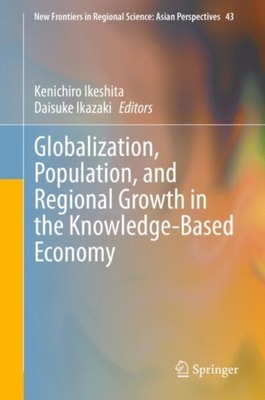
This book clarifies how globalization, progress in the knowledge-based economy, and demographic change affect regional economic growth, using the latest analytical methods for economic growth.
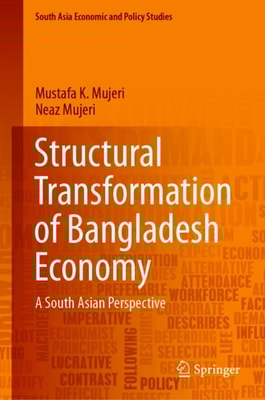
This book examines the theory and global evidence on structural transformation along with stylised facts and implications using, among others, a dynamic panel model, for South Asia.
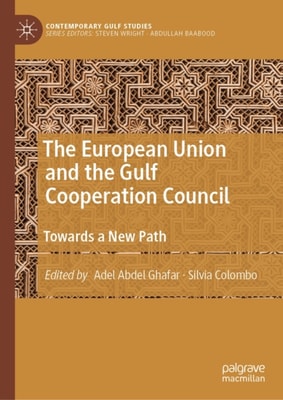
This book provides a comprehensive assessment of the various dimensions of the relationship between the European Union and the Gulf Cooperation Council, and highlights how relations are yet to reach their full potential.
The core argument of this book is that China poses both challenges and creates opportunities for Africa, and that the transformative potentials of China-Africa engagements can be compared to Africa's experiences with European colonialism.
This book contributes to the understanding of environment-economy relations from the perspective of economic geography, grounded in the institutional context of China.
The book summarizes the 60 year development of economic theories, explaining in detail the features and development of economic theories from 1949 to 1976 and in the reform and opening-up period.
This book not only discusses how to further deepen the oil cooperation relations between China and the Gulf Council Countries in the context of "e;the Belt and Road Initiative"e;, but also investigates how to ensure the security of the entire oil supply chain including oil supply, oil transportation channels, oil demand, and petroleum reserves in China.
This volume is devoted to three key themes central to studies in regional science: the sub-national labor market, migration, and mobility, and their analysis.
This book provides an overview of the origins, repercussions and projected future of the ongoing Gulf crisis, as well as an analysis of the major issues and debates relating to it.
This book offers a selection of intensely researched essays focused on the critical planning objectives and policy priorities that would enhance the promotion of inclusive growth in a developing country.
This book gathers invited top experts on Public-Private partnership (PPP) in China, from both theoretical and practical fields, to present the most comprehensive analyses of PPP's practice in China up to 2017.
This book examines state-state relations and new forms of state business relations that have emerged with an increase in China's foreign direct investments in Malaysia.
The Belt and Road Initiative (BRI), officially unveiled in 2013, is Chinese President Xi Jinping's signature foreign and economic policy initiative to achieve improved connectivity, regional cooperation, and economic development on a trans-continental scale.
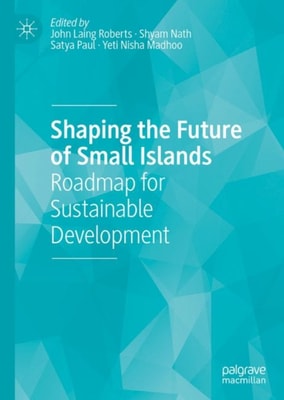
The book provides fresh look at the issues of sustainable development, degradation of natural resources and vulnerability to climate change in Small Island developing states (SIDS).
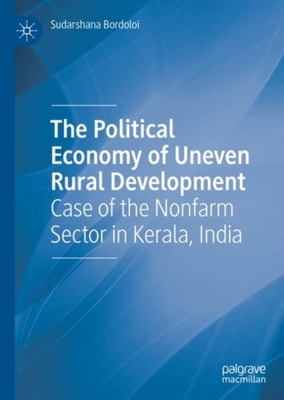
The book shows how class relations develop and is a consequence of capitalist development of the rural non-agricultural/non-farm sector (RNFS)---seen as the dialectical relation between the forces and relations of production---as mediated by the state, which produces uneven social and spatial outcomes.