Kennzahlen als „komprimierte Aussagen über komplexe Zusammenhänge" sind im betrieblichen Arbeitsalltag selbstverständlicher Bestandteil des Handelns in allen Unternehmensbereichen.
Through a mixture of concepts and examples, the second edition of this book demystifies the variety of elements of financial accounting and uncovers the need-to-know information for certification in this field.
When the global financial crisis broke, central banks in both the US and the UK undertook massive asset purchase programmes which resulted in considerable increase in assets.
This textbook offers a step-by-step guide through comprehensive financial statement analysis with real-life case studies for students of financial accounting, financial reporting, and financial statement analysis.
Most university undergraduate and graduate audit classes are geared towards educating prospective auditors but do not provide education for those who will be audit clients and subjected to audits.
This book examines on an international basis how small and medium-sized enterprises (SMEs) cope with the changing economic and social challenges, which are also reflected in financial and non-financial reporting.
This book investigates the going-concern principle in the non-financial disclosure by companies in the international scenario proposing concepts and challenges to come.
The way in which leverage and its expected dynamics impact on firm valuation is very different from what is assumed by the traditional static capital structure framework.
Focusing on the controlling management method, this book considers the conditions that must be met within a given organization in order for controlling to achieve the desired level of product quality, allowing it to enhance the performance of the organization as a whole.
This book deals with the debated relationship between the characteristics of national supervision and manipulative practices in banks' annual reports, with a specific focus on income smoothing.
This book examines current topics and trends in strategic auditing, accounting and finance in digital transformation both from a theoretical and practical perspective.
This book presents an empirical analysis on how the new lease accounting model of IFRS 16 affects financial statements and performance of Italian companies.
This book addresses the considerations and factors that accounting professionals should take into account when pivoting from practice to higher education, think tanks, or other non-practitioner roles.
This textbook presents concepts and applications of Management Accounting, one of the main approaches used by management to support future organisational performance.
Today, information technology plays a pivotal role in financial control and audit: most financial data is now digitally recorded and dispersed among servers, clouds and networks over which the audited firm has no control.
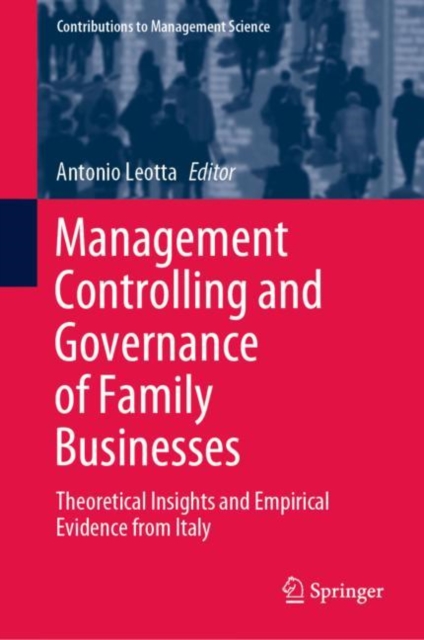
This book addresses a selection of major topics in family businesses, namely 'managerialization' and 'professionalization', succession, internationalization, access to financial markets, and how governance and control systems can help family firms respond to common problems inherent in the business.
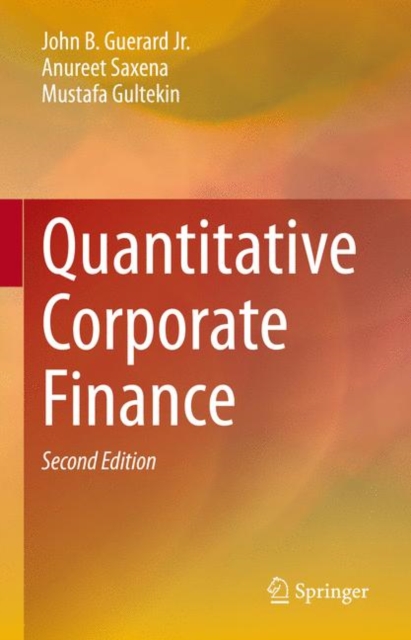
This textbook presents a comprehensive treatment of the legal arrangement of the corporation, the instruments and institutions through which capital can be raised, the management of the flow of funds through the individual firm, and the methods of dividing the risks and returns among the various contributors of funds.
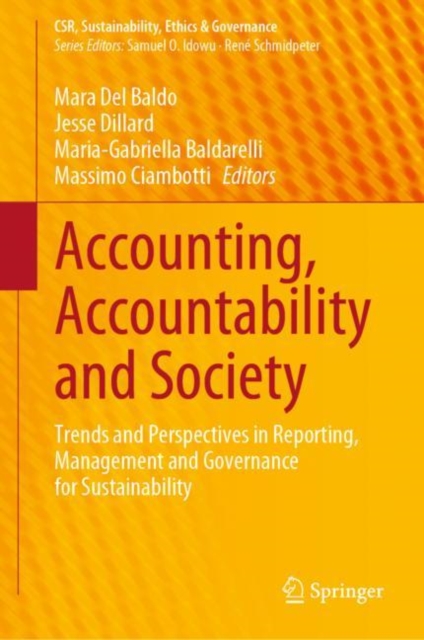
This book addresses the growing interest among policymakers, practitioners and academics in the evolution and the future implications of social, environmental and sustainability accounting.
This book explores new topics in modern research on empirical corporate finance and applied accounting, especially the econometric analysis of microdata.
Blockchain technology and artificial intelligence (AI) have the potential to transform how the accounting and financial services industries engage with the business, stakeholder and consumer communities.
This book analyses the role of public sector accounting, and the relevance of accounting frameworks, in assisting financially sustainable policy making.
This book is designed to meet the needs of CFOs, accounting and financial professionals interested in leveraging the power of data-driven customer insights in management accounting and financial reporting systems.