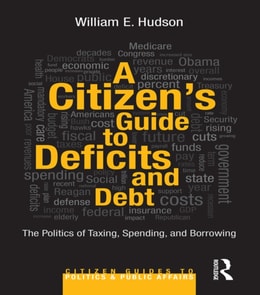
The economic crisis of 2008-2009 and beyond has provided the greatest challenge to public policy in the developed world since the Second World War, as the use of public monies to support banks and declining tax revenues have resulted in rising government borrowing and national debt.
This book seeks to explain the global financial crisis and its wider economic, political, and social repercussions, arguing that the 2007-9 meltdown was in fact a systemic crisis of the capitalist system.
This book seeks to explain the global financial crisis and its wider economic, political, and social repercussions, arguing that the 2007-9 meltdown was in fact a systemic crisis of the capitalist system.
The first edition of Applied Health Economics did an expert job of showing how the availability of large scale data sets and the rapid advancement of advanced econometric techniques can help health economists and health professionals make sense of information better than ever before.
The first edition of Applied Health Economics did an expert job of showing how the availability of large scale data sets and the rapid advancement of advanced econometric techniques can help health economists and health professionals make sense of information better than ever before.
This book is written with an acute awareness of the need for new insight to ensure (1) universal protection in basic healthcare; (2) providing choice; (3) efficient production and consumption of healthcare services; (4) financial sustainability of the healthcare system.
This book is written with an acute awareness of the need for new insight to ensure (1) universal protection in basic healthcare; (2) providing choice; (3) efficient production and consumption of healthcare services; (4) financial sustainability of the healthcare system.
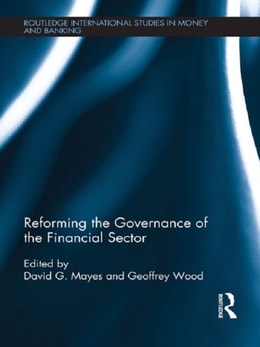
Many financial institutions have in recent years failed - failed either completely, and gone into bankruptcy, or failed in the sense that they have not achieved what their owners or their customers expected them to deliver.
Many financial institutions have in recent years failed - failed either completely, and gone into bankruptcy, or failed in the sense that they have not achieved what their owners or their customers expected them to deliver.
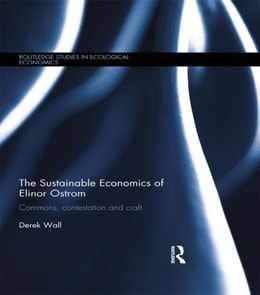
Elinor Ostrom's Nobel Prize-winning work on common pool property rights has implications for some of the most pressing sustainability issues of the twenty-first century - from tackling climate change to maintaining cyberspace.
Elinor Ostrom's Nobel Prize-winning work on common pool property rights has implications for some of the most pressing sustainability issues of the twenty-first century - from tackling climate change to maintaining cyberspace.
A public-private partnership (PPP) is a contractual arrangement with appropriate risk sharing between public and private partners for the delivery of public infrastructure or services, which is intended to create value-for-money to the taxpayer.
A public-private partnership (PPP) is a contractual arrangement with appropriate risk sharing between public and private partners for the delivery of public infrastructure or services, which is intended to create value-for-money to the taxpayer.
This book examines the political origins of financial institutions across fifteen developed democracies, with focused case studies on the US, France, Japan, Austria, and Germany.
This book examines the political origins of financial institutions across fifteen developed democracies, with focused case studies on the US, France, Japan, Austria, and Germany.
In recent times not only have traditional areas of public economics such as taxation, public expenditure, public sector pricing, benefit cost analysis, and fiscal federalism thrown up new challenges but entirely new areas of research and inquiry have emerged.
In recent times not only have traditional areas of public economics such as taxation, public expenditure, public sector pricing, benefit cost analysis, and fiscal federalism thrown up new challenges but entirely new areas of research and inquiry have emerged.
This book reflects on how the economies, social characteristics, ways of life and global relationships of rural areas of Europe have changed in recent years.
This book reflects on how the economies, social characteristics, ways of life and global relationships of rural areas of Europe have changed in recent years.
The book studies the trends that led to the worst financial crisis since the Great Depression, as well as the unfolding of the crisis, in order to provide policy recommendations to improve financial stability.
The book studies the trends that led to the worst financial crisis since the Great Depression, as well as the unfolding of the crisis, in order to provide policy recommendations to improve financial stability.
This new volume sheds new light on current monetary issues, in particular the debate on monetary policy making, by blending theoretical economic analysis, history of economics, and historical case studies.
This new volume sheds new light on current monetary issues, in particular the debate on monetary policy making, by blending theoretical economic analysis, history of economics, and historical case studies.
Computational design has become widely accepted into mainstream architecture, but this is the first book to advocate applying it to create adaptable masterplans for rapid urban growth, urban heterogeneity, through computational urbanism.
Computational design has become widely accepted into mainstream architecture, but this is the first book to advocate applying it to create adaptable masterplans for rapid urban growth, urban heterogeneity, through computational urbanism.
The financial crash of 2007-2008 and the subsequent global economic crisis have raised questions about the viability of capitalism and the desirability of alternative types of economic system.
The financial crash of 2007-2008 and the subsequent global economic crisis have raised questions about the viability of capitalism and the desirability of alternative types of economic system.
Climate Change and the Private Sector explores the challenges of transforming our energy infrastructure to become carbon neutral and adapting to climate change in the twenty-first century.
Climate Change and the Private Sector explores the challenges of transforming our energy infrastructure to become carbon neutral and adapting to climate change in the twenty-first century.
First published in 1990, International Bond Markets analyses how the markets in public-sector debt have developed and how they operate in a number of countries, including those with chronic budget deficits.