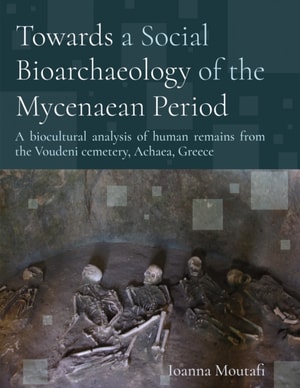
This book investigates the complex relationship between funerary treatment and wider social dynamics through a contextual analysis of human skeletal remains and associated mortuary data from Voudeni, an important Mycenaean (1450–1050 BC) chamber tomb cemetery in Achaea, Greece.
This book investigates the complex relationship between funerary treatment and wider social dynamics through a contextual analysis of human skeletal remains and associated mortuary data from Voudeni, an important Mycenaean (1450–1050 BC) chamber tomb cemetery in Achaea, Greece.
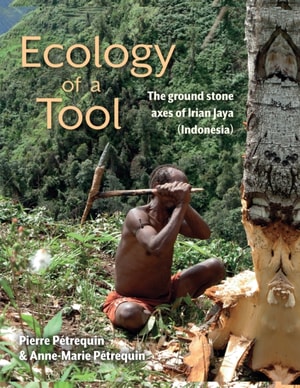
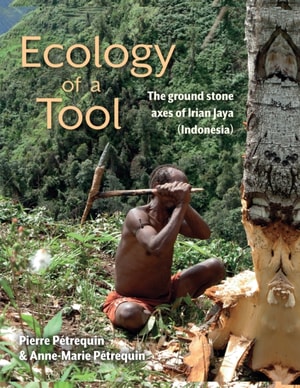
New Guinea, and especially Papua New Guinea, is the last country in the world where ethnologists were able to closely observe, film and photograph the whole manufacturing chaînes opératoires of polished stone felling tools, from quarry extraction to finished tool use.
New Guinea, and especially Papua New Guinea, is the last country in the world where ethnologists were able to closely observe, film and photograph the whole manufacturing chaînes opératoires of polished stone felling tools, from quarry extraction to finished tool use.
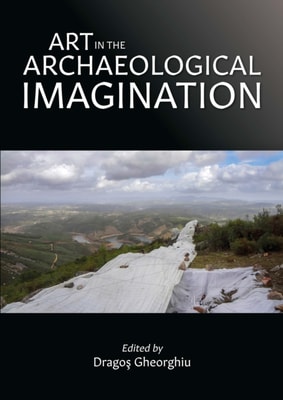
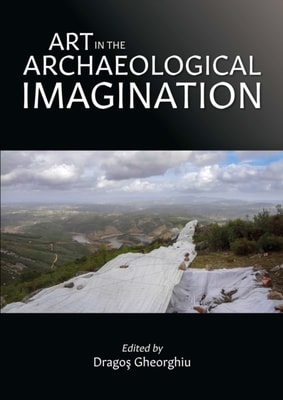
The book discusses the creative mental processes of the prehistoric and contemporaryartists, as well as of the archaeologists studying them from the perspective ofcognition and art.
The book discusses the creative mental processes of the prehistoric and contemporaryartists, as well as of the archaeologists studying them from the perspective ofcognition and art.
Industrialization is a notoriously complex issue in terms of the hazards and benefits it has brought to human beings in our endeavors to improve our lives.
Industrialization is a notoriously complex issue in terms of the hazards and benefits it has brought to human beings in our endeavors to improve our lives.
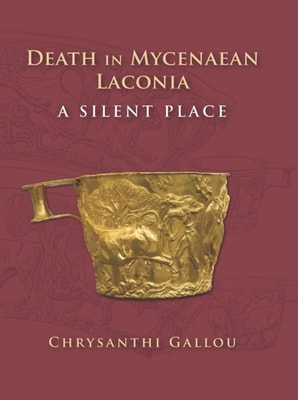
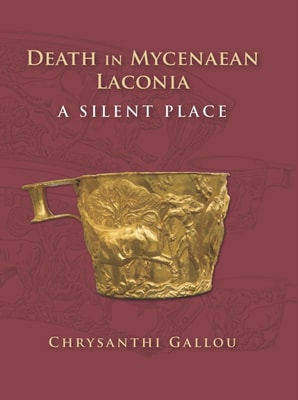
A Silent Place: Death in Mycenaean Lakonia is the first book-length systematic study of the Late Bronze Age (LBA) burial tradition in south-eastern Peloponnese, Greece, and the first to comprehensively present and discuss all Mycenaean tombs and funerary contexts excavated and/or simply reported in the region from the 19th century to present day.
A Silent Place: Death in Mycenaean Lakonia is the first book-length systematic study of the Late Bronze Age (LBA) burial tradition in south-eastern Peloponnese, Greece, and the first to comprehensively present and discuss all Mycenaean tombs and funerary contexts excavated and/or simply reported in the region from the 19th century to present day.
The social processes involved in acquiring flint and stone in the Neolithic began to be considered over thirty years ago, promoting a more dynamic view of past extraction processes.
The social processes involved in acquiring flint and stone in the Neolithic began to be considered over thirty years ago, promoting a more dynamic view of past extraction processes.
The Archaeological Investigations Project (AIP), funded by English Heritage, systematically collected information about the nature and outcomes of more than 86,000 archaeological projects undertaken between 1990 and 2010.
The Archaeological Investigations Project (AIP), funded by English Heritage, systematically collected information about the nature and outcomes of more than 86,000 archaeological projects undertaken between 1990 and 2010.
This second volume on Early Cycladic (and Cycladicising) sculptures found in the Aegean, examines finds from mainland Greece, along with the rarer items from the north and east Aegean, with the exception of those discovered in the Cyclades (covered in the preceding volume), and of those found in Crete.
This second volume on Early Cycladic (and Cycladicising) sculptures found in the Aegean, examines finds from mainland Greece, along with the rarer items from the north and east Aegean, with the exception of those discovered in the Cyclades (covered in the preceding volume), and of those found in Crete.
If there is a feature of the Central European Neolithic period that deserves increased attention of researchers and all those with interest in prehistory, it is circular architecture of the dimensions of many tens of metres, from which only negative imprints of the ditches and imprints of posts in the form of postholes or narrow trenches are preserved to this day.
If there is a feature of the Central European Neolithic period that deserves increased attention of researchers and all those with interest in prehistory, it is circular architecture of the dimensions of many tens of metres, from which only negative imprints of the ditches and imprints of posts in the form of postholes or narrow trenches are preserved to this day.
Ten years after the first volume, this book highlights the important contribution Raman spectroscopy makes as a non-destructive method for characterising the chemical composition of objects with archaeological and historical importance.
Ten years after the first volume, this book highlights the important contribution Raman spectroscopy makes as a non-destructive method for characterising the chemical composition of objects with archaeological and historical importance.
‘Shamanism’ is a term with specific anthropological roots, but which is used more generally to cover a set of interactions between a practitioner or ‘shaman’ and a spiritual or religious realm beyond the reach of most members of the community.
‘Shamanism’ is a term with specific anthropological roots, but which is used more generally to cover a set of interactions between a practitioner or ‘shaman’ and a spiritual or religious realm beyond the reach of most members of the community.
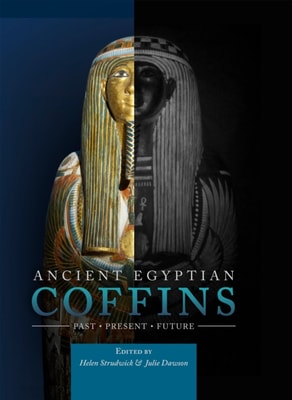
This collection of papers by leading international experts on the subject of ancient Egyptian coffins, builds on a project based at the Fitzwilliam Museum, Cambridge, to study and record in detail its collection.
This collection of papers by leading international experts on the subject of ancient Egyptian coffins, builds on a project based at the Fitzwilliam Museum, Cambridge, to study and record in detail its collection.
The Bioarchaeology of Ritual and Religion is the first volume dedicated to exploring ritual and religious practice in past societies from a variety of ‘environmental’ remains.
The Bioarchaeology of Ritual and Religion is the first volume dedicated to exploring ritual and religious practice in past societies from a variety of ‘environmental’ remains.
Human migration tends to involve more than the odd suitcase or two - we often carry other organisms on our travels, some are deliberately transported, others move by accident.
Human migration tends to involve more than the odd suitcase or two - we often carry other organisms on our travels, some are deliberately transported, others move by accident.
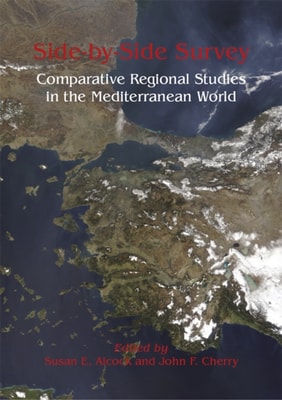
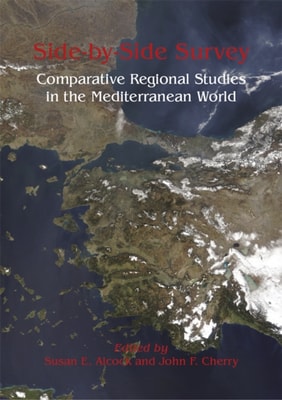
Twenty years ago, John Cherry looked forward to the day when archaeological survey projects working around the Mediterranean region (the 'Frogs round the pond') would begin to compare and synthesize the information they had collected.
Twenty years ago, John Cherry looked forward to the day when archaeological survey projects working around the Mediterranean region (the 'Frogs round the pond') would begin to compare and synthesize the information they had collected.