The Mongol invasions in the first half of the thirteenth century led to profound and shattering changes to the historical trajectory of Islamic West Asia.
Following the devastating Mongol conquest of Baghdad in 1258, the domination of the Abbasids declined leading to successor polities, chiefly among them the Ilkhanate in Greater Iran, Iraq and the Caucasus.
In the second half of the twentieth century, Germany became the dominant political and economic power in Europe - and the arbiter of all important EU decisions.
The Mongol invasions in the first half of the thirteenth century led to profound and shattering changes to the historical trajectory of Islamic West Asia.
The Parthenon Marbles (formerly known as the Elgin Marbles), designed and executed by Pheidias to adorn the Parthenon, are perhaps the greatest of all classical sculptures.
This book is about sustainable agriculture and architecture in the past and the engineering works that supported them, but it also looks to the future.
This book is about sustainable agriculture and architecture in the past and the engineering works that supported them, but it also looks to the future.
This book is the culmination of the author’s lifelong interest in the Roman to medieval transition in England and in the analysis of the historic landscape of Wessex.
This book is the culmination of the author’s lifelong interest in the Roman to medieval transition in England and in the analysis of the historic landscape of Wessex.
Western Iberia has one of the richest inventories of Neolithic chambered tombs in Atlantic Europe, with particular concentrations in Galicia, northern Portugal and the Alentejo.
Western Iberia has one of the richest inventories of Neolithic chambered tombs in Atlantic Europe, with particular concentrations in Galicia, northern Portugal and the Alentejo.
Few areas of the world have played as prominent a role in human evolution as the Levantine Corridor, a comparatively narrow strip of land sandwiched between the Mediterranean Sea on the west and the expanse of inhospitable desert to the east.
Few areas of the world have played as prominent a role in human evolution as the Levantine Corridor, a comparatively narrow strip of land sandwiched between the Mediterranean Sea on the west and the expanse of inhospitable desert to the east.
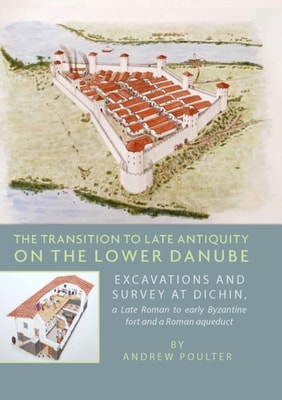
Excavations on the site of this remarkable fort in northern Bulgaria (1996–2005) formed part of a long-term program of excavation and intensive field survey, aimed at tracing the economic as well as physical changes which mark the transition from the Roman Empire to the Middle Ages, a program that commenced with the excavation and full publication of the early Byzantine fortress/city of Nicopolis ad Istrum.
Excavations on the site of this remarkable fort in northern Bulgaria (1996–2005) formed part of a long-term program of excavation and intensive field survey, aimed at tracing the economic as well as physical changes which mark the transition from the Roman Empire to the Middle Ages, a program that commenced with the excavation and full publication of the early Byzantine fortress/city of Nicopolis ad Istrum.
‘Shamanism’ is a term with specific anthropological roots, but which is used more generally to cover a set of interactions between a practitioner or ‘shaman’ and a spiritual or religious realm beyond the reach of most members of the community.
‘Shamanism’ is a term with specific anthropological roots, but which is used more generally to cover a set of interactions between a practitioner or ‘shaman’ and a spiritual or religious realm beyond the reach of most members of the community.