An archaeologist explores history's most fascinating enigmas, from the ancient Druids to the mysteries of the Mayan calendar and the lost city of Atlantis.
Empathy and Performance advances a study of empathy and enactments of power by examining works from author-actors whose performances explore the boundaries between two kinship positions.
Focusing on the city of Armidale during the period 1830 to 1930, this book investigates the relationship between the development of capitalism in a particular region (New England, Australia) and the expression of ideology within architectural style.
Microbial defacement and degradation of artistic or historic artifacts is a worldwide problem affecting all countries regardless of their history, geographical location, or economic conditions.
The symposium "e;Prehistoric Iberia: genetics, anthropology and linguistics"e; was held in the Circulo de Bellas Artes, Madrid on 16th -17th November 1998.
Drawing on Kent Flannery's forty years of cross-cultural research in the area, the contributors to this collection reflect the current diversity of contemporary approaches to the study of cultural evolutionary processes.
Technology transfer has played an increasingly important role in historic preservation during the latter half of the twentieth century, a situation attested to by the undertaking of an important congressional study in 1986 that assessed the role of federal agencies in the field.
In this book I walk with the reader along the bothered me that some of my colleagues, in their archaeological pathways traveled by many reports of archaeological activity on documented researchers in the process of historic site historic sites, never mention finding evidence of previous American Indian occupation.
The Encyclopedia of Prehistory represents also defined by a somewhat different set of an attempt to provide basic information sociocultural characteristics than are eth- on all archaeologically known cultures, nological cultures.
The Encyclopedia of Prehistory represents also defined by a somewhat different set of an attempt to provide basic information sociocultural characteristics than are eth- on all archaeologically known cultures, nological cultures.
The Encyclopedia of Prehistory represents also defined bya somewhatdifferent set of an attempt to provide basic information sociocultural characteristics than are eth- on all archaeologically known cultures, nological cultures.
The Encyclopedia of Prehistory represents also defined by a somewhat different set of an attempt to provide basic information sociocultural characteristics than are eth- on all archaeologically known cultures, nological cultures.
Earth Sciences and Archaeology brings together contributions from an experienced group of archaeologists and geologists whose common objective is to present thorough and current reviews of the diverse ways in which methods from the earth sciences can contribute to archaeological research.
The evolution of complex cultural systems is marked by a number of broad, sweeping patterns that characterize many different cultures at different points in time across the globe.
The archaeological focus on a single geographical area offers an opportunity to present projectile point typology as a microtechnology even though some of the types have widespread distributions.
As the foundations of the modern world were being laid at the beginning of the 19th century, Annapolis, Maryland, identified itself as the Ancient City.
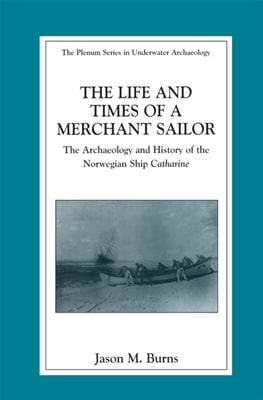
Although underwater archaeology has assumed its rightful place as an important subdiscipline in the field, the published literature has not kept pace with the rapid increase in the number of both prehistoric and historic underwater sites.
This book analyses the problematics of archaeological heritage management in the Canary Islands, which are echoed in other parts of the world where the indigenous heritage is under-represented.
Hadrian's Wall was inscribed as a World Heritage Site (WHS) in 1987 and, with the German Limes, became one of the first two parts of the transnational 'Frontiers of the Roman Empire' (FRE) WHS in 2005.
Historical archaeologists are in a unique position to analyze both historical documents and archaeological data in order to generate hypotheses and draw conclusions.
Writing to the governor of Florida in September of 1964, the president of the Florida Keys Underwater Guides Association expressed concern about proposed salvage operations on the shipwrecks of the Spanish fleet of 1733.
The chapters in this edited volume present multi-disciplinary case studies of prehistoric archaeological sites located on now-submerged portions of the continental shelf.
Contesting Ethnoarchaeologies provides a systematic overview of major non-American traditions of ethnoarchaeology, with a particular focus on Europe and Asia.
The study of ancient metals in their social and cultural contexts has been a topic of considerable interest in archaeology and ancient history for decades, partly due to the modern dependence on technology and man-made materials.
The artificial shaping of the skull vault of infants expresses fundamental aspects of crafted beauty, of identity, status and gender in a way no other body practice does.
The papers in this book question the tyranny of typological thinking in archaeology through case studies from various South American countries (Venezuela, Colombia, Bolivia, Argentina, and Brazil) and Antarctica.
Social and behavioral scientists study religion or spirituality in various ways and have defined and approached the subject from different perspectives.
In creating interpretive strategies for maritime sites, archaeologists and resource managers often are required to think creatively to overcome challenges and problems.
This volume provides the results of a 30-year excavation, reconstruction, and public interpretation campaign at the late prehistoric inland promontory settlement of Castell Henllys, here focusing on the defensive sequence and the role of monumentality in later prehistory.