This volume represents a more Africanist approach to the framework of maritime landscapes and challenges of adapting international heritage policy such as the UNESCO convention.
The original papers collected in this pioneering volume address the historical archaeology of Aboriginal Australia and its application in researching the shared history of Aboriginal and settler Australians.
This edited volume presents current archaeological research and data from the major early Acheulean sites in East Africa, and addresses three main areas of focus; 1) the tempo and mode of technological changes that led to the emergence of the Acheulean in East Africa; 2) new approaches to lithic collections, including lithic technology analyses; and 3) the debated coexistence of the Developed Oldowan and the early Acheulean.
In this book, Eleonora Redaelli investigates the arts in American cities, providing insight into urban cultural policy discourse through the lens of space.
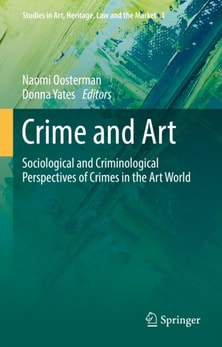
This volume brings together work by authors who draw upon sociological and criminological methods, theory, and frameworks, to produce research that pushes boundaries, considers new questions, and reshape the existing understanding of "e;art crimes"e;, with a strong emphasis on methodological innovation and novel theory application.
In the modern era, every family and local community can cultivate its own history, endowing living people with meanings inherited from the people of the past, by means of today's computer-based information and communication technologies.
This book provides rare insights into the difficult and complex dialogues between stakeholders within and outside the music industries in a time of transition.
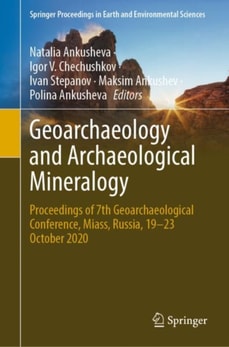
This book of Springer Proceedings in Geoarchaeology and Archaeological Mineralogy contains selected papers presented at the 7th Geoarchaeology Conference, which took place during October 19-23, 2020, at the South Urals Federal Research Center, Ural Branch of Russian Academy of Sciences, Miass, Russia.
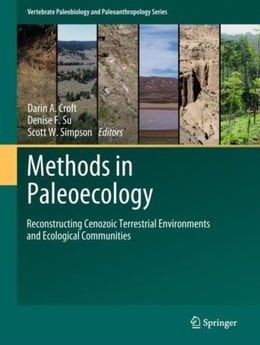
This volume focuses on the reconstruction of past ecosystems and provides a comprehensive review of current techniques and their application in exemplar studies.
This volume contributes to the emerging topic of social paleoethnobotany with a series of papers exploring dynamic aspects of past social life, particularly the day-to-day practices and politics of procuring, preparing, and consuming plants.
This second edition of the classic textbook, The Archaeologist's Laboratory, is a substantially revised work that offers updated information on the archaeological work that follows fieldwork, such as the processing and analysis of artifacts and other evidence.
This book presents a novel and innovative approach to the study of social evolution using case studies from the Old and the New World, from prehistory to the present.
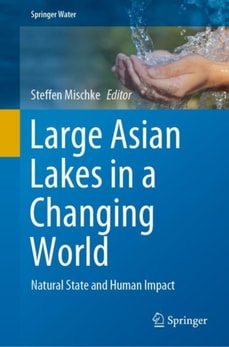
Describing the natural state of eight important lakes in Asia and the human impact on these lake ecosystems, this book offers a valuable reference guide.
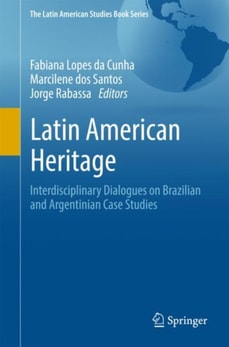
Focusing on Brazil, this book approaches the term "e;heritage"e; from not only a historical and architectural point of view, but also considers its artistic, archaeological, natural, ethnological and industrial aspects.
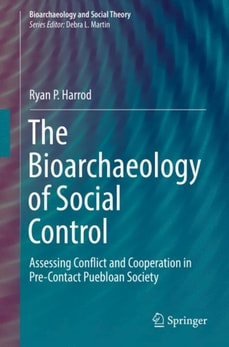
Taking a bioarchaeological approach, this book examines the Ancestral Pueblo culture living in the Four Corners region of the United States during the late Pueblo I through the end of the Pueblo III period (AD 850-1300).
This book explores the relevance of new sources, dimensions, and characteristics of knowledge for supporting creative and cultural organizations and initiatives.
This book focuses on Romania's more than 12,000 caves, which developed in limestone (including thermal water caves), salt, gypsum, and occasionally in sandstone.
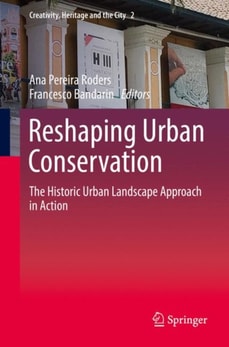
This volume focuses on the implementation of the 2011 UNESCO Recommendation on the Historic Urban Landscape (HUL approach), designed to foster the integration of heritage management in regional and urban planning and management, and strengthen the role of heritage in sustainable urban development.
Zooarchaeology in Practice unites depth of treatment with broad topical coverage to advance methodological discussion and development in archaeofaunal analysis.
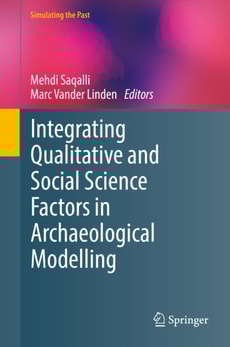
This book covers the methodological, epistemological and practical issues of integrating qualitative and socio-anthropological factors into archaeological modeling.
Recent years have witnessed a rapid increase in the fields of cultural heritage studies and community archaeology worldwide with expanding discussions about the mechanisms and consequences of community participation.
Urbanization has long been a focus of bioarchaeological research, but what is missing from the literature is an exploration of the geographic and temporal range of human biological, demographic, and sociocultural responses to this major shift in settlement pattern.
This volume is a resource for bioarchaeologists interested in using a structural violence framework to better understand and contextualize the lived experiences of past populations.
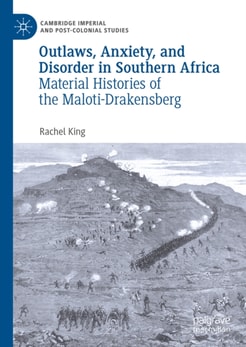
This book explores how objects, landscapes, and architecture were at the heart of how people imagined outlaws and disorder in colonial southern Africa.
This book elaborates on the distinctive characteristics as well as the archaeological, historical and artistic value of Liangzhu pottery, welcoming readers to the wonderful world of Liangzhu by introducing them to its origin, type, design, decoration, evolution and processing technology.
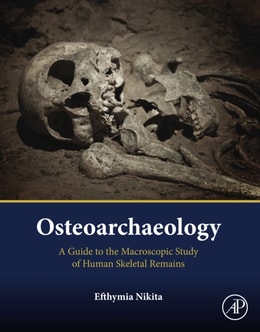
Osteoarchaeology: A Guide to the Macroscopic Study of Human Skeletal Remains covers the identification of bones and teeth, taphonomy, sex, ancestry assessment, age estimation, the analysis of biodistances, growth patterns and activity markers, and paleopathology.
This authored dictionary presents a unique glossary of paleontological terms, taxa, localities, and concepts, with focus on the most significant orders, genera, and species in terms of historical turning points such as mass extinctions.
This book analyzes the role of ai Viet (Vietnam) in the maritime Asian trading network of the thirteenth through the eighteenth centuries as it systematically integrates the results of archaeological investigations.
This book presents selected academic papers addressing five key research areas - archaeology, history, language, culture and arts - related to the Malay Civilisation.
This book addresses questions about theories of heritage, its methodologies of research, and where its boundaries lie with tourism, urban development, post-disaster recovery, collective identities, memory, or conflict.
Following the discovery in Europe in the late 1850s that humanity had roots predating known history and reaching deep into the Pleistocene era, scientists wondered whether North American prehistory might be just as ancient.
This pivot sets Muslim shrines within the wider context of Heritage Studies in the Muslim world and considers their role in the articulation of sacred landscapes, their function as sites of cultural memory and their links to different religious traditions.
The definitive book on the archaeology of Palestine from Alexander the Great’s conquest to Constantine’s reign Drawing on the most recent, groundbreaking archaeological research, Eric M.