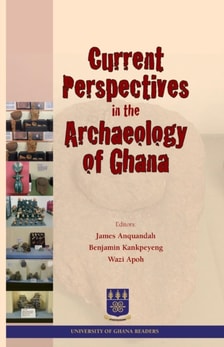
This collection of essays on archaeology and heritage studies is authored by local and expatriate scholars who are either past or current practitioners in archaeological work in Ghana.
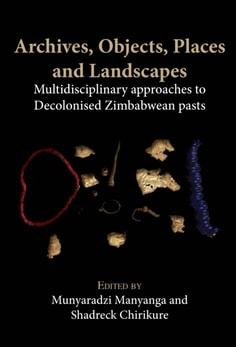
Dissatisfaction has matured in Africa and elsewhere around the fact that often, the dominant frameworks for interpreting the continent,s past are not rooted on the continent,s value system and philosophy.
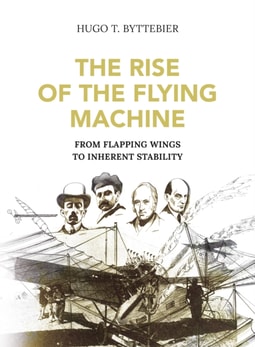
This important work of history tells the story of the aviation pioneers who devoted their lives, and often their fortunes, to the evolution of the aeroplane as it exists today.
The aim of the conference was to discuss the contribution of physics and other sciences in archaeological research and in the preservation of cultural heritage.
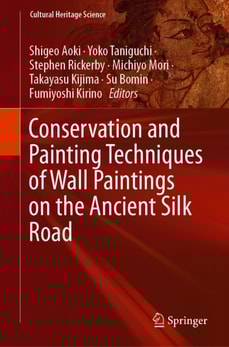
This book presents recent research on ancient Silk Road wall paintings, providing an up-to-date analysis of their coloring materials and techniques, and of developments in efforts to preserve them.
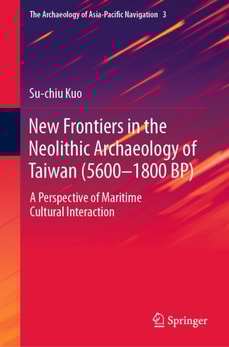
This book summarizes the systematic research on the Neolithic cultures of Taiwan, based on the latest archaeological discoveries, and focusing on the maritime interactions between mainland southeast China, Taiwan, and southeast Asia during (5600-1800 BP).
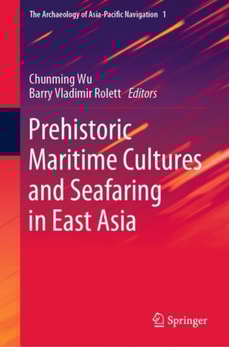
This book focuses on prehistoric East Asian maritime cultures that pre-dated the Maritime Silk Road, the "e;Four Seas"e; and "e;Four Oceans"e; navigation system recorded in historical documents of ancient China.
This book is one of the first to systematically explore cultural interactions between the Northern Zone of China and the Eurasian Steppe, with a focus on the formation process of the Xiongnu Confederation and the Silk Road.
This book provides comprehensive information on enlargement of methodological and empirical choices in a multidisciplinary perspective by breaking down the monopoly of possessing tribal studies in the confinement of conventional disciplinary boundaries.
This book explores China's global competitiveness in the building of infrastructures with a particular interest in the resource-rich African countries.
"e;The Earliest China"e; is the first archaeological book in China to translate in the dominant language of the world on the origin of Chinese ancient civilization in the Central Plains and the study of Xia dynastic culture.
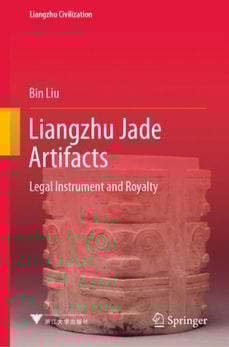
This book explains how the walls of Liangzhu City were made from bedding stones and mud, with the total area of bedding stones covering roughly 290,000 square meters.
This book traces archaeological exploration and discoveries as early as 2012 and reveals Liangzhu culture by reviewing seven years of archaeological findings at the Liangzhu historical site, developments in archaeology history, the psychological journeys of archaeologists, as well as the collision of schools of thought.
This book summary introduces the key research findings, exploration and excavation works carried out during the 80 years of archaeological endeavours entirely devoted to Liangzhu historical sites.
This book discusses the evolution of Mongolian shamanism from the distant past to the collapse of great empires such as the Yuan Dynasty in the fourteenth century, drawing on archeological findings and historical resources like the Mongolian Secret History.
Dunhuang studies refer to a discipline focusing on Dunhuang Manuscripts, Dunhuang grotto art, the theory of Dunhuang studies, and Dunhuang history and geography.
This book initiatively and systematically presents the latest discoveries in the context of shipwreck archaeology in China, telling the exciting story of the wrecks' distribution, connotation and the research advances and empirically reconstructing the development of overseas trade and maritime cultures along the Maritime Silk Road, which flourished for more than 2000 years.
This book outlines the latest research in Fanshan by the archaeologist, a man-made hathpace cemetery, on which is located the inner city of Liangzhu historical site at northwest area.
"e;The Earliest China"e; is the first archaeological book in China to translate in the dominant language of the world on the origin of Chinese ancient civilization in the Central Plains and the study of Xia dynastic culture.
This book clarifies the advent of Liangzhu Culture and analyses the morphology, structure and internal social organization of grass-root settlements, medium-size settlements and the ancient city of Liangzhu, as well as the religious beliefs, ideology and power mechanisms represented by jade.
This book addresses questions about theories of heritage, its methodologies of research, and where its boundaries lie with tourism, urban development, post-disaster recovery, collective identities, memory, or conflict.
This book analyzes the role of ai Viet (Vietnam) in the maritime Asian trading network of the thirteenth through the eighteenth centuries as it systematically integrates the results of archaeological investigations.
This book summarizes the latest archeological findings on Liangzhu culture and outlines the rise and fall of Liangzhu society in terms of its environment, flora and fauna.
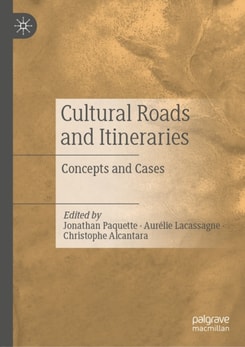
This book provides the first synthetic review of the literature on cultural roads and itineraries, providing a template for developing typologies and clarity on existing research.
This book presents an anthology of English-language archaeological and anthropological writings by Li Chi, the founding father of modern archaeology in China.
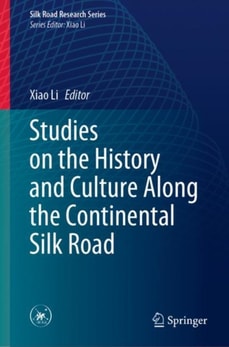
This book presents outstanding articles addressing various aspects related to the ancient Silk Road, in particular the cultural, political, and economic interactions that took place among the civilizations and cultures on the Eurasian continent.
This book elaborates on the distinctive characteristics as well as the archaeological, historical and artistic value of Liangzhu pottery, welcoming readers to the wonderful world of Liangzhu by introducing them to its origin, type, design, decoration, evolution and processing technology.
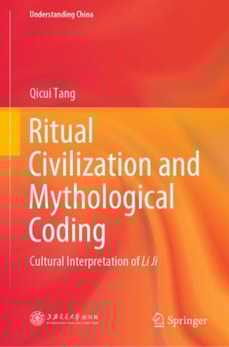
This book places Li Ji (the Book of Rites) back in the overall context of "e;books,"e; "e;rites"e; and its research history, drawing on the interrelations between myth, ritual and "e;materialized"e; symbols to do so.