This volume addresses the directions that studies of archaeological human remains have taken in a number of different countries, where attitudes range from widespread support to prohibition.
With a long history and deep connection to the Earth's resources, indigenous peoples have an intimate understanding and ability to observe the impacts linked to climate change.
This well-illustrated book offers an up-to-date synthesis of the field of historic preservation, cast as a social campaign concerned with the condition, treatment and use of the legacy of existing properties in the United States.
The Bible's grand narrative about Israel's Exodus from Egypt is central to Biblical religion, Jewish, Christian, and Muslim identity and the formation of the academic disciplines studying the ancient Near East.
This book explores the way in which the legacy of the German occupation of the Channel Islands has been turned into heritage (or, conversely, neglected) over the last 70 years.
This volume provides an up-to-date and in-depth summary and analysis of the political practices of pre-Columbian communities of the Araucanians or Mapuche of south-central Chile and adjacent regions.
This book examines methods for linking osteo-archaeological data with historical and environmental sources to shed light on the living conditions of past populations.
This manual pulls together-and illustrates with interesting case studies-the variety of specialized and generalized archaeological research strategies that yield new insights into science.
New Developments in the Bioarchaeology of Care evaluates, refines and expands existing concepts and practices in the developing field of bioarchaeological research into health-related care provision in the past.
This book highlights new and innovative approaches to archaeological research using computational modeling while focusing on the Neolithic transition around the world.
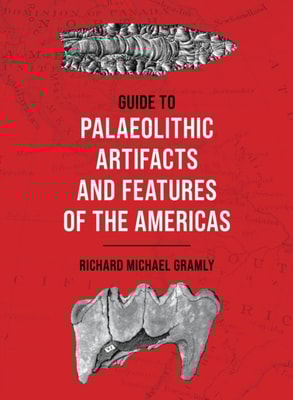
Guide to Palaeolithic Artifacts and Features of the Americas is the go-to reference for stone, bone, antler, ivory, and wooden artifacts of the Palaeolithic era in the Americas.
This book offers approaches to the study of Byzantine dress of elites and non-elites, in sacred and secular modes, from the beginning of the Empire in the fourth century until the fifteenth century.
Guide to Palaeolithic Artifacts and Features of the Americas is the go-to reference for stone, bone, antler, ivory, and wooden artifacts of the Palaeolithic era in the Americas.
The volume of Springer Proceedings in Geoarchaeology and Archaeological Mineralogy contains selected papers presented at the 9th Geoarchaeology Conference, which took place during September 19-22, 2022, at the South Urals Federal Research Center, the Ural Branch of the Russian Academy of Sciences, Miass, Russia.
Through the lens of the fashion industry, Iva Petkova explores not only how institutionalized organizations react and adapt to the rise of start-up outsiders, but also how these outside "e;disruptors"e; seek to cultivate legitimacy and win influence.
This book provides a cross-disciplinary perspective on the degradation and deterioration of the cultural record encompassed by urban headstones located in parish churchyards.
This volume presents a collection of articles which offer different perspectives for archaeological pottery studies, regarding the understanding of pre-Hispanic social practices in Quebrada de Humahuaca, Argentina.
Sauropodomorpha Huene 1932 is one of the most successful groups of dinosaurs, including the most abundant and diverse herbivorous forms with a worldwide record, extending from the late Triassic to the late Cretaceous.
This unique text/reference reviews the key principles and techniques in conceptual modelling which are of relevance to specialists in the field of cultural heritage.