This book offers new insights into the mechanisms of state control, systematic repression and mass violence focused on ethnic, political, class, and religious minorities in the recent past.
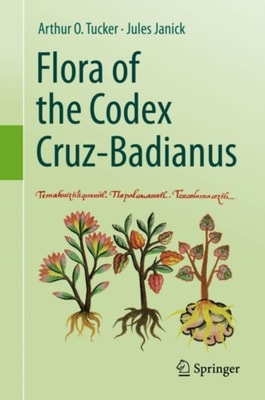
In 1929, Charles Upson Clark (1875-1960), a history Professor at Columbia University carrying out bibliographic research on the early history of the Americas in the Vatican Library, came across a remarkable illustrated Latin manuscript entitled Libellus de Medicinalibus Indorum Herbis (Little Book of Indian Medicinal Herbs) completed in 1552.
This volume is a resource for bioarchaeologists interested in using a structural violence framework to better understand and contextualize the lived experiences of past populations.
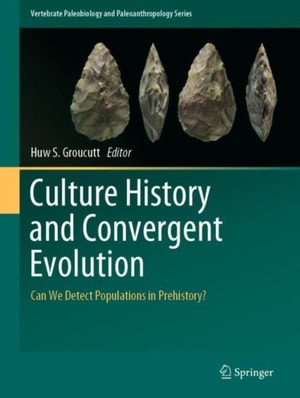
This volume brings together diverse contributions from leading archaeologists and paleoanthropologists, covering various spatial and temporal periods to distinguish convergent evolution from cultural transmission in order to see if we can discover ancient human populations.
This book, in two volumes, breathes fresh air empirically, methodologically, and theoretically into understanding the rich ceremonial lives, the philosophical-religious knowledge, and the impressive material feats and labor organization that distinguish Hopewell Indians of central Ohio and neighboring regions during the first centuries CE.
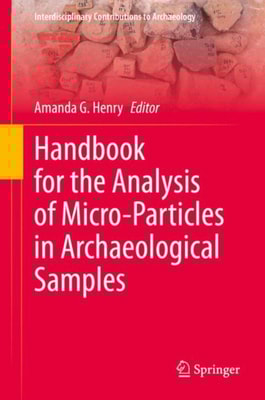
This handbook provides a resource for those already familiar with some kinds of micro-particles who wish to learn more about others, or for those just starting out in the study of microremains who wish to have a broad understanding about microscopic archaeology.
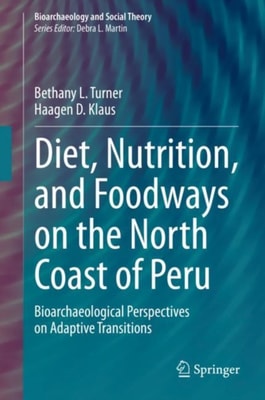
This book synthesizes in-depth bioarchaeological research into diet, subsistence regimes, and nutrition-and corresponding insights into adaptation, suffering, and resilience-among indigenous north-coastal Peruvian communities from early agricultural through European colonial periods.
Describing the natural state of eight important lakes in Asia and the human impact on these lake ecosystems, this book offers a valuable reference guide.
This collection of twenty-eight essays presents an up-to-date survey of pre-Islamic Iran, from the earliest dynasty of Illam to the end of Sasanian empire, encompassing a rich diversity of peoples and cultures.
This edited volume provides managers, as well as students, with the best practices in effectively leading the 21st century workforce and managing change.
This book offers fascinating insights into the lives of our ancestors and investigates the dynamic processes that led to the establishment of complex human societies.
Archaeological practice is currently shifting in response to feminist, indigenous, activist, community-based, and anarchic critiques of how archaeology is practiced and how science is used to interpret the past lives of people.
This book explores a wide range of emerging cultural, heritage, and other tourism issues that will shape the future of hospitality and tourism research and practice in the digital and innovation era.
This book discusses the Lagoa Santa Karst, which has been internationally known since the pioneering studies of the Danish naturalist Peter Lund in the early 1800s.
This volume gives voice to cultural institutions working with collections of Islamic art and material culture globally, including many from outside Western Europe and North America.
Anthropological histories and historical geographies of colonialism both have examined the material and discursive processes of colonization and have identified the opportunities for different kinds of relationships to emerge between Europeans and the indigenous people they encountered and in different ways colonized.
In one of the few studies to draw upon cemetery data to reconstruct the social organization, social change, and community composition of a specific area, this volume contributes to the growing body of sociohistorical examinations of Appalachia.
Highlighting the latest research on Actualistic Taphonomy (AT), this book presents the outcomes of a meeting that took place in Montevideo, Uruguay, in October 2017.
This book explores how objects, landscapes, and architecture were at the heart of how people imagined outlaws and disorder in colonial southern Africa.
Through case studies from Europe and Russia, this volume analyses memorials as a means for the present to make claims on the past in the aftermath of armed conflict.
This book introduces selected contributions from the GEGAL (Spanish acronym for Latin American Geoarchaeological Studies Group) Workshop held at La Paloma Beach, Uruguay, with a focus on Coastal Geoarchaeology, and an attendance of more than 50 researchers, students and professionals from several Latin American countries.
Communal-level resource management successes and failures comprise complex interactions that involve local, regional, and (increasingly) global scale political, economic, and environmental changes, shown to have recurring patterns and trajectories.
Recent years have witnessed a rapid increase in the fields of cultural heritage studies and community archaeology worldwide with expanding discussions about the mechanisms and consequences of community participation.
This book covers the methodological, epistemological and practical issues of integrating qualitative and socio-anthropological factors into archaeological modeling.