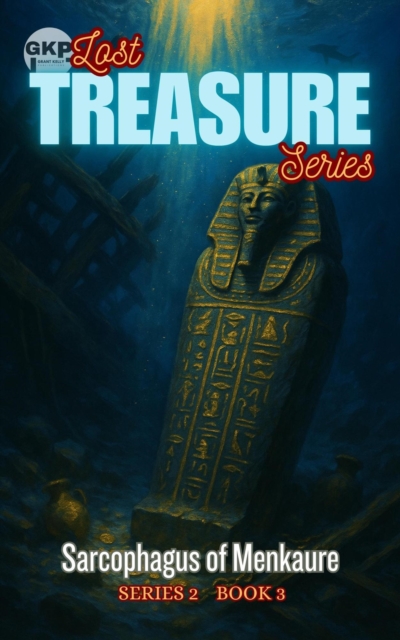
For three thousand years — longer than the whole span from Cleopatra to our own day — the land of Egypt was ruled by god-kings: living embodiments of the falcon Horus, lords of the Two Lands, charged with holding up the order of the world.
The fleets and naval forces employed by the Roman Empire have traditionally been conceived as a 'Roman navy' that guarded the waterways of the Mediterranean and the northern frontier.
Discussion of the commercial treaties between Rome and Carthage includes examination of the evidence of Carthaginian trade-goods brought to Rome and of the probable residence of N.
Provides a detailed account of the 1777 Battle of Brandywine, revealing how Washington's forces fought bravely despite ultimately losing Philadelphia to the British.
Many famous texts from classical antiquity-by historians like Thucydides, tragedians like Sophocles and Euripides, the comic poet Aristophanes, the philosopher Plato, and, above all, Homer-present powerful and profound accounts of wartime experience, both on and off the battlefield.
Many famous texts from classical antiquity-by historians like Thucydides, tragedians like Sophocles and Euripides, the comic poet Aristophanes, the philosopher Plato, and, above all, Homer-present powerful and profound accounts of wartime experience, both on and off the battlefield.
Bombing Pompeii examines the circumstances under which over 160 Allied bombs hit the archaeological site of Pompeii in August and September 1943, and the wider significance of this event in the history of efforts to protect cultural heritage in conflict zones, a broader issue which is still of great importance.
Bombing Pompeii examines the circumstances under which over 160 Allied bombs hit the archaeological site of Pompeii in August and September 1943, and the wider significance of this event in the history of efforts to protect cultural heritage in conflict zones, a broader issue which is still of great importance.
Provides a detailed account of the 1777 Battle of Brandywine, revealing how Washington's forces fought bravely despite ultimately losing Philadelphia to the British.
In Honor Thy Gods Jon Mikalson uses the tragedies of Aeschylus, Sophocles, and Euripides to explore popular religious beliefs and practices of Athenians in the fifth and fourth centuries B.
In Honor Thy Gods Jon Mikalson uses the tragedies of Aeschylus, Sophocles, and Euripides to explore popular religious beliefs and practices of Athenians in the fifth and fourth centuries B.
As the general public in Britain read about Egypt's history, visited collections, and viewed the material remains of a past that had not yet been uncovered by Western scholars, the mysterious nature of Egypt's past became fertile ground for literary imaginations.
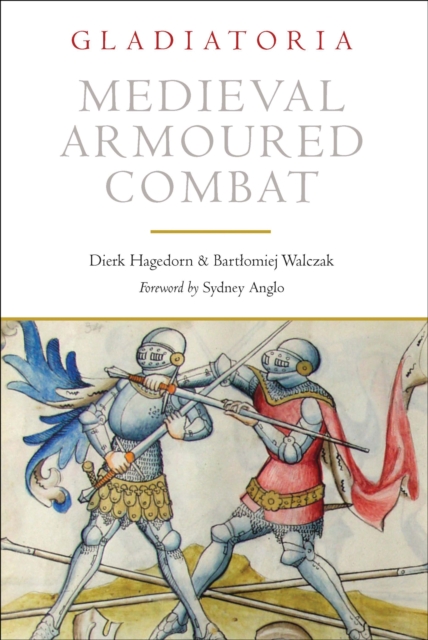
The "e;Gladiatoria"e; group of German fencing manuscripts are several editions of a treatise on armoured foot combat, specifically aimed at duel fighting.
As the general public in Britain read about Egypt's history, visited collections, and viewed the material remains of a past that had not yet been uncovered by Western scholars, the mysterious nature of Egypt's past became fertile ground for literary imaginations.
The ancient east presents a structured historical examination of early societies that shaped political organization, cultural exchange, and regional identity.
The olynthiacs and the philippics of Demosthenes is a collection of political orations addressing the urgent challenges faced by Athens during the rise of Philip II of Macedon.
The letters of the younger Pliny First series - Volume 1 presents a curated collection of correspondence that captures the daily rhythms, intellectual concerns, and social environments of ancient Rome.
South of the Golden Horn, on the narrow tongue of land-narrow it seems as seen from the hills of the northern shore-is the city of Constantine and his successors in empire, seated, like the old Rome, on seven hills, and surrounded on three sides by sea, on the fourth by the still splendid, though shattered, mediaeval walls.
During the period between the end of the Hannibalic War and Octavian's decisive victory in the battle of Actium in 31 BC, the Italian peninsula gradually evolved as the heartland of the Roman Empire as it was expanding across the Mediterranean.
The story of Rome from the earliest times to the end of the republic presents a sweeping narrative of the growth of Roman civilization from legendary origins to the collapse of republican rule.
The so-called Chronica urbis Romae has long been valued for the exact year-month-day figures that it gives for the reign of every Roman emperor from Julius Caesar to Licinius, especially those for the emperors of the third century, whose dates of accession and death are for the most part unknown.
A bird's-eye look at the Ghost Dance, the first instance of modern, collective racial self-consciousness for Native peoples in the United StatesFrom the Sand Creek Massacre (1864) to the Massacre at Wounded Knee (1890), Indigenous religious practices-legally banned after 1883-took on new meanings as acts of defiance against colonialism and white supremacy.
A revelatory exploration of how the Bible's underdogs, outlaws, and forgotten figures can teach us about our humanityIn this unprecedented book, a secular humanist and celebrated scholar of religion tells the stories of the Bible's most marginalized figures, challenging readers to reconsider who are the heroes of the text, and who are the villains.
Writing on a small island in the Firth of Forth in the 1440s, Walter Bower set out to tell the whole story of the Scottish nation in a single huge book, the Scotichronicon--'a history book for Scots'.
Bona Dea, also known as Fauna, was a very important goddess of female initiations in Rome, and several features of hers were shared by similar goddesses in ancient Italy.