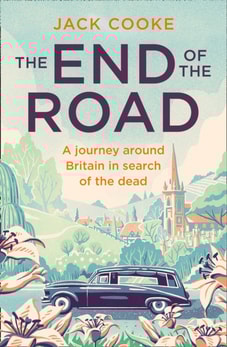
A wonderfully quixotic, charming and surprisingly uplifting travelogue which sees Jack Cooke, author of the much-loved The Treeclimbers Guide, drive around the British Isles in a clapped-out forty-year old hearse in search of famous - and not so famous - tombs, graves and burial sites.
Im Zeichen des Koru erzählt eine epische Geschichte, die sich über mehrere Generationen erstreckt und das Erbe der Maori mit Themen wie Liebe, Verlust und der unerschütterlichen Kraft des menschlichen Geistes verbindet.
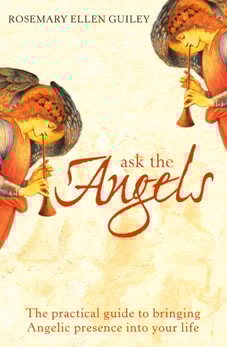
Bestselling author Rosemary Ellen Guiley's easy-to-use, practical guide for opening to angelic guidance and wisdom, focusing on how to communicate with angels and how you know when you've got an answer.
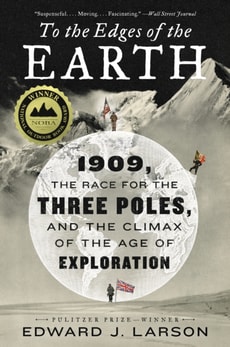
Winner of the National Outdoor Book Award From the Pulitzer Prize-winning historian, a "e;suspenseful"e; (WSJ) and "e;adrenaline-fueled"e; (Outside) entwined narrative of the most adventurous year of all time, when three expeditions simultaneously raced to the top, bottom, and heights of the world.
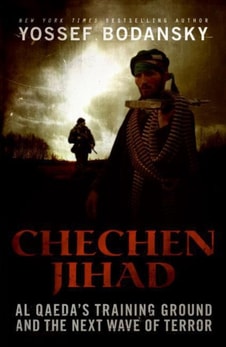
In this authoritative look at the roots of modern terrorism, Yossef Bodansky, one of the most respectedand best-informedexperts on radical Islamism in the world today, pinpoints the troubled region of Chechnya as a dangerous and little-understood crucible of terror in the struggle between East and West.
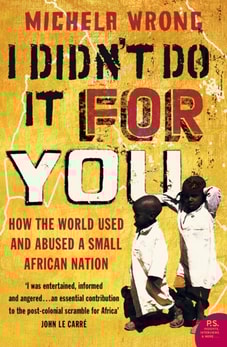
One small East African country embodies the battered history of the continent: patronised by colonialists, riven by civil war, confused by Cold War manoeuvring, proud, colorful, with Africa's best espresso and worst rail service.
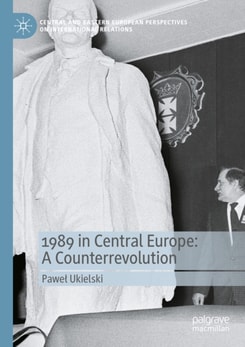
The literature on the fall of communism contains numerous interpretations of the changes that took place in Central and Eastern Europe in 1989, while debates about how best to characterize the fall of the communist regimes have raged for many years.
Seit den ersten christlichen Missionen im mittelalterlichen Kiew bis zur entscheidenden Abgrenzung zwischen Ost und West steht die ruthenische Kirche an einer einzigartigen Schnittstelle der Religionsgeschichte.
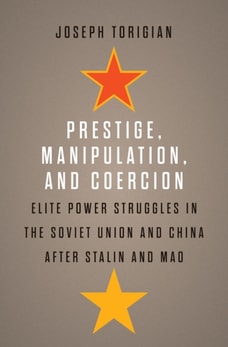
How succession in authoritarian regimes was less a competition of visions for the future and more a settling of scores "e;Joseph Torigian's stellar research and personal interviews have produced a brilliant, meticulous study.
A unique work of fiction from the troubled streets of Ukraine, giving invaluable testimony to the new history unfolding in the nation’s post-independence years "One of the most astounding novels to come out of modern Ukraine.
Seeking to rebuild the Russian film industry after its post-Soviet collapse, directors and producers sparked a revival of nationalist and patriotic sentiment by applying Hollywood techniques to themes drawn from Russian history.
In this ground-breaking collection, a team of leading experts offer a detailed examination of under-researched aspects of Soviet political repression in the 1930s.
Women in Russian Culture and Society, 1700-1825 is a collection of essays by leading researchers shedding new light on women as writers, actresses, nuns and missionaries.
The first book to analyze the distinct leader cults that flourished in the era of 'High Stalinism' as an integral part of the system of dictatorial rule in the Soviet Union and Eastern Europe.
The first major territorial struggle in the late Soviet period involved Nagorno-Karabagh, an Armenian inhabited territory that had been assigned to the Azerbaijan Soviet Socialist Republic.
Stalinism in a Russian Province reexamines the agrarian policy pillars of Stalin's 'revolution from above' initiated in 1929-30, and is the first major study of its kind since the opening of Soviet archives.
This is the first comprehensive study in English of Soviet women who fought against the genocidal, misogynist, Nazi enemy on the Eastern Front during the Second World War.
The Australian Study of Politics provides the first comprehensive reference book on the history of the study of politics in Australia, whether described as political studies or political science.
The displacement of population during and after the Second World War took place on a global scale and formed part of a longer historical process of violence, territorial reconfiguration and state 'development'.
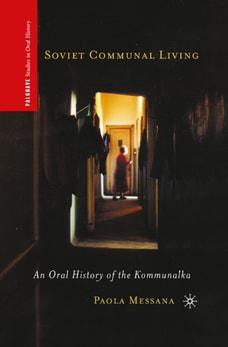
This book brings together fascinating testimonies from thirty inhabitants of the 'Kommunalka,' the communal apartments that were the norm in housing in the cities of Russia during the whole history of the Soviet Union.
Covering topics such as the Soviet monopoly over information and communication, violence in the gulags, and gender relations after World War II, this festschrift volume highlights the work and legacy of Sheila Fitzpatrick offers a cross-section of some of the best work being done on a critical period of Russia and the Soviet Union.
This book is the first interdisciplinary treatment of the cultural significance of the Decembrists' mythic image in Russian literature, history, film and opera in a survey of its deployment as cultural trope since the original 1825 rebellion and through the present day.
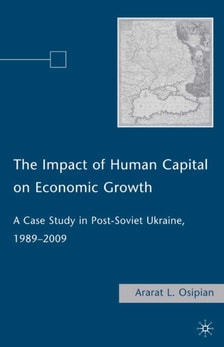
This book presents theoretical and empirical investigation of the impact of human capital on economic growth in Ukraine during the period of 1989-2009.