An examination of the early Soviet period of the Russian (Soviet) Academy of Sciences which focuses on the reactions of individual members of the academy to the new situation in which they found themselves after October 1917.
The essays in this collection explore the social 'construction' of the Russian peasantry in the period between Emancipation and Collectivisation, and the impact of these constructions on Tsarist and Bolshevik agrarian policy.
Drawing on research based on access to the recently-opened Soviet archives, this new edition provides a valuable thematic account of the nature of Stalinism.
This book explores the long-term reasons for the demise of Imperial Russia, examining the failure of the autocratic state to strengthen its own political position while economic change transformed Russian society.
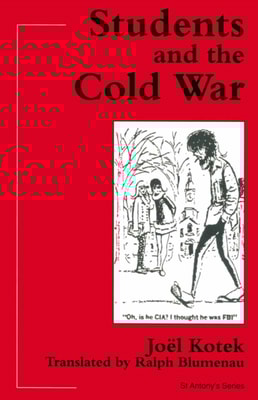
During the military stand-off between East and West known as the Cold War, each of the two camps sought out to undermine its opponent by looking for vulnerable aspects of its society.
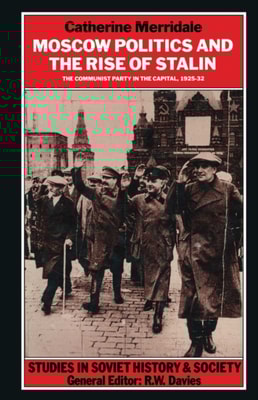
Exploring such general issues as the differing roles of the Communist Party and the State in ruling the former Soviet Union and the exercise of political power in the Stalin regime, this first western study of the chief Soviet government body during the 1930s traces the history of the Council of People's Commissars (Sovnarkom) whilst Molotov was chairman.
Naomi Carmon has brought together a group of distinguished scholars from post-industrial countries to discuss changes in immigration flows, their impact on the receiving countries, and alternative policy responses.
Contrary general perceptions concerning Russia during this era, Jewish political activities continued beyond 1907, and given the political limits of Tsarist Russia, transformed and modernized Jewish society to the fullest extent possible.
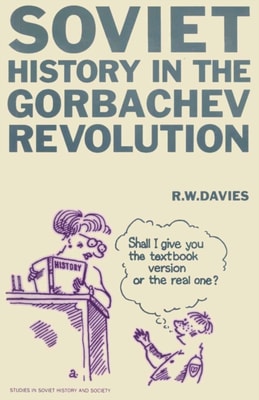
This work presents eleven studies in the field of Russian/Soviet economic and social history, which have been specially commissioned as a tribute to Professor R.
'The most significant issue that Dockrill addresses is that of how Japan views the war in retrospect, a question which not only tells us a lot about how events were seen in Japan in 1941 but is also, a matter still of importance in contemporary East Asian politics.
This is a volume of essays exploring important themes in the economic and social history of Russia and the Soviet Union during the critical period between 1860 and 1930.
The Reconstruction of Poland, 1914-23 is a significant reappraisal of the political, social and economic problems associated with the rebirth of an independent Polish state.
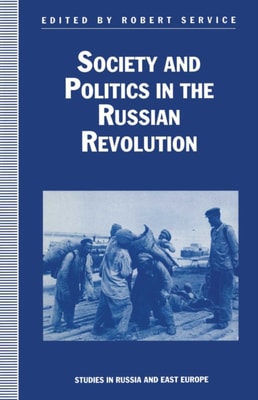
The Russian Revolution of 1917 was an event of the greatest importance, but the social groups which were crucial to its development and outcome have been little written about.
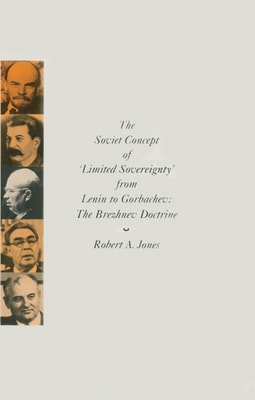
The book examines the origins, development and contemporary significance of the Soviet doctrine of 'limited sovereignty' ('Brezhnev Doctrine'), with particular reference to the Doctrine's implications for the Soviet Union's relations with Eastern Europe.