A philosophical exploration of female submission, using insights from feminist thinkers-especially Simone de Beauvoir-to reveal the complexities of women's reality and lived experienceWhat role do women play in the perpetuation of patriarchy?
A groundbreaking look at how the interrogation rooms of the Korean War set the stage for a new kind of battle-not over land but over human subjectsTraditional histories of the Korean War have long focused on violations of the thirty-eighth parallel, the line drawn by American and Soviet officials in 1945 dividing the Korean peninsula.
The racist legacy behind the Western idea of freedomThe era of the Enlightenment, which gave rise to our modern conceptions of freedom and democracy, was also the height of the trans-Atlantic slave trade.
The era of the American Revolution was one of violent and unpredictable social, economic, and political change, and the dislocations of the period were most severely felt in the South.
One of Argentinas 30,000 disappeared, Alicia Partnoy was abducted from her home by secret police and taken to a concentration camp where she was tortured, and where most of the other prisoners were killed.
An important investigation of the sociocultural fallout of America's work on the atomic bombIn The Nuclear Borderlands, Joseph Masco offers an in-depth look at the long-term consequences of the Manhattan Project.
The forgotten story of the nineteenth-century freethinkers and twentieth-century humanists who tried to build their own secular religionIn The Church of Saint Thomas Paine, Leigh Eric Schmidt tells the surprising story of how freethinking liberals in nineteenth-century America promoted a secular religion of humanity centered on the deistic revolutionary Thomas Paine (1737-1809) and how their descendants eventually became embroiled in the culture wars of the late twentieth century.
Though civilians constituted the majority of the nation's population and were intimately involved with almost every aspect of the war, we know little about the civilian experience of the Civil War.
Bartolomé Mitre y el historiador chileno Diego Barros Arana intercambiaron apasionadas cartas acerca de Descripción e historia de Paraguay de Félix de Azara y de su posible publicación.
Unlike the 1930s, when the United States tragically failed to open its doors to Europeans fleeing Nazism, the country admitted over three million refugees during the Cold War.
A necessary reckoning with America's troubled history of injustice to Indigenous peopleAfter One Hundred Winters confronts the harsh truth that the United States was founded on the violent dispossession of Indigenous people and asks what reconciliation might mean in light of this haunted history.
This cultural history of American federalism argues that nation-building cannot be understood apart from the process of industrialization and the making of the working class in the late-eighteenth-century United States.
Water for Gotham tells the spirited story of New York's evolution as a great city by examining its struggle for that vital and basic element--clean water.
A political history of the most famous desegregation crisis in AmericaThe desegregation crisis in Little Rock is a landmark of American history: on September 4, 1957, after the Supreme Court struck down racial segregation in public schools, Arkansas Governor Orval Faubus called up the National Guard to surround Little Rock Central High School, preventing black students from going in.
In The Twilight of the Middle Class, Andrew Hoberek challenges the commonly held notion that post-World War II American fiction eschewed the economic for the psychological or the spiritual.
This comprehensive and in-depth look at southern politics in the United States challenges conventional notions about the rise of the Republican Party in the South.
In the recent past, enormous creative energy has gone into the study of American slavery, with major explorations of the extent to which African culture affected the culture of black Americans and with an almost totally new assessment of slave culture as Afro-American.
A richly illustrated cultural history of the midcentury pulp paperback"e;There is real hope for a culture that makes it as easy to buy a book as it does a pack of cigarettes.
The Promise of American Life is part of the bedrock of American liberalism, a classic that had a spectacular impact on national politics when it was first published in 1909 and that has been recognized ever since as a defining text of liberal reform.
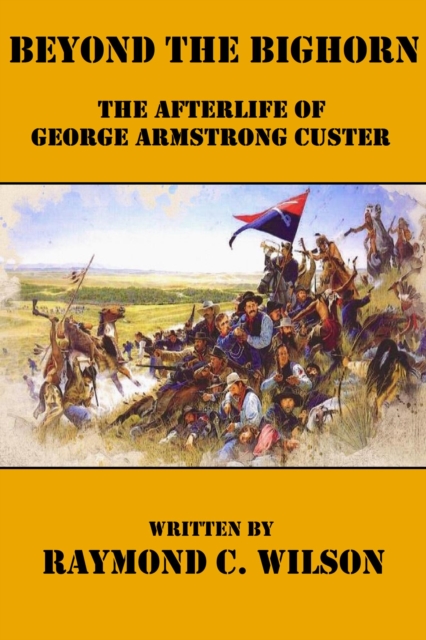
One week after the infamous June 1876 Battle of the Little Big Horn, when news of the defeat of General George Armstrong Custer and his 7th Cavalry troops reached the American public, Sitting Bull became the most wanted hostile Indian in America.
Exploring the unintentional production of seemingly feminist outcomes In India, elite law firms offer a surprising oasis for women within a hostile, predominantly male industry.
This collection of short, action-filled stories of the Old West's most egregiously badly behaved female outlaws is a great addition to Western author Robert Barr Smith's books on the American frontier.
For fifty years prison inmates in Texas were leased out to railroads, coal mines, farm plantations, and sawmill crews with terrible incidences of brutality, cruelty, injury, and death to the prisoners.
It started on a summer afternoon in 1795 when a young man named Daniel McGinnis found what appeared to be an old site on an island off the Acadian coast, a coastline fabled for the skullduggery of pirates.
In the years following the American Civil War, many participantsgenerals, politicians, journalists, and soldiersauthored first-hand accounts of their unique experiences.
Taken from the interviews conducted by the Works Progress Administration (WPA) in Arizona during the Great Depression,this regional history offers more than facts, figures, and stilted portraits of ';important history.
This collection of short, action-filled stories of the Old West goes beyond the tales everyone knows of the OK Corral and the Dead Man's Hand to focus on the gunfights, massacres, and daring deeds that are the stars of local historians but not featured in general histories of the old west.
A historical look at the American fascination with Italian fascism during the interwar periodIn the interwar years, the United States grappled with economic volatility, and Americans expressed anxieties about a decline in moral values, the erosion of families and communities, and the decay of democracy.