An interdisciplinary collection of essays designed to map out a wide-ranging and productive future for postcolonial studies, this volume assesses the current state of the field and points toward its most promising new developments.
From portrayals of African women's bodies in early modern European travel accounts to the relation between celibacy and Indian nationalism to the fate of the Korean "e;comfort women"e; forced into prostitution by the occupying Japanese army during the Second World War, the essays collected in Bodies in Contact demonstrate how a focus on the body as a site of cultural encounter provides essential insights into world history.
At this stalled and disillusioned juncture in postcolonial history-when many anticolonial utopias have withered into a morass of exhaustion, corruption, and authoritarianism-David Scott argues the need to reconceptualize the past in order to reimagine a more usable future.
A rich collection of primary materials, the multivolume Archives of Empire provides a documentary history of nineteenth-century British imperialism from the Indian subcontinent to the Suez Canal to southernmost Africa.
A rich collection of primary materials, the multivolume Archives of Empire provides a documentary history of nineteenth-century British imperialism from the Indian subcontinent to the Suez Canal to southernmost Africa.
In 1898 the United States declared sovereignty over the Philippines, an archipelago of seven thousand islands inhabited by seven million people of various ethnicities.
From nineteenth-century black nationalist writer Martin Delany through the rise of Jim Crow, the 1937 riots in Trinidad, and the achievement of Independence in the West Indies, up to the present era of globalization, Black Nationalism in the New World explores the paths taken by black nationalism in the United States and the Caribbean.
In the Time of Trees and Sorrows showcases peasants' memories of everyday life in North India under royal rule and their musings on the contrast between the old days and the unprecedented shifts that a half century of Indian Independence has wrought.
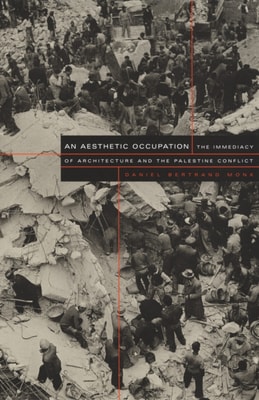
In An Aesthetic Occupation Daniel Bertrand Monk unearths the history of the unquestioned political immediacy of "e;sacred"e; architecture in the conflict between Palestinians and Israelis.
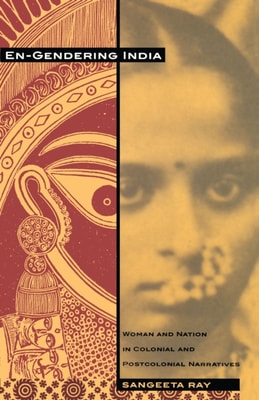
En-Gendering India offers an innovative interpretation of the role that gender played in defining the Indian state during both the colonial and postcolonial eras.
In Belated Travelers, Ali Behdad offers a compelling cultural critique of nineteenth-century travel writing and its dynamic function in European colonialism.
The term "e;subalternity"e; refers to a condition of subordination brought about by colonization or other forms of economic, social, racial, linguistic, and/or cultural dominance.
In this second edition of The Repeating Island, Antonio Benitez-Rojo, a master of the historical novel, short story, and critical essay, continues to confront the legacy and myths of colonialism.
In this creative, ethnographic, and historical critique of labor practices on an Indian plantation, Piya Chatterjee provides a sophisticated examination of the production, consumption, and circulation of tea.
Colonial discourse in the United States has tended to criminalize, pathologize, and depict as savage not only Native Americans but Mexican immigrants, indigenous peoples in Mexico, and Chicanas/os as well.
Winner of the 1990 Best Book Award from the New England Council on Latin American StudiesThis study of Bolivia uses Cochabamba as a laboratory to examine the long-term transformation of native Andean society into a vibrant Quechua-Spanish-mestizo region of haciendas and smallholdings, towns and villages, peasant markets and migratory networks caught in the web of Spanish imperial politics and economics.
This reflection on colonial culture argues for an examination of "e;Indochina"e; as a fictive and mythic construct, a phantasmatic legacy of French colonialism in Southeast Asia.
In Monsters and Revolutionaries Francoise Verges analyzes the complex relationship between the colonizer and colonized on the Indian Ocean island of Reunion.
Empires of Vision brings together pieces by some of the most influential scholars working at the intersection of visual culture studies and the history of European imperialism.
In New Science, New World Denise Albanese examines the discursive interconnections between two practices that emerged in the seventeenth century-modern science and colonialism.
Much of the scholarship on difference in colonial Spanish America has been based on the "e;racial"e; categorizations of indigeneity, Africanness, and the eighteenth-century Mexican castas system.
Via military conquest, Catholic evangelization, and intercultural engagement and struggle, a vast array of knowledge circulated through the Spanish viceroyalties in Mexico and the Andes.
This important collection of essays expands the geographic, demographic, and analytic scope of the term genocide to encompass the effects of colonialism and settler colonialism in North America.
Combining insights from imperial studies and transnational book history, this provocative collection opens new vistas on both fields through ten accessible essays, each devoted to a single book.
Freedom Time reconsiders decolonization from the perspectives of Aime Cesaire (Martinique) and Leopold Sedar Senghor (Senegal) who, beginning in 1945, promoted self-determination without state sovereignty.
In The Brink of Freedom David Kazanjian revises nineteenth-century conceptions of freedom by examining the ways black settler colonists in Liberia and Mayan rebels in Yucatan imagined how to live freely.
In 1968 the Third World Liberation Front at San Francisco State College demanded the creation of a Third World studies program to counter the existing curricula that ignored issues of power-notably, imperialism and oppression.
In We Dream Together Anne Eller breaks with dominant narratives of conflict between the Dominican Republic and Haiti by tracing the complicated history of Dominican emancipation and independence between 1822 and 1865.
Anticolonial theorists and revolutionaries have long turned to dialectical thought as a central weapon in their fight against oppressive structures and conditions.
In Critique of Black Reason eminent critic Achille Mbembe offers a capacious genealogy of the category of Blackness-from the Atlantic slave trade to the present-to critically reevaluate history, racism, and the future of humanity.
Following the publication of Adam Smith's The Wealth of Nations, nineteenth-century liberal economic thinkers insisted that a globally hegemonic Britain would profit only by abandoning the formal empire.
In From the Tricontinental to the Global South Anne Garland Mahler traces the history and intellectual legacy of the understudied global justice movement called the Tricontinental-an alliance of liberation struggles from eighty-two countries, founded in Havana in 1966.
In Sins against Nature Zeb Tortorici explores the prosecution of sex acts in colonial New Spain (present-day Mexico, Guatemala, the US Southwest, and the Philippines) to examine the multiple ways bodies and desires come to be textually recorded and archived.