Banks defines and applies the concept of communications in a far broader context than previous historical studies of communication, encompassing a range of human activity from sailing routes, to mapping, to presses, to building roads and bridges.
In Colonization and Community John Belshaw takes a new look at British Columbia's first working class, the men, women, and children beneath and beyond the pit-head.
Essential reading for an understanding of contemporary Quebec, The Dream of Nation traces the changing nature of various "e;dreams of nation,"e; from the imperial dream of New France to the separatist dream of the 1980 referendum.
Morantz shows that with the imposition of administration from the south the Crees had to confront a new set of foreigners whose ideas and plans were very different from those of the fur traders.
Concepts of civilizational superiority and redemptive assimilation, widely held among nineteenth-century Russian intellectuals, helped to form stereotypes of Ukraine and Ukrainians in travel writings, textbooks, and historical fiction, stereotypes that have been reactivated in ensuing decades.
By combining textual analysis with an ethnographic study of the Jesuits Blackburn is able to reveal the gap between the domineering language of the Relations and the limited authority that the Jesuits were able to exercise over Native people, who actively challenged much of what the Jesuits tried to do and say.
The authors examine the interaction of missionary organizations with local political powers and with their home government, arguing that in trying to decide which course of action to pursue, missionaries became knowledgeable students of imperial politics and the shifting state of international affairs.
Clarke describes events in Nova Scotia leading up to the siege of Fort Cumberland by the Continental army in 1776 and argues that from the beginning of hostilities Nova Scotians' primary loyalty was to Britain.
In this pioneering study Douglas Anglin describes and dissects the process of crisis decision making in Zambia through a detailed reconstruction of the most critical decisions of 1965-66, and assesses the effect of crisis-induced stress on the policy outcomes of President Kenneth Kaunda and other Zambian leaders.
Errington argues that in order to appreciate the evolution of Upper Canadian beliefs, particularly the development of political ideology, it is necessary to understand the various and changing perceptions of the United States and of Great Britain held by different groups of colonial leaders.
In Class, Ethnicity, and Social Inequality Christopher McAll discusses the increased juxtaposition of ethnically distinct groups in the same social environments which has resulted from labour migration since the Second World War.
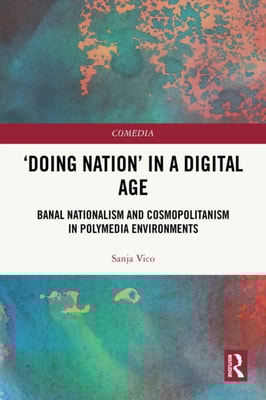
This book introduces a new theory of national identity, arguing that the nation does not only represent an abstract "e;imagined community"e; but also represents embodied cultural and discursive practices.
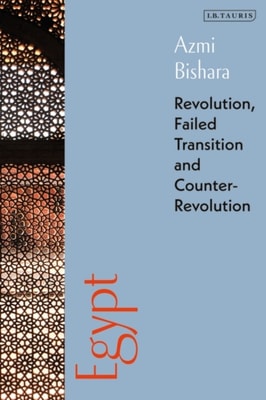
Azmi Bishara's seminal study of the 2011 Egyptian Revolution chronicles in granular detail the lead up to the momentous uprisings and the subsequent transition and coup.
Azmi Bishara's seminal study of the 2011 Egyptian Revolution chronicles in granular detail the lead up to the momentous uprisings and the subsequent transition and coup.
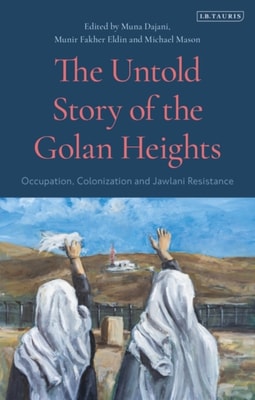
In 1967 Israel occupied the western section of Syria's Golan Heights, expelling 130,000 residents and leaving only a few thousand Arab inhabitants clustered in several villages.
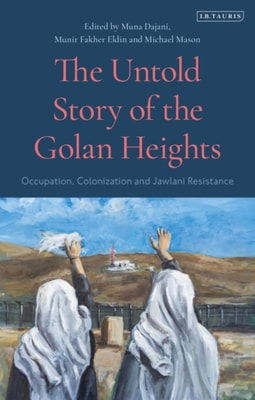
In 1967 Israel occupied the western section of Syria's Golan Heights, expelling 130,000 residents and leaving only a few thousand Arab inhabitants clustered in several villages.
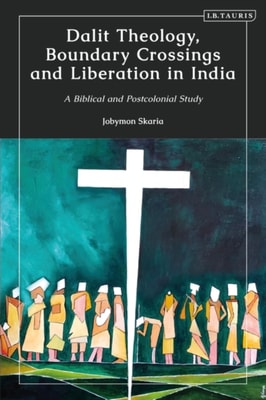
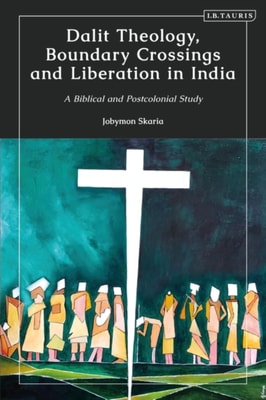
Jobymon Skaria, an Indian St Thomas Christian Scholar, offers a critique of Indian Christian theology and suggests that constructive dialogues between Biblical and dissenting Dalit voices such as Chokhamela, Karmamela, Ravidas, Kabir, Nandanar and Narayana Guru could set right the imbalance within Dalit theology, and could establish dialogical partnerships between Dalit Theologians, non-Dalit Christians and Syrian Christians.
Jobymon Skaria, an Indian St Thomas Christian Scholar, offers a critique of Indian Christian theology and suggests that constructive dialogues between Biblical and dissenting Dalit voices such as Chokhamela, Karmamela, Ravidas, Kabir, Nandanar and Narayana Guru could set right the imbalance within Dalit theology, and could establish dialogical partnerships between Dalit Theologians, non-Dalit Christians and Syrian Christians.
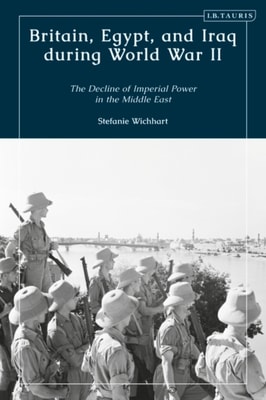
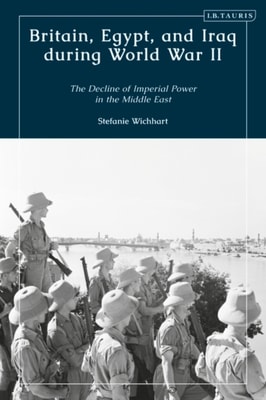
This book explores the tumultuous war years through the lens of the British Embassies in Cairo and Baghdad, demonstrating the role that the Second World War played in shaping the political and social map of the contemporary Middle East.
This book explores the tumultuous war years through the lens of the British Embassies in Cairo and Baghdad, demonstrating the role that the Second World War played in shaping the political and social map of the contemporary Middle East.
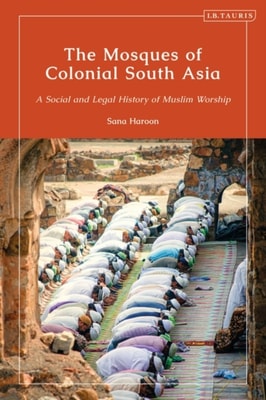
In a series of legal battles starting in 1882, South Asian Muslims made up of modernists, traditionalists, reformists, Shias and Sunnis attempted to modify the laws relating to their places of worship.
In a series of legal battles starting in 1882, South Asian Muslims made up of modernists, traditionalists, reformists, Shias and Sunnis attempted to modify the laws relating to their places of worship.
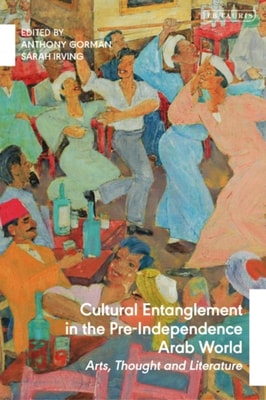
This book examines the ways in which non-Arabic cultural influences interacted with the rich, complex and sometimes conflictual environment of the Arab world in the pre-independence era.
This book examines the ways in which non-Arabic cultural influences interacted with the rich, complex and sometimes conflictual environment of the Arab world in the pre-independence era.
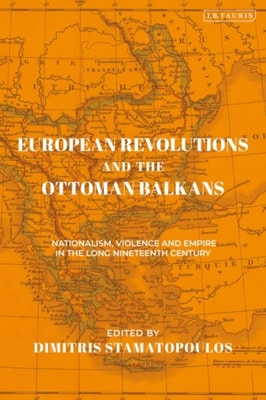
The emergence of the Balkan national states in the nineteenth and twentieth centuries has long been viewed through an Orientalist lens, and their birth and evolution traditionally seen by scholars as the effect of the Ottoman Empire's decline.
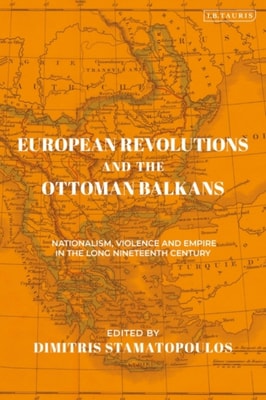
The emergence of the Balkan national states in the nineteenth and twentieth centuries has long been viewed through an Orientalist lens, and their birth and evolution traditionally seen by scholars as the effect of the Ottoman Empire's decline.
How the rise of the West was a temporary exception to the predominant world orderWhat accounts for the rise of the state, the creation of the first global system, and the dominance of the West?