Winner: Southern Historical Association Smith Award for Best Book in European HistoryWinner: Southern Conference on Slavic Studies Book AwardThey are war stories, filled with danger and deprivation, excitement and opportunity, sorrow and trauma, scandal and controversyand because they are the war stories of nurses, they remain largely untold.
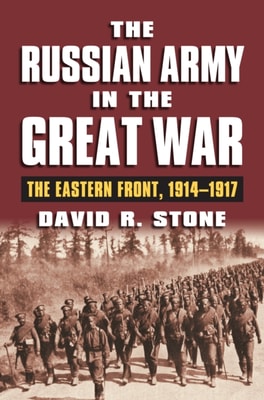
Choice Outstanding Academic TitleOn June 11, 1937, a closed military court ordered the execution of a group of the Soviet Union's most talented and experienced army officers, including Marshal Mikhail Tukhachevskii; all were charged with participating in a Nazi plot to overthrow the regime of Joseph Stalin.
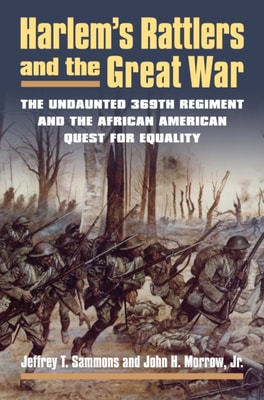
Choice Outstanding TitleWhen on May 15, 1918 a French lieutenant warned Henry Johnson of the 369th to move back because of a possible enemy raid, Johnson reportedly replied: Im an American, and I never retreat.
How social networks shaped the imperial Chinese stateChina was the world's leading superpower for almost two millennia, falling behind only in the last two centuries and now rising to dominance again.
An incisive look at the causes and consequences of the Rwandan genocide"e;When we captured Kigali, we thought we would face criminals in the state; instead, we faced a criminal population.
From the bestselling author of The English comes Empire, Jeremy Paxman's history of the British Empire accompanied by a flagship 5-part BBC TV series, for readers of Simon Schama and Andrew Marr.
Catholics and Political Violence in the Twentieth Century presents a historical reconstruction of the ways in which Catholics have justified the recourse to political violence during the twentieth century, a period marked by major wars, nationalisms, decolonization, ideological clashes, and episodes of genocide.
The word pharmacopoeia has come to have many meanings, although it is commonly understood to be a book describing approved compositions and standards for drugs.
Violence and Public Memory assesses the relationship between these two subjects by examining their interconnections in varied case studies across the United States, South America, Europe, the Middle East, and Africa.
'[The White Father] was to be a State of the Nation novel, about the end of Empire, contrasting the last generation of men who'd served it, and the new one which was just breaking out from the long dullness of the post-war years, but didn't really know where it was going.
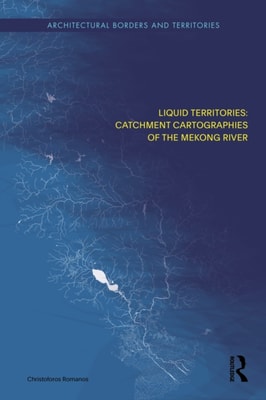
In addition to being a fundamental concept for planning the water infrastructure which supports extensive agricultural economies across Southeast Asia, knowledge of the Mekong River's hydrological catchments has calibrated the control of land, resources and people.
The second instalment of the Pax Britannica Trilogy by Jan Morris, recreates the British Empire at its dazzling climax - the Diamond Jubilee of Queen Victoria in 1897, celebrated as a festival of imperial strength, unity, and splendour.
An exciting collection of essays connecting postcolonialism and the Gospel of John, written by a group of international scholars, both established and new, from Hispanic, African, Jewish, Chinese, Korean and African-American backgrounds.
This edited collection explores how national airlines in postcolonial states operate at the complex intersection of corporate branding, cultural governance, tourism development, and national identity formation.
A history of opium's dramatic fall from favor in colonial Southeast AsiaDuring the late nineteenth century, opium was integral to European colonial rule in Southeast Asia.
This book explores Roman love elegy from postcolonial perspectives, arguing that the tropes, conventions, and discourses of the Augustan genre serve to reinforce the imperial identity of its elite, metropolitan audience.
Choice Outstanding TitleWhen on May 15, 1918 a French lieutenant warned Henry Johnson of the 369th to move back because of a possible enemy raid, Johnson reportedly replied: Im an American, and I never retreat.
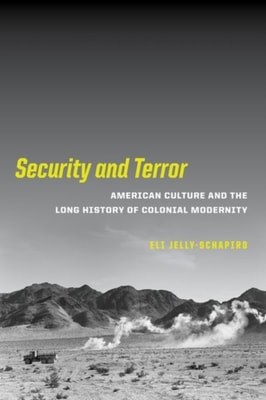
When in 1492 Christopher Columbus set out for Asia but instead happened upon the Bahamas, Cuba, and Hispaniola, his error inaugurated a specifically colonial modernity.
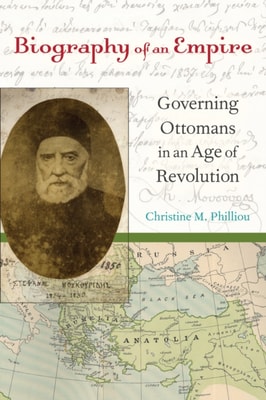
This vividly detailed revisionist history opens a new vista on the great Ottoman Empire in the early nineteenth century, a key period often seen as the eve of Tanzimat westernizing reforms and the beginning of three distinct histories-ethnic nationalism in the Balkans, imperial modernization from Istanbul, and European colonialism in the Middle East.