The Politics and Poetics of Indian Digital Diasporas explores the emancipatory potential and pitfalls of digital platforms and how well or how poorly they reflect intra-communal diversities within South Asian diasporic communities.
This book is the result of a conference organised by the Contemporary Portuguese Political History Research Centre (CPHRC) and the University of Dundee that took place during September 2000.
In December of 1914, veteran Boer commander General Louis Botha landed his forces on the coast of German South West Africa to finish off the colony’s Schutztruppe defenders.
This is the first of a two volume series covering early twentieth century colonial campaigns in Africa, Asia and the Americas, ranging from Mexico and the Philippines to Africa and the North West Frontier.
In the decades before colonial partition in Africa, the Church Missionary Society embarked on the first serious effort to evangelize in an independent Muslim state.
This book traces American engagement in the English-speaking Caribbean from the eighteenth to the twenty-first century, and is the first to examine the policies of Presidents George W.
This book is the first major work to explore the utility of the border as a theoretical, methodological, and interpretive construct for understanding colonial public health by considering African experiences in the Zimbabwe-Mozambique borderland.
This book examines how and why Portugal and Spain increasingly engaged with women in their African colonies in the crucial period from the 1950s to the 1970s.
This book explores how fin de siecle Britain and Britons displaced spatially-charged apprehensions about imperial decline, urban decay and unpoliced borders onto Jews from Eastern Europe migrating westwards.
This book comprises 17 chapters derived from new research papers presented at the 7th International Symposium of the ICA Commission on the History of Cartography, held in Oxford from 13 to 15 September 2018 and jointly organized by the ICA Commission on Topographic Mapping and the Bodleian Libraries, University of Oxford.
This book examines Australian colonial and foreign aid policy towards Papua New Guinea and Southeast Asia in the age of international development (1945-1975).
This book provides a critical analysis of Donald Trump's mention of General Pershing and his alleged use of bullets dipped in pig's blood to kill 49 out of 50 captured Muslims during the suppression years in the Philippines.
This book explores the experiences of 'Indo-Mozambicans,' citizens and residents of Mozambique who can trace their origins to the Indian subcontinent, a region affected by competing colonialisms during the twentieth century.
The French in Macao in the Nineteenth and Early Twentieth Centuries: Literary, Cultural, and Historical Perspectives investigates the role that Macao played as a meeting place of the East and the West during this period of time and its decline as a Portuguese colony in the eyes of the Europeans.
This book delves into the history of the Horn of Africa diaspora in Italy and Europe through the stories of those who fled to Italy from East African states.
This book looks back to the period 1860 to 1950 in order to grasp how alternative visions of amity and co-existence were forged between people of faith, both within and resistant to imperial contact zones.
This collection brings together essays examining the international influence of queens, other female rulers, and their representatives from 1450 through 1700, an era of expanding colonial activity and sea trade.
This book challenges existing accounts of the nineteenth and twentieth centuries in which political developments are explained in terms of the rise of the nation-state.
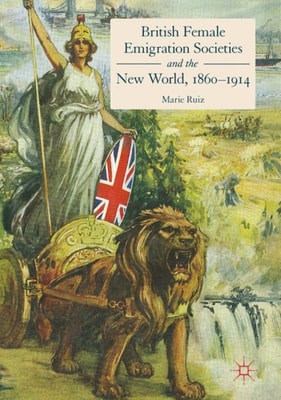
This book focuses on the departure of Britain's 'surplus' women to Australia and New Zealand organised by Victorian British female emigration societies.
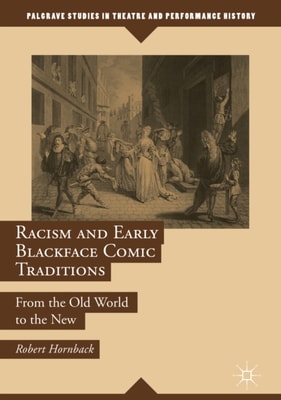
This book traces blackface types from ancient masks of grinning Africans and phallus-bearing Roman fools through to comedic medieval devils, the pan-European black-masked Titivillus and Harlequin, and racial impersonation via stereotypical 'black speech' explored in the Renaissance by Lope de Vega and Shakespeare.
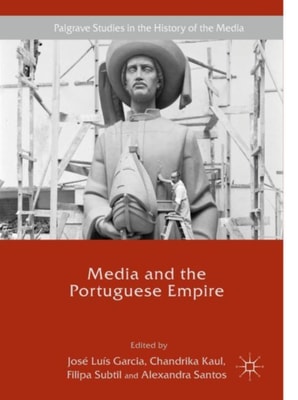
This volume offers a new understanding of the role of the media in the Portuguese Empire, shedding light on the interactions between communications, policy, economics, society, culture, and national identities.
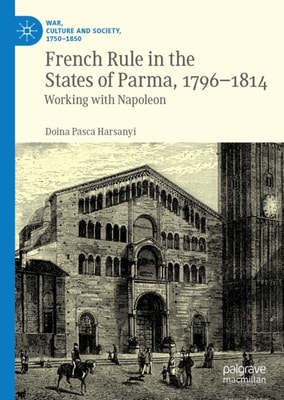
This book addresses the interplay between collaboration and resistance during the Revolutionary/Napoleonic era in the Duchies of Parma, Piacenza and Guastalla, renamed States of Parma in 1802 and Department of Taro in 1808.
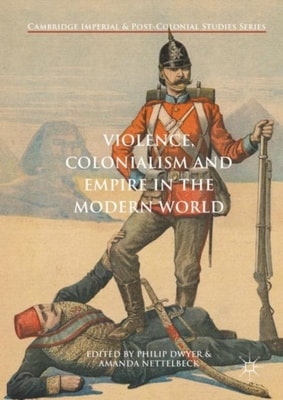
This book explores the theme of violence, repression and atrocity in imperial and colonial empires, as well as its representations and memories, from the late eighteenth through to the twentieth century.