This volume probes into the mechanisms of how languages are created, legitimized, maintained, or destroyed in the service of the extant nation-states across Central Europe.
This timely and informative volume centres how global Black feminist narratives of care are important to our contemporary theorizing and highlights the transgressive potential of a critical transnational Black feminist pedagogical praxis.
Through ten case studies by international specialists, this book investigates the circulation and production of scientific knowledge between 1750 and 1945 in the fields of agriculture, astronomy, botany, cartography, medicine, statistics, and zoology.
This timely and informative volume centres how global Black feminist narratives of care are important to our contemporary theorizing and highlights the transgressive potential of a critical transnational Black feminist pedagogical praxis.
How do we try to make the world a better place, when the challenges of poverty, disease, war, conflict, and climate change continue to impact millions of lives?
This book mediates between postcolonial positions that criticize Marxist approaches (and Marx's writings) for their Eurocentrism and defenders of Marx, who claim that this accusation is a myth.
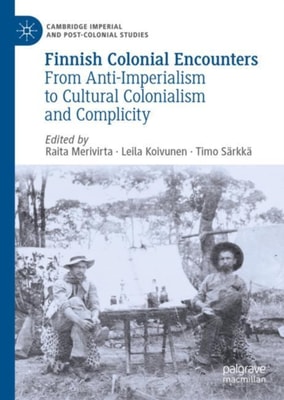
Breaking new ground in the study of European colonialism, this book focuses on a nation historically positioned between the Western and Eastern Empires of Europe - Finland.
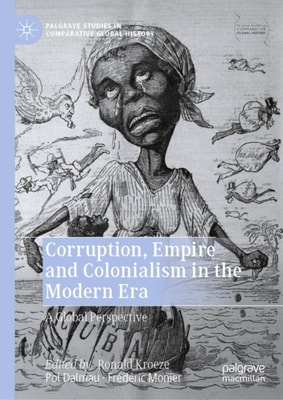
Answering the calls made to overcome methodological nationalism, this volume is the first examination of the links between corruption and imperial rule in the modern world.
This edition brings together in three fully edited volumes the correspondence and associated papers of Sir Joseph Banks regarding European and especially British exploration of Africa from 1767-1820, for the first time publishing this globally scattered material in one place, thereby revolutionizing its availability and understanding of the activities of a key figure who helped organize and publish a series of missions to penetrate the African interior, mainly from West Africa and by crossing the Sahara from Cairo and Tripoli.
Following the Brexit vote, this book offers a timely historical assessment of the different ways that Britain's economic future has been imagined and how British ideas have influenced global debates about market relationships over the past two centuries.
A page-turning story of the Pilgrims, the courageous band of freedom-seekers who set out for a new life for themselves and forever changed the course of history.
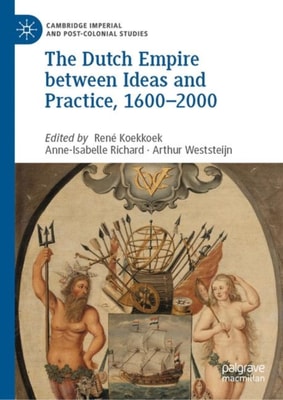
This volume explores the intellectual history of the Dutch Empire from a long-term and global perspective, analysing how ideas and visions of empire took shape in imperial practice from the seventeenth century to the present day.
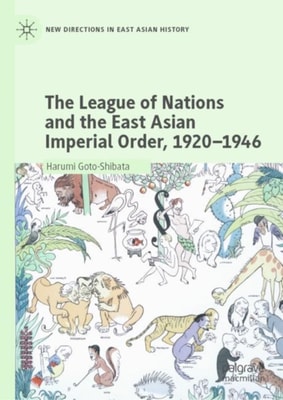
Well-grounded on abundant Japanese language sources which have been underused, this book uncovers the League of Nations' works in East Asia in the inter-war period.
This book uses a historical and theoretical focus to examine the key of issues of the Enlightenment, Orientalism, concepts of identity and difference, and the contours of different modernities in relation to both local and global shaping forces, including the spread of capitalism.
To what extent do women accept, adjust and challenge the intersecting and shifting relations of cultural, political and religious discourses that organize their (sexual) lives?
This book explores the interaction between science and society and the development of forensic science as well as the historical roots of crime detection in colonial India.
This book explores how public commentary framed Australian involvement in the Waikato War (1863-64), the Sudan crisis (1885), and the South African War (1899-1902), a succession of conflicts that reverberated around the British Empire and which the newspaper press reported at length.
This book offers an analysis of the decolonisation process across three different regions around the world: Central America, Southeast Asia and the Caucasus.
This collection provides new insights into the 'Age of Revolutions', focussing on state trials for treason and sedition, and expands the sophisticated discussion that has marked the historiography of that period by examining political trials in Britain and the north Atlantic world from the 1790s and into the nineteenth century.
This book examines a diverse set of civic war memorials in North East England commemorating three clusters of conflicts: the Crimean War and Indian Rebellion in the 1850s; the 'small wars' of the 1880s; and the Boer War from 1899 to 1902.
This book will be the first to deeply analyze the Swedish court and monarchy through a longue duree perspective to show the crucial role of the court in maintaining a relationship between the monarchy and nobility throughout the eighteenth and nineteenth centuries.
In this edifying volume Sarah Corona and Claudia Zapata extrapolate the causes for the divisions between groups in Latin American society, bringing their years of experience investigating the conditions and consequences of heterogeneity in the region.
This work examines the attempt by the governments of Portugal, Rhodesia and South Africa to defy the drive for African independence in the 1960s and 70s, and the international community's response.
This book provides the first ever intelligence history of Iraq from 1941 to 1945, and is the third and final volume of a trilogy on regional intelligence and counterintelligence operations that includes Nazi Secret Warfare in Occupied Persia (Iran) (2014), and Espionage and Counterintelligence in Occupied Persia (Iran) (2015).
First published in 1978, Britain and the Politics of Rhodesian Independence is a study of British policy towards Rhodesia and an account of the failure of both Labour and Conservative governments to find a satisfactory solution to its 'decolonization'.
This book investigates the thematic and conceptual dimensions of insidious trauma in contemporary eastern African literatures and cultural productions.