This book examines how the rulers in the Persian Gulf responded to the British announcement of military withdrawal from the Gulf in 1968, ending 150 years of military supremacy in the region.
This book examines the role of imperial narratives of multinationalism as alternative ideologies to nationalism in Central and Eastern Europe, the Balkans, and the Middle East from the revolutions of 1848 up to the defeat and subsequent downfall of the Habsburg and Ottoman empires in 1918.
This book provides a new analysis of the contested history of one of the most violent wars of decolonisation of the twentieth century - the Algerian War/ the Algerian Revolution between 1954 and 1962.
This book explores the culture of migration that emerged in Malawi in the early twentieth century as the British colony became central to labour migration in southern Africa.
This book contributes to global history by examining the connected histories of German and United States colonial empires from the early nineteenth century to the Nazi era.
"e;Reframing Postcolonial Studies addresses the urgent issues that Black Lives Matter has raised with respect to everyday material practices and the frameworks in which our knowledge and cultural heritage are conceptualized and stored.
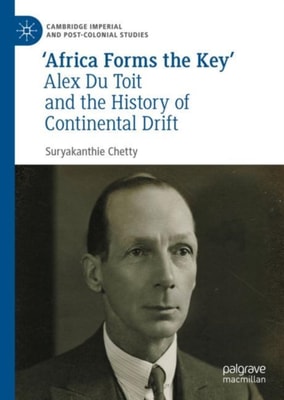
This book examines the work of prominent South African geologist Alex Du Toit as a means of understanding the debate around continental drift both in segregation-era South Africa and internationally.
This book will be the first to deeply analyze the Swedish court and monarchy through a longue duree perspective to show the crucial role of the court in maintaining a relationship between the monarchy and nobility throughout the eighteenth and nineteenth centuries.
This collection brings together a range of case studies by both established and early career scholars to consider the nexus between business and development in post-colonial Africa.
This book examines Australian colonial and foreign aid policy towards Papua New Guinea and Southeast Asia in the age of international development (1945-1975).
This book is the first major work to explore the utility of the border as a theoretical, methodological, and interpretive construct for understanding colonial public health by considering African experiences in the Zimbabwe-Mozambique borderland.
This book traces American engagement in the English-speaking Caribbean from the eighteenth to the twenty-first century, and is the first to examine the policies of Presidents George W.
This book offers an institutional history of the British Legation in Kabul, which was established in response to the independence of Afghanistan in 1919.
This book is an innovative presentation of the way in which the descendants of Muslim immigrants from Algeria in France perceive and deal with multiple social identifications.
This volume views the study of disease as essential to understanding the key historical developments underpinning the foundation of contemporary Indian Ocean World (IOW) societies.
This book reconstructs the history of a group of British Quaker families and their involvement in the process of settler colonialism in early nineteenth-century Australia.
In 1824 and 1830, over one hundred thousand acres across Iowa, Minnesota and Nebraska were set aside as a home for descendants of Native American women and white traders and trappers.
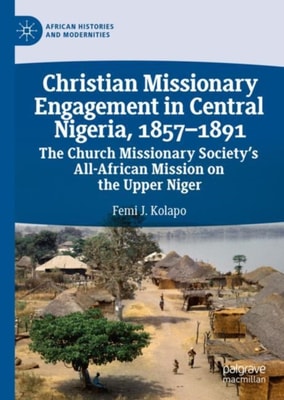
In the decades before colonial partition in Africa, the Church Missionary Society embarked on the first serious effort to evangelize in an independent Muslim state.
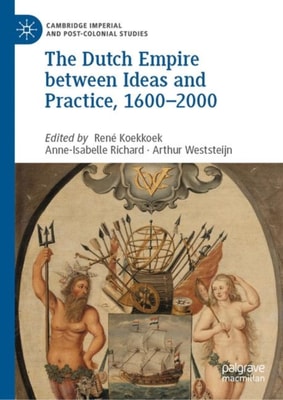
This volume explores the intellectual history of the Dutch Empire from a long-term and global perspective, analysing how ideas and visions of empire took shape in imperial practice from the seventeenth century to the present day.
This book explores how fin de siecle Britain and Britons displaced spatially-charged apprehensions about imperial decline, urban decay and unpoliced borders onto Jews from Eastern Europe migrating westwards.
This book offers an institutional history of the British Legation in Kabul, which was established in response to the independence of Afghanistan in 1919.
Anthropological histories and historical geographies of colonialism both have examined the material and discursive processes of colonization and have identified the opportunities for different kinds of relationships to emerge between Europeans and the indigenous people they encountered and in different ways colonized.
This book comprises 17 chapters derived from new research papers presented at the 7th International Symposium of the ICA Commission on the History of Cartography, held in Oxford from 13 to 15 September 2018 and jointly organized by the ICA Commission on Topographic Mapping and the Bodleian Libraries, University of Oxford.
This edited collection explores how migrants played a major role in the creation and settlement of the British Empire, by focusing on a series of Australian case studies.