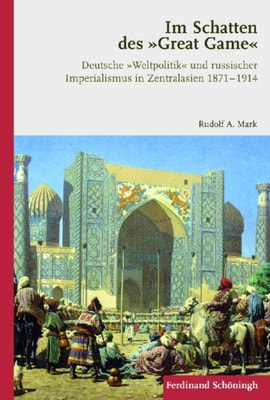
Die Beobachtung des Great Game, der Machtkonkurrenz zwischen dem British Empire und dem Russländischen Kaiserreich in Zentralasien bildete seit Bismarck ein zentrales Element der Berliner Orientpolitik und der späteren Weltpolitik.
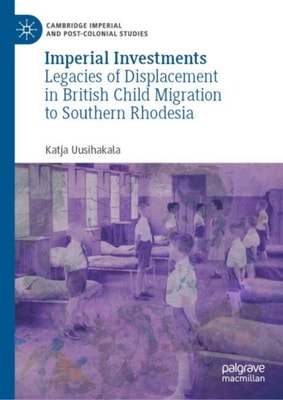
This book examines the legacy of a British child migration scheme that relocated British children to Southern Rhodesia between 1946 and 1962, with the aim of populating the colony with "e;fresh white stock"e;.
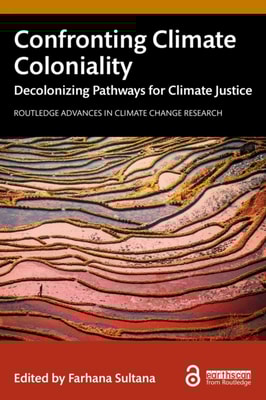
This timely and urgent collection brings together cutting-edge interdisciplinary scholarship and ideas from around the world to present critical examinations of climate coloniality.
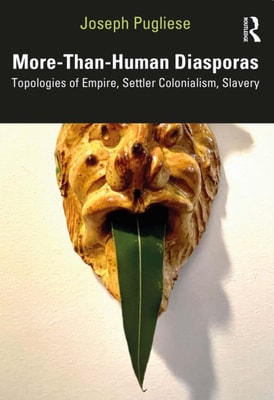
Pugliese's More Than Human Diasporas breaks the confines of existing scholarship in its vision of the way that more than human diasporic entities-such as water, trees, clay, stone and architectural styles-have functioned as agents within the context of empire, settler colonialism and a largely effaced history of Mediterranean enslavement, a history that pre existed and then coincided with the Atlantic slave trade.
This book gives a true account of one sojourners trip through a place that seemed hard to imagine, almost impossible to endure, and too painful to remember.
This book explores a panorama of historical studies, focused on the historical tensions between genealogical knowledge and well-known Pacific Islander engagements with genomic research in a postwar era of simultaneous decolonization and Big Science.
This book examines the radicalization of beliefs, tactics, and oppression by a dominant governing group when faced with a subordinate group's historic quest for basic human rights dating back for five centuries.
This book offers snapshots of sex work in global history, examining how it has differed in different places around the world at different points in time.
"e;Statuomania"e; overtook Algeria beginning in the nineteenth century as the French affinity for monuments placed thousands of war memorials across the French colony.
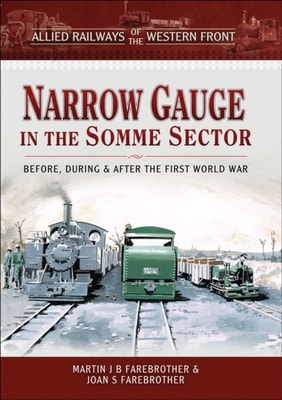
The Somme sector of the Western Front was held by French forces until early 1916, when the British and Dominions Third and Fourth Armies moved into the northern part, before the joint First Battle of the Somme from July to November 1916.
In a series of concise, thought-provoking chapters the authors summarize and make accessible the latest scholarship on the middle years of the Great War 1915 and 1916 and cover fundamental issues that are rarely explored outside the specialist journals.
The 1914 Battle of the Aisne, officially from 12 15 September, came about as a result of the German retirement from the Battle of the Marne, which took place further south as the huge conscript armies of France and Germany jostled for position almost within sight of Paris.
Eighth Army, Britain's most famous field army of the twentieth century, landed in Italy in September 1943 and fought continously until the defeat of the Germans in early-May 1945.
Fills a gap in comparative studies, interrogating strategies of Empire in dominating the Indigenous and linking two modern cultures from the Global South.
This book investigates the impact of commercial banks in Kenya right through from their origins, to their role during the colonial period, the process of adaptation following independence, and up to their responses to new challenges and economic policies in the twenty-first century.
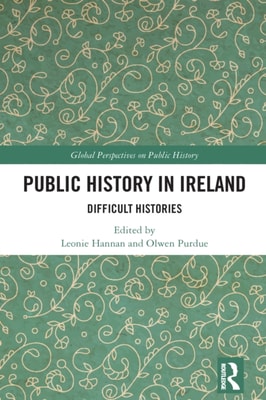
Through a collection of essays that reflect the complexity of the island's historical past as it operates today, Public History in Ireland delivers a scholarly yet accessible introduction to contemporary topics and debates in Irish public history.
This book assesses the impact of European colonization in the late 19th and early 20th century in 'restructuring' the shared past of India and Southeast Asia.
This book takes a critical and historical perspective in parsing the current state of play for refugee and immigrant students in Germany, addressing federal, state, and institutional innovations as well as gaps in service.
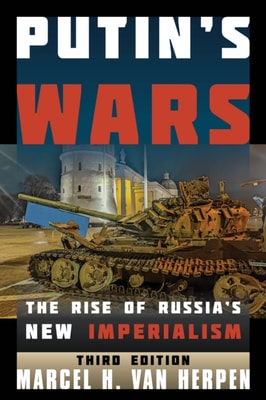
This fully updated book offers the first systematic analysis of Putin's three wars, placing the Second Chechen War, the war with Georgia of 2008, and the war with Ukraine in their broader historical context.
Reformatting Agrarian Life presents a stealth urban history from the countryside that foregrounds the mutual entanglements of agrarian and urban expertise.
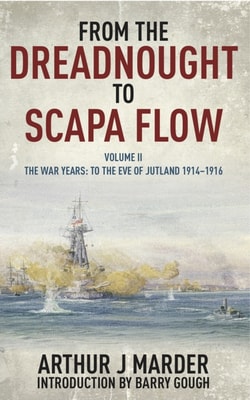
After the German surrender in November 1918, the German High Seas Fleet was interned at Scapa Flow in the Orkney Islands, the anchorage for the Royal Navy's Grand Fleet throughout the First World War.
The Great War Display Team was founded in 1988 and has since gone on to become one of Britain's premier display teams, with a wealth of talented pilots passing through its ranks and amazing crowds with a variety of recreated aircraft including Fokker Dr1s, Royal Aircraft Factory S.
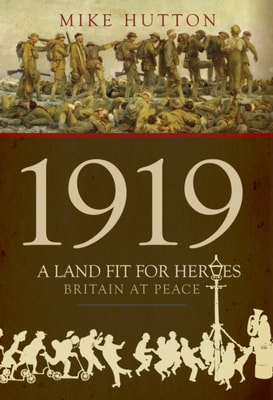
The year 1919 has often been ignored in historians' dizzy haste to enter the world of the Roaring Twenties but it was a year of enormous challenges and change.
Ordinary Heroes is the first book to focus on the staggering achievements of hundreds of thousands of civilian volunteers and charity workers, the majority of them women, during the First World War, both at home and abroad.
Hans Rose was one of Germany's most successful WWI U-boat aces, and her most successful ace during the convoy period when attacks by U-boats were most difficult and dangerous.
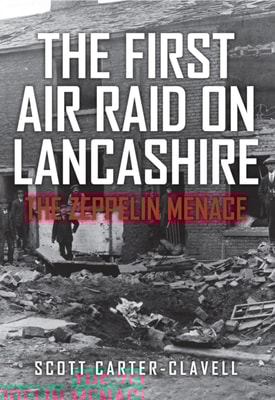
This book gives a detailed account of the Zeppelin raids on Bolton and Rossendale in late September 1916, setting them in the context of wider events at home and abroad.
An advertising illustrator and artist by trade, Private Fergus Mackain enlisted in 1915 to 'do his bit', serving in France when the fighting was at its fiercest.
A rare and forgotten first-hand account of the first day of the Battle of the Somme by a British infantry soldier who went 'over the top' and survived.
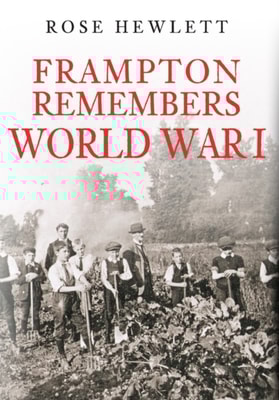
Frampton Remembers World War I tells the story of a Gloucestershire village during the First World War, and how its inhabitants individually and collectively contributed towards victory.
During the First World War, there were five air bases in Wales: two airship stations, one at Llangefni on Anglesey (RNAS Anglesey) and one at Milton in Pembrokeshire (RNAS Pembroke), a fighter/bomber station at Aber (RNAS Bangor) and a seaplane base at Fishguard (RNAS Fishguard).
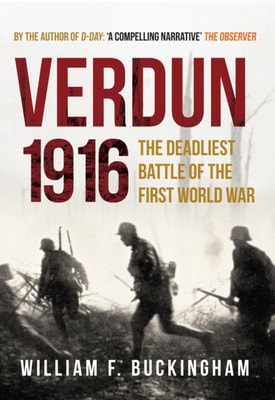
Fought on the heights above the garrison town of the same name on the River Meuse, 140 miles east of Paris, the Battle of Verdun lasted for ten months, between February and December 1916, double the length of the Battle of the Somme and over three times the length of the Battle of Passchendaele.