Flagships of Imperialism is the first scholarly monograph on the history of the P&O shipping company, and the first history of P&O to pay due attention to the context of nineteenth century imperial politics which so significantly shaped the company's development.
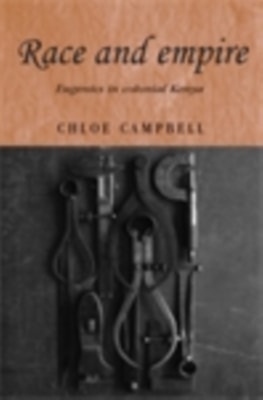
Race and empire tells the story of a short-lived but vehement eugenics movement that emerged among a group of Europeans in Kenya in the 1930s, unleashing a set of writings on racial differences in intelligence more extreme than that emanating from any other British colony in the twentieth century.
The British army was almost unique among the European armies of the Great War in that it did not suffer from a serious breakdown of discipline or collapse of morale.
This is a detailed study of the various ways in which London and India were imaginatively constructed by British observers during the nineteenth century.
Building on earlier work, this text combines theoretical perspectives with empirical work, to provide a comparative analysis of the electoral systems, party systems and governmental systems in the ethnic republics and regions of Russia.
This book analyses black Atlantic studies, colonial discourse analysis and postcolonial theory, providing paradigms for understanding imperial literature, Englishness and black transnationalism.
The description of South Africa as a 'rainbow nation' has always been taken to embrace the black, brown and white peoples who constitute its population.
Military Service Tribunals were formed following the introduction of conscription in January 1916, to consider applications for exemption from military service.
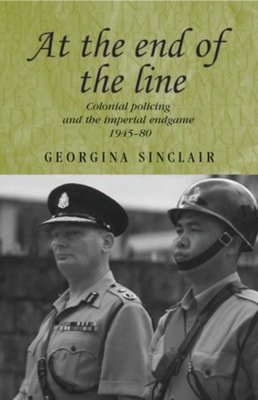
Colonial policing and the imperial endgame is the first comprehensive study of the colonial police and their complex role within Britain's long and turbulent process of decolonisation, a time characterised by political upheaval and colonial conflict.
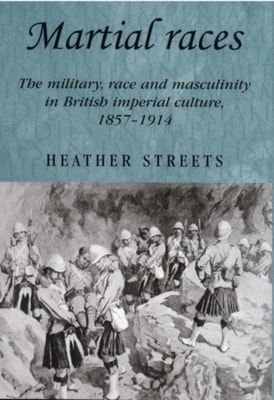
This book explores how and why Scottish Highlanders, Punjabi Sikhs, and Nepalese Gurkhas became identified as the British Empire's fiercest, most manly soldiers in nineteenth century discourse.
Race and empire tells the story of a short-lived but vehement eugenics movement that emerged among a group of Europeans in Kenya in the 1930s, unleashing a set of writings on racial differences in intelligence more extreme than that emanating from any other British colony in the twentieth century.
The British army was almost unique among the European armies of the Great War in that it did not suffer from a serious breakdown of discipline or collapse of morale.
Flagships of Imperialism is the first scholarly monograph on the history of the P&O shipping company, and the first history of P&O to pay due attention to the context of nineteenth century imperial politics which so significantly shaped the company's development.
Priestley's England is the first full-length academic study of J B Priestley - novelist, playwright, screen-writer, journalist and broadcaster, political activist, public intellectual and popular entertainer, one of the makers of twentieth-century Britain, and one of its sharpest critics.
The educational experiences of youth refugees and asylum seekers during migration, cross-border movements, protracted displacements, and pre-resettlement phases have largely remained as a black box.
Edwin Lutyens' Memorial to the Missing of the Somme at Thiepval in Northern France, visited annually by tens of thousands of tourists, is arguably the finest structure erected by any British architect in the twentieth century.
In this groundbreaking work, Bill Ashcroft extends the arguments posed in The Empire Writes Back to investigate the transformative effects of postcolonial resistance and the continuing relevance of colonial struggle.
A both controversial and comprehensive historical analysis of how the British Empire worked, from Wolfson Prize-winning author and historian John DarwinThe British Empire shaped the world in countless ways: repopulating continents, carving out nations, imposing its own language, technology and values.
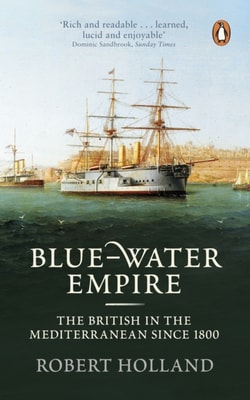
Blue-Water Empire is Robert Holland's magnificent narrative of Britain's military and cultural ties with the Mediterranean Sea, in the style of the epic naval histories of N.
Bringing together key historical and innovative ethnographic materials on the peoples of the South-West Province of Cameroon and the Nigerian borderlands, this volume presents critical and analytical approaches to the production of ethnic, political, religious, and gendered identities in the region.
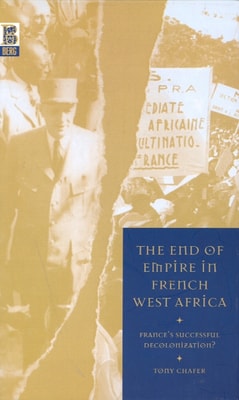
In an effort to restore its world-power status after the humiliation of defeat and occupation, France was eager to maintain its overseas empire at the end of the Second World War.
Adrian Greaves uses his exceptional knowledge of the Anglo-Zulu War to look beyond the two best known battles of Isandlwana and the iconic action at Rorkes Drift to other fiercely fought battles.
A military history of native sub-Saharan African armies during the late nineteenth and early twentieth centuries, exploring their training, weapons, tactics and more.
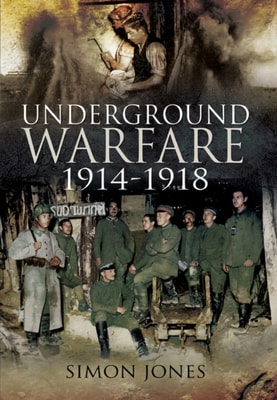
Simon Joness graphic history of underground warfare during the Great War uses personal reminiscences to convey the danger and suspense of this unconventional form of conflict.
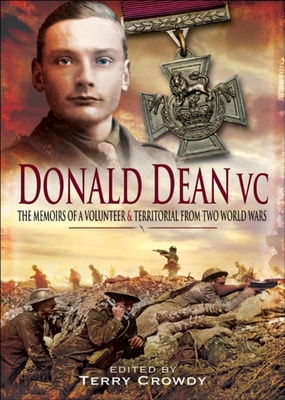
Donald Dean lied about his age to enlist in the Queen's Own Royal West Kent Regiment and serve on the Western Front, where he worked his way up from Private to acting Captain.
This book is the result of a conference organised by the Contemporary Portuguese Political History Research Centre (CPHRC) and the University of Dundee that took place during September 2000.