The remarkable story of the innovative legal strategies Native Americans have used to protect their religious rightsFrom North Dakota's Standing Rock encampments to Arizona's San Francisco Peaks, Native Americans have repeatedly asserted legal rights to religious freedom to protect their sacred places, practices, objects, knowledge, and ancestral remains.
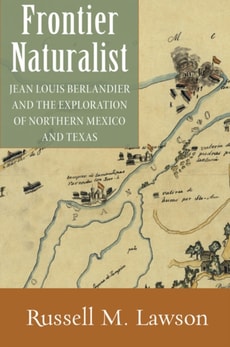
In the fourteenth century, a culture arose in and around the Edwards Plateau of Central Texas that represents the last prehistoric peoples before the cultural upheaval introduced by European explorers.
How the specter of climate has been used to explain history since antiquityScientists, journalists, and politicians increasingly tell us that human impacts on climate constitute the single greatest threat facing our planet and may even bring about the extinction of our species.
The 50th anniversary edition of this classic work on the art of Northwest Coast Indians now offers color illustrations for a new generation of readers along with reflections from contemporary Northwest Coast artists about the impact of this book.
A major work on the history and culture of Southwest Indians, The Columbia Guide to American Indians of the Southwest tells a remarkable story of cultural continuity in the face of migration, displacement, violence, and loss.
How high energy consumption transformed postwar Phoenix and deepened inequalities in the American SouthwestIn 1940, Phoenix was a small, agricultural city of sixty-five thousand, and the Navajo Reservation was an open landscape of scattered sheepherders.
Winner of the 2024 Will Rogers Medallion Award for Western BiographiesJohn William Dear was born in 1845 into a close-knit farming family in Northern Virginia.
A través del análisis de la historia de vida de Cristóbal Acevedo Martínez, hijo de Aurelio Acevedo Robles —un importante personaje implicado en la guerra cristera—, la autora presenta algunas de las experiencias y consecuencias de la Cristiada, un hecho que aún vive en la memoria colectiva e individual de sus sobrevivientes y descendientes, con implicaciones en la dimensión cultural.
In 1884, twenty-three-year-old Corabelle Fellows left her family in Washington, DC, and journeyed out West to teach Native children in Nebraska and Dakota Territory.
Des Kaisers Platz an der Sonne: die Kolonie Deutsch SamoaDie deutschen Kolonien (offiziell Schutzgebiete genannt) wurden vom Deutschen Reich ab den 1880er Jahren erworben und es bestand aus den überseeischen Kolonien, Dependenzen und Territorien des Deutschen Reiches.
A compelling history of the German ethnologists who were inspired by Prussian polymath and explorer Alexander von HumboldtThe Berlin Ethnological Museum is one of the world's largest and most important anthropological museums, housing more than a half million objects collected from around the globe.