In History and Revolution, a group of respected historians confronts the conservative, revisionist trends in historical enquiry that have been dominant in the last twenty years.
Of the many innovative approaches to emerge during the twenty-first century, one of the most productive has been the interdisciplinary nexus of theories and methodologies broadly defined as the study of emotions.
In an era defined by daily polls, institutional rankings, and other forms of social quantification, it can be easy to forget that comparison has a long historical lineage.
Throughout the many political and social upheavals of the early modern era, names were words to conjure by, articulating significant historical trends and helping individuals and societies make sense of often dramatic periods of change.
On the surface, historical scholarship might seem thoroughly incompatible with political engagement: the ideal historian, many imagine, is a disinterested observer focused exclusively on the past.
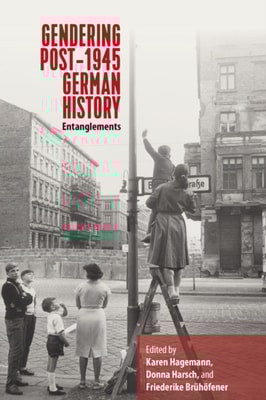
Although entanglement has become a keyword in recent German history scholarship, entangled studies of the postwar era have largely limited their scope to politics and economics across the two Germanys while giving short shrift to social and cultural phenomena like gender.
Across half a century, from the division of Germany through the end of the Cold War, a cohort of thirty women from the small German town of Schonebeck in what used to be the GDR circulated among themselves a remarkable collective archive of their lives: a Rundbrief, or bulletin, containing hundreds of letters and photographs.
The extent and irreversibility of US decline is becoming ever more obvious as America loses war after war and as one industry after another loses its technological edge.
This book aims to perform a critical and broad assessment of the historiography of science produced from the late nineteenth century to the early twenty-first century.
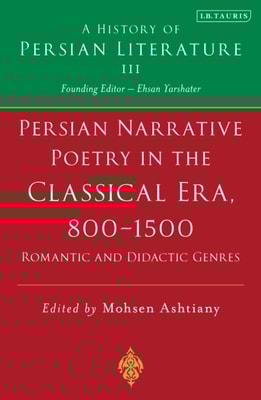
The third volume in this ground-breaking series, Persian Narrative Poetry in the Classical Era, 800-1500: Romantic and Didactic Genres, introduces masterpieces of Persian literature from these seven centuries to an international audience.
Afghanistan has been a theatre of civil and international conflict for much of the twentieth century – stability is essential if there is to be peace in the Greater Middle East.
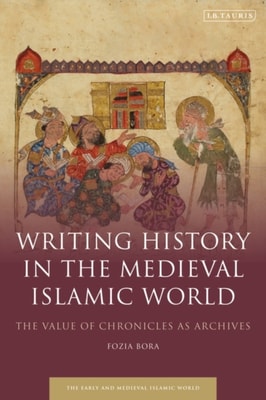
In the 'encyclopaedic' fourteenth century, Arabic chronicles produced in Mamluk cities bore textual witness to both recent and bygone history, including that of the Fatimids (969–1171CE).
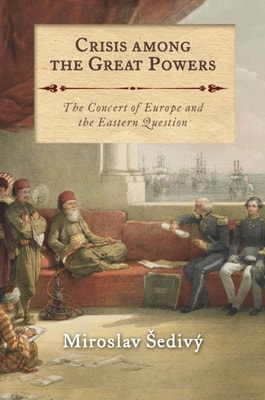
In 1840, conflict within the Ottoman Empire gave rise to a serious all-European crisis which led to a diplomatic rupture between France and other Great Powers.
The third volume in this ground-breaking series, Persian Narrative Poetry in the Classical Era, 800-1500: Romantic and Didactic Genres, introduces masterpieces of Persian literature from these seven centuries to an international audience.
In the 'encyclopaedic' fourteenth century, Arabic chronicles produced in Mamluk cities bore textual witness to both recent and bygone history, including that of the Fatimids (969–1171CE).
The Americanist community played a vital role in the Cold War, as well as in large part directing the cultural consumption of Soviet society and shaping perceptions of the US.
The Americanist community played a vital role in the Cold War, as well as in large part directing the cultural consumption of Soviet society and shaping perceptions of the US.
Whether defined as essentially 'Turkish', and therefore alien to the Lebanese experience, or remembered in its final years as a tyrannical and brutal dictatorship, the period has not been thought of fondly in most Lebanese historiography.
In 1840, conflict within the Ottoman Empire gave rise to a serious all-European crisis which led to a diplomatic rupture between France and other Great Powers.
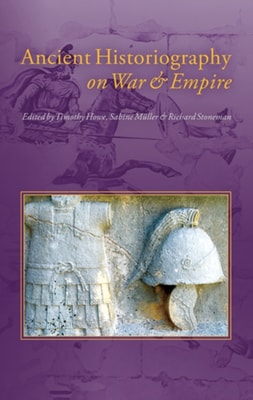
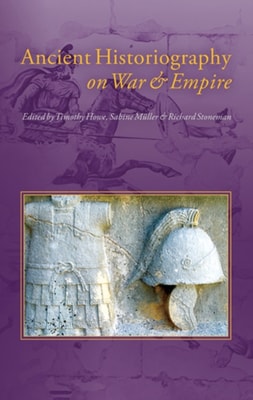
In the ancient Greek-speaking world, writing about the past meant balancing the reporting of facts with shaping and guiding the political interests and behaviours of the present.
In the ancient Greek-speaking world, writing about the past meant balancing the reporting of facts with shaping and guiding the political interests and behaviours of the present.
The history of the Cold War has focused overwhelmingly on statecraft and military power, an approach that has naturally placed Moscow and Washington center stage.
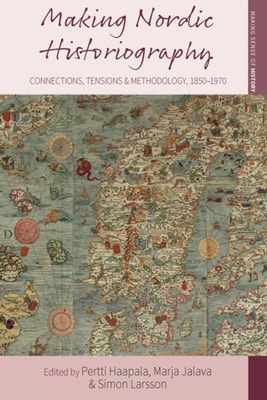
The last several decades have witnessed an explosion of new empirical research into representations of the past and the conditions of their production, prompting claims that we have entered a new era in which the past has become more present than ever before.
At a time when rapidly evolving technologies, political turmoil, and the tensions inherent in multiculturalism and globalization are reshaping historical consciousness, what is the proper role for historians and their work?
Bringing together incisive contributions from an international group of colleagues and former students, Modern Germany in Transatlantic Perspective takes stock of the field of German history as exemplified by the extraordinary scholarly career of Konrad H.
First published in 2007, The Nanking Atrocity remains an essential resource for understanding the massacre committed by Japanese soldiers in Nanking, China during the winter of 1937-38.
As one of the premier historical thinkers of his generation, Jorn Rusen has made enormous contributions to the methods and theoretical framework of history as it is practiced today.
The result of extensive collaboration among leading scholars from across Europe, Conceptual History in the European Space represents a landmark intervention in the historiography of concepts.